
When most people think about saving for retirement, they picture stocks, bonds, mutual funds, and traditional investment accounts. However, did you know that certain precious metals can also be held in an Individual Retirement Account (IRA)?
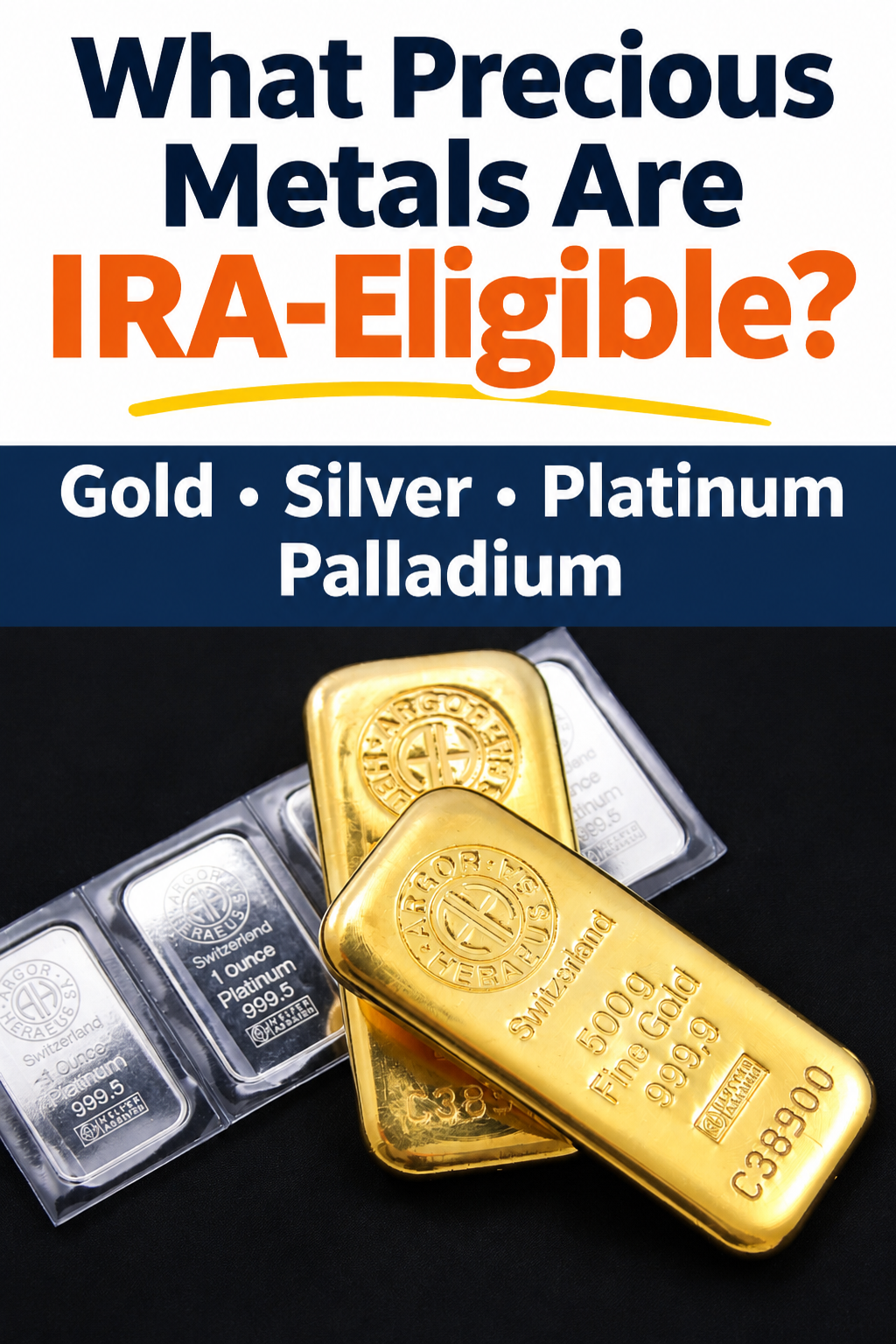
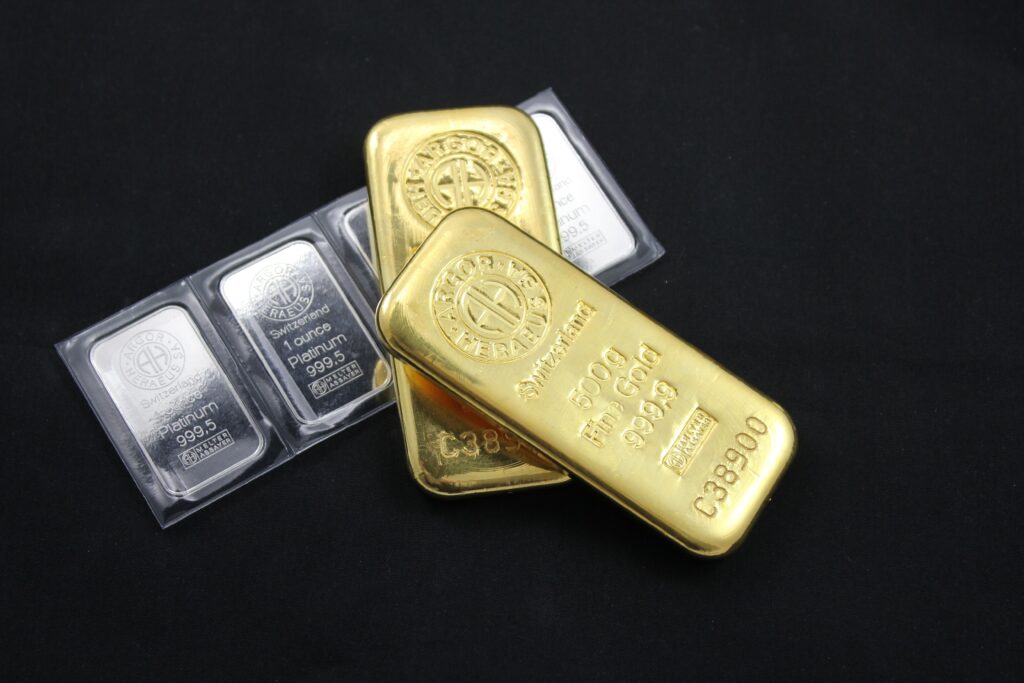
Gold, silver, platinum, and palladium are four precious metals that may qualify for inclusion in a retirement account. These investments can provide an alternative way to diversify retirement savings, especially for people interested in owning physical assets rather than relying entirely on the stock market.
But not every gold coin, silver bar, or piece of precious metal qualifies. The Internal Revenue Service (IRS) has specific requirements regarding purity, storage, and the types of metals that can be held in an IRA.
Here’s what you need to know about IRA-eligible precious metals, which coins and bars qualify, and how investing in physical metals through a retirement account works.
What Is a Precious Metals IRA?
A precious metals IRA is a type of self-directed Individual Retirement Account that allows investors to hold certain physical precious metals as retirement assets.
Unlike a conventional IRA that typically holds stocks, bonds, and mutual funds, a self-directed IRA may offer access to alternative investments, including qualifying precious metals.
Precious metals IRAs can be structured as traditional or Roth IRAs, depending on the custodian and account options available.
With a traditional IRA, contributions may be tax-deductible depending on your circumstances, and distributions are generally taxable. With a Roth IRA, eligible contributions are made with after-tax money, and qualified withdrawals are tax-free.
The same general IRA contribution limits and distribution rules apply.
One important difference is that physical precious metals generally must be held by an authorized trustee or custodian. You cannot simply purchase gold or silver, store it in your home, and claim it as an IRA investment.
1. Gold: The Most Recognized IRA-Eligible Precious Metal
Gold is one of the most popular precious metals for retirement investors. It has been used as a store of value for thousands of years and is often viewed as a potential hedge against inflation and economic uncertainty.
The IRS generally requires gold bullion to have a minimum purity of 99.5%, although certain specifically permitted coins are exceptions.
Examples of IRA-Eligible Gold
- American Gold Eagle coins
- American Gold Buffalo bullion coins
- Canadian Gold Maple Leaf coins that meet purity requirements
- Austrian Gold Philharmonic coins
- Australian Gold Kangaroo coins
- Qualifying gold bars and rounds produced by acceptable refiners or manufacturers
American Gold Eagles are especially noteworthy because they contain 91.67% gold rather than 99.5%, but are specifically permitted under federal IRA rules.
Not every gold coin qualifies. Rare coins, collectible coins, and jewelry are generally not eligible for inclusion in a precious metals IRA.
Why Invest in Gold Through an IRA?
Gold may appeal to retirement savers who want to diversify their investments beyond traditional financial markets.
Potential benefits include portfolio diversification, ownership of a tangible asset, and exposure to gold prices.
However, gold does not pay dividends or interest, and its value can fluctuate significantly. Investors also need to account for storage fees, insurance, and custodian expenses.
2. Silver: An Affordable Alternative to Gold
Silver is another precious metal that can qualify for IRA investment.
Because silver generally costs considerably less per ounce than gold, it may appeal to investors who want to purchase physical precious metals without committing as much money to each ounce.
Silver also has substantial industrial demand, including applications in electronics, solar panels, medical equipment, and other technologies.
To qualify as IRA-eligible silver bullion, the metal generally must have a minimum purity of 99.9%.
Examples of IRA-Eligible Silver
- American Silver Eagle bullion coins
- Canadian Silver Maple Leaf coins
- Austrian Silver Philharmonic coins
- Australian Silver Kangaroo coins
- Qualifying silver bars with a purity of at least 99.9%
- Certain qualifying silver rounds
The American Silver Eagle is a popular choice because it is specifically permitted under federal IRA rules.
Silver bars and rounds must satisfy applicable purity and custody requirements. Their eligibility should be verified with the IRA custodian before purchasing.
Why Invest in Silver Through an IRA?
Silver offers exposure to both precious metals investing and industrial demand.
Potential advantages include:
- Lower price per ounce compared with gold
- Portfolio diversification
- Potential appreciation when silver prices rise
- Demand from manufacturing and technology industries
However, silver prices can be volatile. Physical silver also takes up considerably more storage space than an equivalent dollar value of gold, potentially increasing storage and handling costs.
Investors should compare dealer premiums and storage expenses before deciding whether physical silver makes sense for their retirement strategy.
3. Platinum: A Less Common Precious Metal Investment
Platinum is a relatively rare precious metal used in jewelry, industrial manufacturing, and automotive catalytic converters.
Although it receives less attention than gold and silver, qualifying platinum can also be held in a precious metals IRA.
The IRS generally requires platinum bullion to have a minimum purity of 99.95%.
Examples of IRA-Eligible Platinum
- American Platinum Eagle coins
- Canadian Platinum Maple Leaf coins
- Australian Platinum Koala coins that meet applicable requirements
- Qualifying platinum bars and rounds with a purity of at least 99.95%
Availability can vary, and investors should confirm the eligibility of a specific product before purchasing it for an IRA.
Why Consider Platinum?
Platinum may offer diversification because its price is influenced by different factors than those affecting gold.
Industrial demand, automotive manufacturing, mining production, and global economic conditions can all influence platinum prices.
However, platinum can experience significant price swings, and its investment market is generally smaller than the markets for gold and silver.
4. Palladium: Another IRA-Eligible Precious Metal
Palladium is the fourth major precious metal that may qualify for inclusion in an IRA.
Like platinum, palladium is used extensively in industrial applications, particularly automotive catalytic converters.
Palladium bullion generally must meet a minimum purity requirement of 99.95% to qualify.
Examples of IRA-Eligible Palladium
- American Palladium Eagle coins
- Canadian Palladium Maple Leaf coins
- Qualifying palladium bars with a purity of at least 99.95%
Palladium products may be harder to find than gold and silver bullion, and fewer precious metals IRA providers may offer extensive palladium selections.
Why Invest in Palladium?
Palladium may interest investors seeking exposure to industrial precious metals.
Its price can be affected by mining supply, automotive production, environmental regulations, and technological changes.
However, palladium can be particularly volatile, and demand may change as automakers shift toward different technologies.
For that reason, investors should carefully consider the risks before allocating retirement savings to palladium.
IRA-Eligible Precious Metals: Purity Requirements
The following table summarizes the general purity requirements for the four primary IRA-eligible precious metals.
| Precious Metal | Minimum Bullion Purity | Common IRA-Eligible Example |
|---|---|---|
| Gold | 99.5% | American Gold Buffalo |
| Silver | 99.9% | American Silver Eagle |
| Platinum | 99.95% | American Platinum Eagle |
| Palladium | 99.95% | American Palladium Eagle |
These purity standards generally apply to bullion. Certain coins are specifically authorized by federal law even when they do not meet the usual bullion purity threshold.
Meeting a purity standard alone does not automatically make every product IRA-eligible. The product must also satisfy applicable legal requirements, and the IRA trustee or custodian must be willing to hold it.
What Precious Metals Are NOT IRA-Eligible?
Although several precious metals qualify for IRA investment, many other items are prohibited or fail to meet the requirements.
Examples generally include:
- Gold and silver jewelry
- Most collectible and numismatic coins
- Rare coins purchased primarily for their collectible value
- Gold bullion below the required purity level, unless a specific statutory exception applies
- Silver bars that do not meet the required fineness
- Precious metals purchased and personally stored outside the IRA’s custody arrangements
Other metals, including copper, rhodium, and iridium, are not among the four precious metals generally permitted as IRA bullion under federal law.
Some dealers advertise collectible coins as retirement investments, so it is important to distinguish between products that may appreciate in value and those that legally qualify for IRA ownership.
Can You Store IRA Gold or Silver at Home?
One of the most important rules for precious metals IRAs concerns storage.
Generally, you cannot personally take possession of IRA-owned precious metals and keep them in a home safe, safety deposit box under your personal control, or another private location.
Instead, IRA-owned physical precious metals must be held through an authorized trustee or custodian under arrangements that comply with IRS requirements.
Many precious metals IRA custodians use third-party depositories to store investors’ metals.
These facilities may offer secure storage, insurance arrangements, and inventory management.
Some companies advertise home-storage gold IRAs or arrangements involving IRA-owned limited liability companies. These structures can create significant tax risks and should not be assumed to comply with IRS rules.
Improper personal possession of IRA metals can result in a taxable distribution and potentially additional penalties.
How to Invest in Precious Metals Through an IRA
If you’re interested in adding physical precious metals to your retirement savings, the process typically involves several steps.
Step 1: Choose a Self-Directed IRA Custodian
Find a qualified IRA custodian that permits physical precious metals investments.
Not all IRA providers offer this option. Many traditional brokerage IRAs limit investors to securities such as stocks, bonds, mutual funds, and exchange-traded funds.
Compare custodians based on fees, investment options, storage arrangements, and customer service.
Step 2: Open and Fund Your Account
You may be able to fund a precious metals IRA through a new contribution, a direct transfer from another IRA, or an eligible rollover from a workplace retirement plan.
Annual contribution limits still apply to new contributions.
Properly completed transfers and rollovers generally do not count toward annual IRA contribution limits, although rollovers can have additional rules and restrictions.
Step 3: Select IRA-Eligible Precious Metals
Choose qualifying gold, silver, platinum, or palladium products.
Before purchasing, confirm that the specific coins or bars satisfy IRS requirements and are accepted by your custodian.
Compare the dealer’s selling price with the current spot price of the metal to understand the premium you’re paying.
Step 4: Arrange Approved Storage
Your custodian will coordinate the purchase and appropriate storage of the metals.
Depending on the provider, storage options may include segregated or non-segregated arrangements.
Be sure to understand the fees and how your metals will be identified and accounted for.
Step 5: Monitor Your Investment
Precious metals prices change over time, so review your holdings periodically.
Consider how much of your overall retirement portfolio is invested in precious metals and whether that allocation still fits your financial goals and risk tolerance.
Physical Precious Metals vs. Precious Metals ETFs
You don’t necessarily need a self-directed IRA to gain exposure to gold or silver.
Many conventional IRAs allow investments in precious metals exchange-traded funds (ETFs), mining stocks, and other securities tied to precious metals markets.
Here’s how physical metals and ETFs generally compare.
| Feature | Physical Precious Metals IRA | Precious Metals ETF in an IRA |
|---|---|---|
| Investment | Qualifying physical bullion or coins | Shares of an investment fund |
| Storage | Requires compliant physical custody | No personal bullion storage arrangements |
| Fees | Custodian, dealer, and storage costs | Fund expenses and possible trading costs |
| Liquidity | Requires arranging a sale of physical metal | Generally tradable during market hours |
| Ownership | IRA owns physical metals | IRA owns fund shares |
| Account Type | Usually self-directed IRA | Often available in conventional brokerage IRAs |
An ETF can provide a simpler way to gain exposure to precious metals prices, but owning ETF shares is not the same as having physical bullion held for your IRA.
Some ETFs hold physical metals, while others use futures contracts or invest in mining companies. Their risks and performance can differ substantially.
How Much of Your IRA Should Be Invested in Precious Metals?
There is no single percentage of retirement savings that everyone should allocate to precious metals.
The appropriate amount depends on factors such as your age, retirement timeline, financial goals, other investments, and tolerance for risk.
Precious metals may provide diversification, but they also come with disadvantages.
Unlike dividend-paying stocks or interest-bearing bonds, physical gold and silver do not generate ongoing income.
Their prices can also decline for extended periods.
Investors should be cautious about concentrating too much of their retirement savings in any single asset category, including precious metals.
A diversified retirement portfolio may include several different asset classes rather than relying entirely on gold, silver, or other alternative investments.
What Are the Costs of a Precious Metals IRA?
Before opening a precious metals IRA, it’s important to understand the potential expenses.
Common costs include:
- Account setup fees: Some custodians charge an initial fee to establish a self-directed IRA.
- Annual administration fees: Custodians may charge recurring fees to maintain the account.
- Storage fees: Physical metals generally require secure storage.
- Dealer premiums: Coins and bars usually sell for more than their underlying spot metal value.
- Transaction fees: Buying, selling, or transferring metals may involve additional charges.
- Insurance expenses: Insurance may be included in storage fees or charged separately.
These expenses can reduce investment returns, particularly for smaller accounts.
Compare the total cost of ownership rather than focusing only on advertised account setup fees.
Frequently Asked Questions About IRA-Eligible Precious Metals
Is silver IRA-eligible?
Yes. Certain silver coins and bars qualify for IRA investment. Silver bullion generally must have a purity of at least 99.9%, and the investment must meet applicable IRS custody requirements.
Can you hold gold and silver in the same IRA?
Yes. A self-directed IRA that permits precious metals can generally hold multiple qualifying metals, including gold, silver, platinum, and palladium.
Are American Silver Eagles IRA-approved?
Yes. American Silver Eagle bullion coins are specifically permitted under federal IRA rules. The eligibility of particular collectible or special-edition products should be confirmed before purchasing.
Can you put gold jewelry in an IRA?
Generally, no. Gold jewelry does not qualify as IRA-approved bullion merely because it contains a high percentage of gold.
Can you hold precious metals in a Roth IRA?
Yes. A Roth self-directed IRA may hold qualifying precious metals if the custodian supports those investments and applicable requirements are satisfied.
Are silver rounds IRA-eligible?
Some silver rounds may qualify if they meet the required purity and other applicable requirements. Not every silver round is automatically eligible, so confirm with the custodian before buying.
Can you roll over a 401(k) into a precious metals IRA?
An eligible 401(k) distribution may be rolled over into a self-directed IRA that permits precious metals. Whether a rollover is available depends on the retirement plan’s rules and your eligibility to take a distribution.
Do precious metals IRAs have required minimum distributions?
Traditional precious metals IRAs generally follow the same required minimum distribution rules as other traditional IRAs. Roth IRAs generally do not require distributions during the original owner’s lifetime.
If the account holds physical metals, meeting a required minimum distribution may involve selling metals, using other available IRA assets, or taking an in-kind distribution that can have tax consequences.
Final Thoughts: Are IRA-Eligible Precious Metals Worth Considering?
Gold, silver, platinum, and palladium are the four primary precious metals that can qualify for physical ownership within an IRA.
Each offers different characteristics. Gold is widely recognized as a store of value, silver combines investment and industrial demand, while platinum and palladium provide exposure to smaller markets influenced heavily by industrial uses.
However, investing in precious metals through an IRA involves more than simply purchasing coins or bars. Investors must follow IRS eligibility and custody requirements, consider fees, and understand the risks associated with fluctuating metal prices.
For some retirement savers, precious metals may provide an additional layer of diversification. For others, lower-cost investments such as precious metals ETFs may be more practical.
Before making a decision, compare your options and consider speaking with a qualified financial or tax professional who understands self-directed retirement accounts.
The goal isn’t necessarily to replace traditional investments with precious metals. It’s to understand the available options and make informed decisions about your long-term financial future.
Disclaimer: This article is for informational purposes only and should not be considered financial, investment, or tax advice. IRA rules and investment eligibility can change. Consult a qualified professional before making retirement investment decisions.
Sources and Further Reading
- IRS Publication 590-A: Contributions to Individual Retirement Arrangements
- IRS Publication 590-B: Distributions from Individual Retirement Arrangements
- 26 U.S. Code § 408: Individual Retirement Accounts