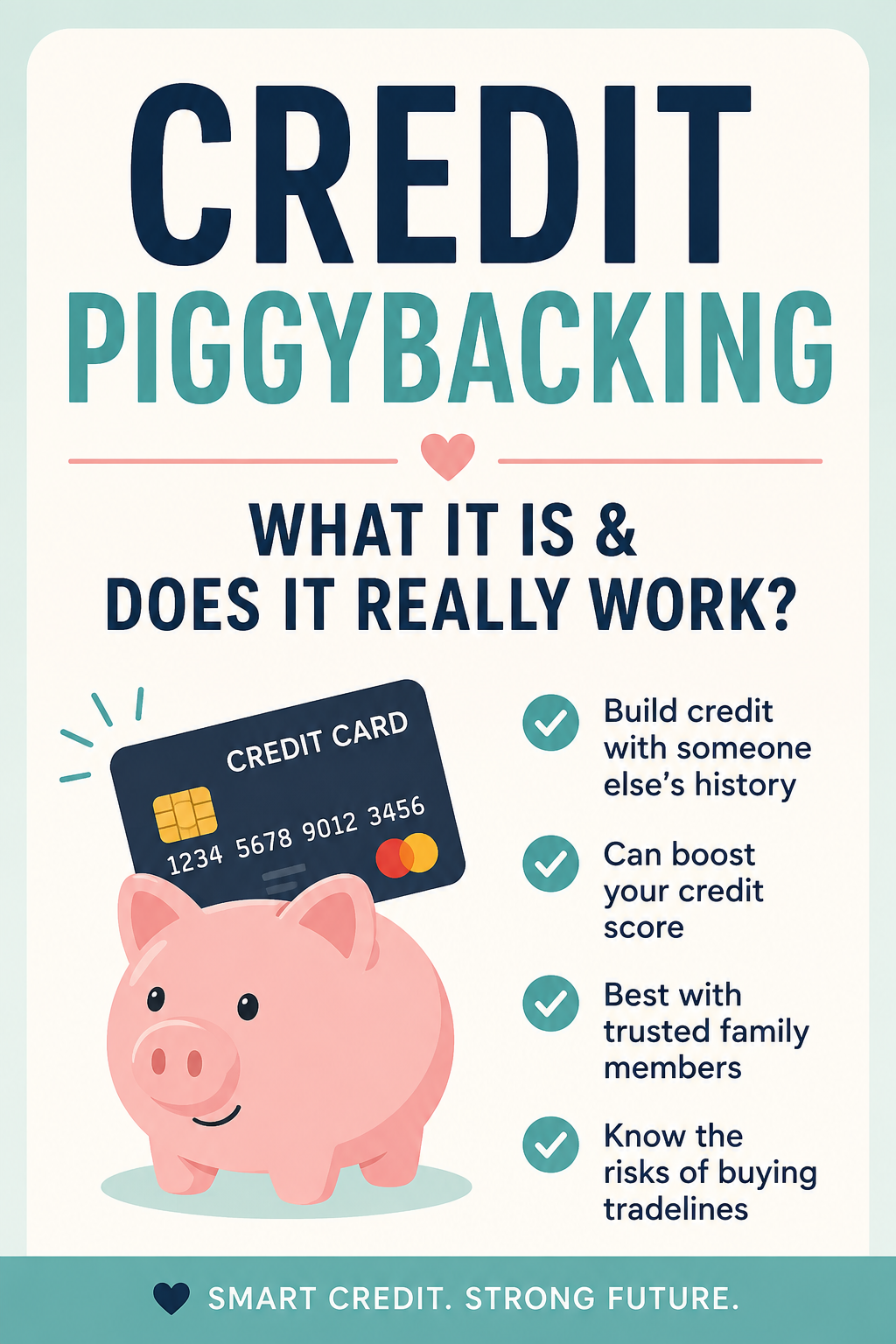


If you’re trying to build credit or raise your credit score, you may have come across a strategy called credit piggybacking. The name sounds a little strange, but the concept is fairly simple: you benefit from someone else’s established credit history by becoming an authorized user on one of their credit card accounts.
Credit piggybacking can be a legitimate way for someone with little or no credit history to start building credit. But there’s also a much more controversial version involving companies that sell access to other people’s credit card accounts.
Here’s how credit piggybacking works, when it might help, and why you should be cautious about paying for it.
What Is Credit Piggybacking?
Credit piggybacking typically happens when someone is added as an authorized user on another person’s credit card.
For example, a parent might add an adult child to a credit card they’ve had for many years. If the card issuer reports authorized users to the credit bureaus, information about that account may then appear on the child’s credit report.
The Consumer Financial Protection Bureau has noted that authorized-user status can allow some of another person’s account history to appear on the authorized user’s credit record.
That can potentially help someone who has a thin credit file or hasn’t established much credit of their own.
How Does Credit Piggybacking Work?
Suppose your mom has a credit card that she’s had for 15 years. She consistently pays the bill on time and keeps the balance relatively low.
She adds you as an authorized user.
Depending on how the issuer reports the account, that well-established credit card could begin appearing on your credit report. That could potentially benefit factors used in calculating your credit score, including account history and payment information.
You don’t necessarily have to use the card to receive a potential credit benefit.
In fact, some families add someone as an authorized user but never actually give that person the physical card.
Does Credit Piggybacking Improve Your Credit Score?
It can, but there’s no guaranteed number of points your score will increase.
The results depend on your existing credit profile, the scoring model being used, how the credit card issuer reports authorized users, and the condition of the account you’re being added to.
Experian notes that becoming an authorized user can potentially help establish credit, particularly for someone with little credit history. However, creditors ultimately want to see how you handle debts for which you’re personally responsible.
That’s an important distinction.
Credit piggybacking may give your credit profile a boost, but it isn’t a substitute for establishing accounts and a positive payment history in your own name.
The Account You Piggyback On Matters
Getting added to just any credit card isn’t necessarily helpful.
Ideally, an authorized-user account would have:
- A long history
- Consistent on-time payments
- A relatively low balance compared with the credit limit
- No recent late payments
- An issuer that reports authorized users to the credit bureaus
Piggybacking can work in both directions.
If the primary cardholder suddenly runs up a huge balance or starts missing payments, the account could potentially hurt rather than help the authorized user’s credit.
That’s why this strategy makes the most sense when you’re dealing with someone you know and trust financially.
You Usually Aren’t Responsible for the Debt
One major difference between an authorized user and a joint account holder is responsibility for the debt.
The CFPB says an authorized user generally isn’t obligated to repay the debt on the account.
The primary cardholder, however, needs to understand the flip side of that arrangement.
If you give an authorized user permission to actually use the credit card, charges they make are generally considered authorized charges. The primary account holder can therefore be responsible for purchases made by that user.
If your only goal is helping someone establish credit, you don’t necessarily have to hand over a card and let them go on a shopping spree.
What Are Tradelines?
This is where credit piggybacking gets more complicated.
A credit account appearing on your credit report is commonly called a tradeline.
Because authorized-user accounts can potentially affect credit scores, an entire industry has developed around selling tradelines.
Instead of asking a parent, spouse or trusted family member to add you to a credit card, you pay a company to arrange for you to become an authorized user on a stranger’s established credit card.
You might see these advertised as:
- Seasoned tradelines
- Authorized-user tradelines
- Credit tradelines
- Credit score boosting services
- Tradelines for sale
Generally, you’re added to the account temporarily and don’t receive the actual credit card.
The goal isn’t to spend money. It’s simply to have the established account appear on your credit report.
Can You Really Buy Someone Else’s Credit History?
Sort of, and this is where the waters get murky.
The CFPB has described paid piggybacking arrangements in which a consumer pays a credit repair company that finds a third party willing to add the consumer as an authorized user. The consumer may then temporarily inherit some of the account’s history on their credit report.
Some tradeline companies advertise this as a fast way to boost a credit score before applying for a mortgage, auto loan or credit card.
But lenders and credit-scoring companies are well aware that paid piggybacking exists.
Scoring models have evolved to reduce manipulation involving authorized-user accounts, and lenders may examine your underlying credit history rather than simply looking at the score.
So even if a purchased tradeline changes your score, that doesn’t mean a lender will suddenly treat you like someone who personally has 15 years of flawless borrowing history.
Is Credit Piggybacking Legal?
Traditional credit piggybacking between family members or people who legitimately share access to an account is generally a normal use of authorized-user status.
Paid credit piggybacking is considerably more questionable.
Experian warns against for-profit piggybacking services, noting that buying authorized-user status can be legally and ethically problematic, particularly if someone uses an artificially increased credit score to qualify for financing they otherwise wouldn’t receive.
In other words, there’s a big difference between Mom adding her 18-year-old daughter to a long-standing credit card to help her establish credit and someone paying a stranger hundreds or thousands of dollars to temporarily make their credit file look stronger immediately before applying for a major loan.
The second scenario is much more likely to raise red flags.
Risks of Buying Tradelines
Besides the possibility that a lender won’t give the authorized-user account much weight, purchasing tradelines comes with some practical risks.
One of the biggest is identity theft.
To be added to someone else’s account, you may need to provide highly sensitive personal information. Handing that information to an unfamiliar tradeline company creates an obvious security risk.
You also have no control over the stranger’s account.
The primary cardholder could increase the balance, miss a payment, close the account or remove you as an authorized user.
And once you’re removed, any benefit you received may disappear.
Experian also warns that paid tradelines can be expensive, sometimes costing $1,000 or more depending on the account.
That’s a lot of money for a temporary result that isn’t guaranteed to help you qualify for anything.
Can Credit Piggybacking Help You Get a Mortgage?
Don’t count on it.
Mortgage lenders typically look much deeper than a single credit score.
An authorized-user account may appear on your credit report and could affect your score, but lenders may want to see credit accounts for which you are actually responsible.
Experian reported in March 2026 that being an authorized user can strengthen a credit score but may not help someone qualify for a mortgage when they have limited accounts of their own or can’t demonstrate that they’ve personally made payments on the authorized-user account.
So buying a tradeline right before applying for a mortgage isn’t a magic doorway into better financing.
What About Adding Your Child as an Authorized User?
This is one of the more practical uses of credit piggybacking.
Some parents add teenagers or young adults as authorized users on well-managed credit cards to help them begin establishing a credit history.
The CFPB notes that being an authorized user on an adult’s credit card is one reason a minor might have a credit report before turning 18.
If you’re considering doing this, contact your credit card issuer first. Ask about minimum-age requirements and whether authorized-user activity is reported to the major credit bureaus.
And remember that you don’t necessarily need to give your child unlimited access to the card.
You can use the arrangement as both a credit-building tool and an opportunity to teach them how credit actually works.
Better Ways to Build Credit
Piggybacking on a trusted family member’s well-managed account can potentially give someone a head start, but eventually you’ll want credit history that’s truly your own.
Consider combining authorized-user status with strategies such as getting a secured credit card, opening a beginner-friendly credit card, paying every bill on time and keeping credit card balances low.
The goal shouldn’t simply be to manufacture the highest possible score.
A strong credit profile develops when you demonstrate that you can borrow money and repay it responsibly over time.
That’s slower than buying a tradeline, but it’s also much more valuable.
Should You Try Credit Piggybacking?
If a parent, spouse or other trusted person with excellent credit is willing to add you as an authorized user, traditional credit piggybacking may be worth considering, especially if you’re new to credit.
Just make sure the account is well managed and that the issuer reports authorized users.
Paying a stranger to add you to an established account is another story.
Purchased tradelines can be expensive, temporary and risky. Lenders know the tactic exists, and a higher credit score doesn’t guarantee you’ll qualify for a loan once an underwriter looks at your actual credit history.
Credit piggybacking can give your credit profile a small set of training wheels. Eventually, though, you need to pedal under your own financial power.
This article is for informational purposes only and should not be considered financial, legal or credit advice.