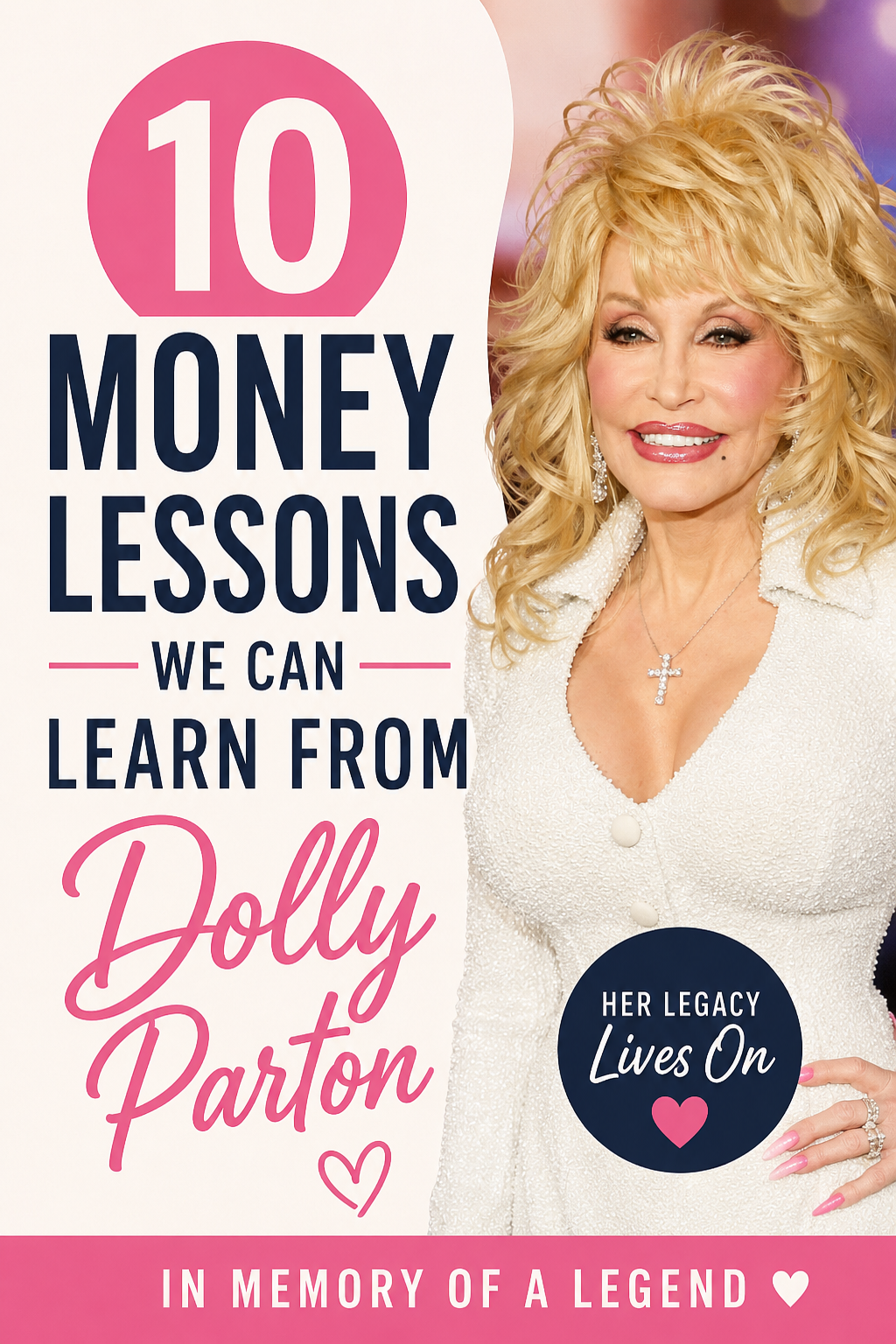
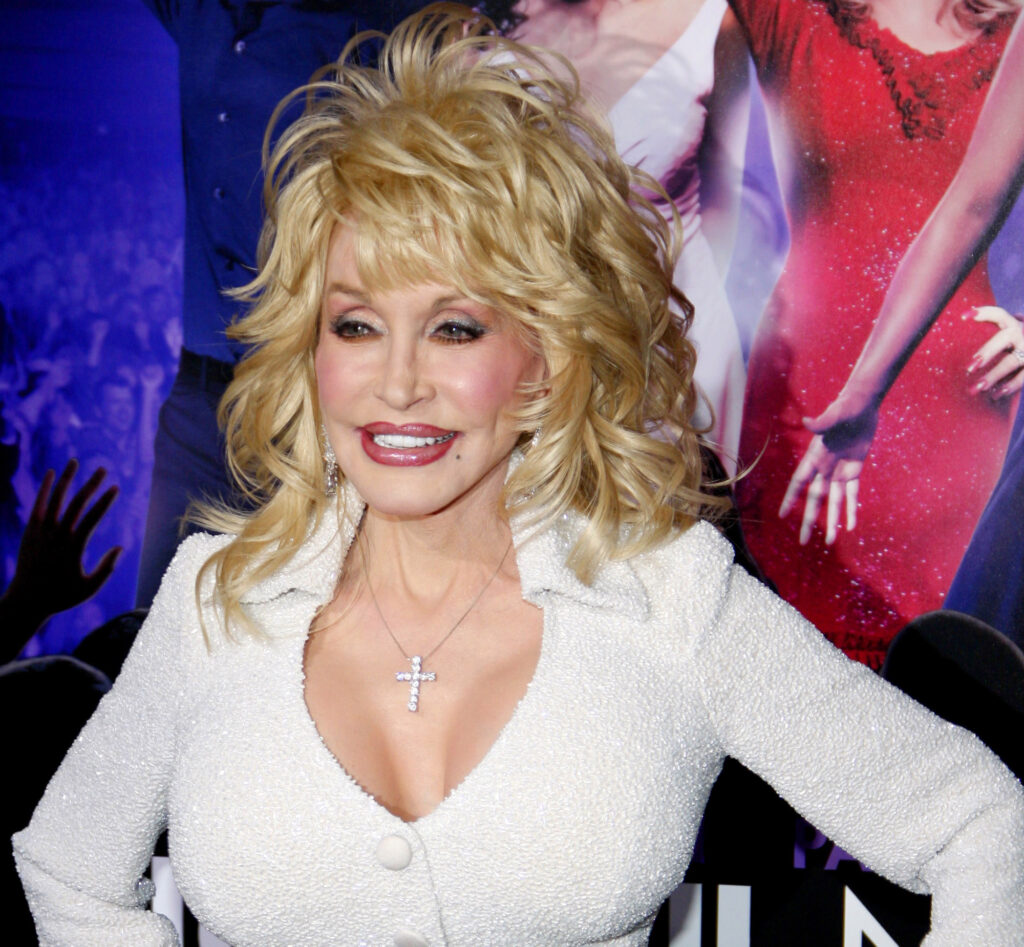

The world lost a true original this week.
Dolly Parton died on August 25, 2026, at the age of 80, leaving behind an extraordinary legacy that stretches far beyond country music. She was a singer, songwriter, actress, businesswoman, philanthropist, and one of those rare celebrities who seemed to become more beloved with each passing decade.
For many of us, it feels strange to imagine a world without Dolly in it.
But while her songs will continue to be played for generations, there’s another part of Dolly Parton’s legacy worth remembering: she was remarkably smart about money.
Dolly grew up in poverty as one of 12 children in rural Tennessee and eventually built a business empire encompassing music, publishing, movies, television, Dollywood, licensing, and more. Just as importantly, she used a considerable amount of her success to help others.
So, in tribute to a woman who gave us far more than great music, here are 10 money lessons we can learn from Dolly Parton’s remarkable life.
1. Where You Start Doesn’t Determine Where You’ll Finish
Dolly’s rags-to-rhinestones story wasn’t manufactured by a publicist.
She really did grow up poor in a one-room cabin in the mountains of East Tennessee. She was the fourth of 12 children in a family where money was scarce.
Rather than hiding her upbringing after becoming successful, Dolly celebrated it.
Her childhood inspired some of her most memorable songwriting, including “Coat of Many Colors.” The experiences she could have viewed solely as disadvantages became part of the story that connected her to millions of people.
There’s an important financial lesson in that.
Where you begin doesn’t determine where you have to end up.
Maybe you grew up without much money. Maybe you’ve accumulated debt. Maybe you’re approaching retirement without as much saved as you’d hoped. Maybe you’ve made financial decisions you wish you could undo.
You can’t change the starting line.
You can change where you go from here.
2. Know What You’re Worth
One of the greatest business decisions Dolly ever made involved Elvis Presley.
Elvis wanted to record Dolly’s “I Will Always Love You,” but his manager, Colonel Tom Parker, reportedly required writers to give up half of their publishing rights when Elvis recorded their songs.
Dolly refused.
Imagine having the opportunity for Elvis Presley to record your song and saying no.
But Dolly understood something incredibly important: ownership had value.
Decades later, Whitney Houston recorded “I Will Always Love You” for The Bodyguard. Her version became one of the most successful singles in music history.
Dolly still owned her publishing rights.
It’s an extreme example of a lesson that applies to the rest of us: Don’t become so dazzled by an opportunity that you ignore what you’re giving up to get it.
Know what your work is worth.
And don’t be afraid to walk away from a bad deal.
3. Ownership Can Be More Valuable Than a Paycheck
Dolly didn’t just sing songs. She wrote them.
And she understood the value of owning the rights to her work.
Her songwriting catalog became an asset capable of generating money long after she finished writing or recording a song.
Most of us aren’t going to write the next “Jolene,” but the principle is universal.
A paycheck is important, but building ownership can change your financial future.
That might mean owning stocks, real estate, a small business, a website, intellectual property, digital products, or other assets with the potential to appreciate or produce income.
Working for money pays today’s bills.
Owning assets can help pay tomorrow’s.
4. Don’t Rely on One Source of Income
Calling Dolly Parton a singer almost seems inadequate when you look at everything she built.
She earned money through songwriting, recording, touring, acting, television, movies, publishing, licensing, merchandise, production, and business ventures.
Then there’s Dollywood.
Dolly understood diversification long before “multiple streams of income” became a favorite phrase on social media.
It’s a lesson worth borrowing.
Depending entirely on one employer or one source of income can leave you financially vulnerable.
You don’t necessarily need seven side hustles. But having another source of money can provide valuable breathing room.
It could be freelancing, reselling, rental income, dividends, affiliate marketing, consulting, selling digital products, or a small business.
You may never need that second income stream.
But it’s nice to know it’s there.
5. Invest in What You Know
One of Dolly’s most successful investments was also deeply connected to her roots.
In 1986, she became involved with a Tennessee theme park that would become Dollywood.
It wasn’t simply another celebrity putting her name on a business. Dolly understood East Tennessee, its people, its culture, its music, and its tourism potential.
Dollywood ultimately became a major attraction and employer in the region.
There’s a lesson here for investors and entrepreneurs.
You don’t have to chase every hot stock, cryptocurrency, business opportunity, or investment trend.
Sometimes the best opportunities are much closer to home.
What industries do you understand? What problems have you personally encountered? What skills have you spent years developing?
Your knowledge has value too.
6. Your Reputation Is an Asset
Dolly accomplished something arguably harder than becoming famous.
She remained beloved.
Over a career spanning decades, her reputation for kindness, humor, generosity, and authenticity became nearly as recognizable as her voice and enormous blond hair.
That reputation had tremendous value.
You don’t need to be famous for this lesson to matter.
Whether you’re an employee, freelancer, reseller, business owner, landlord, creator, or salesperson, your reputation follows you.
Do you keep your promises?
Do you treat customers fairly?
Do you admit when you’ve made a mistake?
Do people trust you?
A strong reputation can create opportunities money can’t buy.
Protect it like any other valuable asset.
7. Being Good With Money Doesn’t Mean Never Spending It
Nobody looked at Dolly Parton and thought, “Now there’s a minimalist.”
The hair. The nails. The clothes. The rhinestones.
Dolly knew what she liked.
And that’s an important part of personal finance that sometimes gets lost in all the advice about cutting expenses.
Saving money isn’t supposed to mean eliminating everything that brings you joy.
The goal is to spend intentionally.
Cut ruthlessly on things you don’t care about so you have room in your budget for the things you do.
Maybe your version of Dolly’s rhinestones is travel. Maybe it’s your grandchildren. Maybe it’s concerts, shoes, gardening, cars, books, or eating at great restaurants.
A successful financial life doesn’t have to be a joyless one.
You just need to know where your priorities are.
8. Never Forget Where You Came From
Dolly could have made her fortune and left East Tennessee behind.
Instead, she repeatedly invested in it.
Dollywood brought jobs and tourism to the region. Her charitable work supported families and organizations in Tennessee and far beyond it.
She demonstrated that becoming successful doesn’t require forgetting the people and places that helped shape you.
There’s a lesson here even for those of us without millions to give away.
Shop at a local business.
Help someone who’s struggling.
Leave a generous tip.
Support a school fundraiser.
Give to your church or favorite charity.
Hire someone who needs an opportunity.
You don’t have to be rich to make your little corner of the world better.
9. Giving Back May Be the Best Thing You Ever Do With Your Money
Of all Dolly’s accomplishments, one of her greatest legacies may be the Dolly Parton Imagination Library.
Dolly launched the program in 1995 to provide free books to young children. What started in her home county eventually expanded internationally, distributing hundreds of millions of books.
Her philanthropy didn’t stop there.
Throughout her life, Dolly supported disaster relief, education, health care, medical research, and numerous other causes. In 2020, she famously donated $1 million toward COVID-19 research at Vanderbilt University Medical Center, funding that helped support work connected with the Moderna vaccine.
When we talk about building wealth, we usually concentrate on how much we can accumulate.
Dolly offered another perspective.
Money can also be used to create something that outlives you.
You don’t need millions of dollars to follow her example. Giving $10 to a food pantry matters. Buying school supplies for a child matters. Donating to an animal shelter matters. Helping a neighbor matters.
Generosity isn’t reserved for millionaires.
10. Decide What Being “Rich” Means to You
Dolly Parton became extraordinarily successful, but her story was never solely about accumulating money.
She talked about family. Faith. Her Tennessee upbringing. Her husband, Carl Dean. Her music. Her fans. Her community.
And she gave away an enormous amount of what she earned.
That’s perhaps the most important financial lesson of all.
Money is useful, but it’s a terrible finish line.
There will always be another income level to reach, another house to buy, another investment milestone, and someone with a larger bank account.
At some point, each of us has to answer a much more personal question:
What does enough look like?
Maybe your version of wealth is retiring early.
Maybe it’s paying off your mortgage.
Maybe it’s having enough savings that emergencies aren’t emergencies anymore.
Maybe it’s being able to help your children.
Maybe it’s traveling.
Or maybe it’s simply having enough money that you can spend more of your time doing what you love with the people you love.
That’s a definition of wealth only you can write.
Dolly Parton’s Legacy Was Worth Far More Than Money
It’s tempting to measure a celebrity’s financial success by asking how much they were worth when they died.
With Dolly Parton, that feels like asking the least interesting question.
Her real wealth is everywhere.
It’s in the songs people will still be singing decades from now.
It’s in Dollywood and the jobs and tourism it helped create in East Tennessee.
It’s in the millions of children who received books because Dolly believed a child’s circumstances shouldn’t determine his or her opportunities.
It’s in the artists she inspired, the communities she helped, the businesses she built, and the people who watched a girl who grew up with almost nothing become one of the most recognizable women in the world.
Dolly Parton knew how to make money.
She knew how to keep ownership of what she created.
She knew how to turn one successful career into multiple businesses and income streams.
But perhaps most importantly, she seemed to understand that the greatest purpose of having money wasn’t simply having more of it.
It was having the freedom to do something meaningful with it.
That’s a financial lesson worth remembering.
And while the world may have lost Dolly Parton this week, the things she created, the people she helped, and the lessons she left behind aren’t going anywhere.
We will always love you, Dolly.