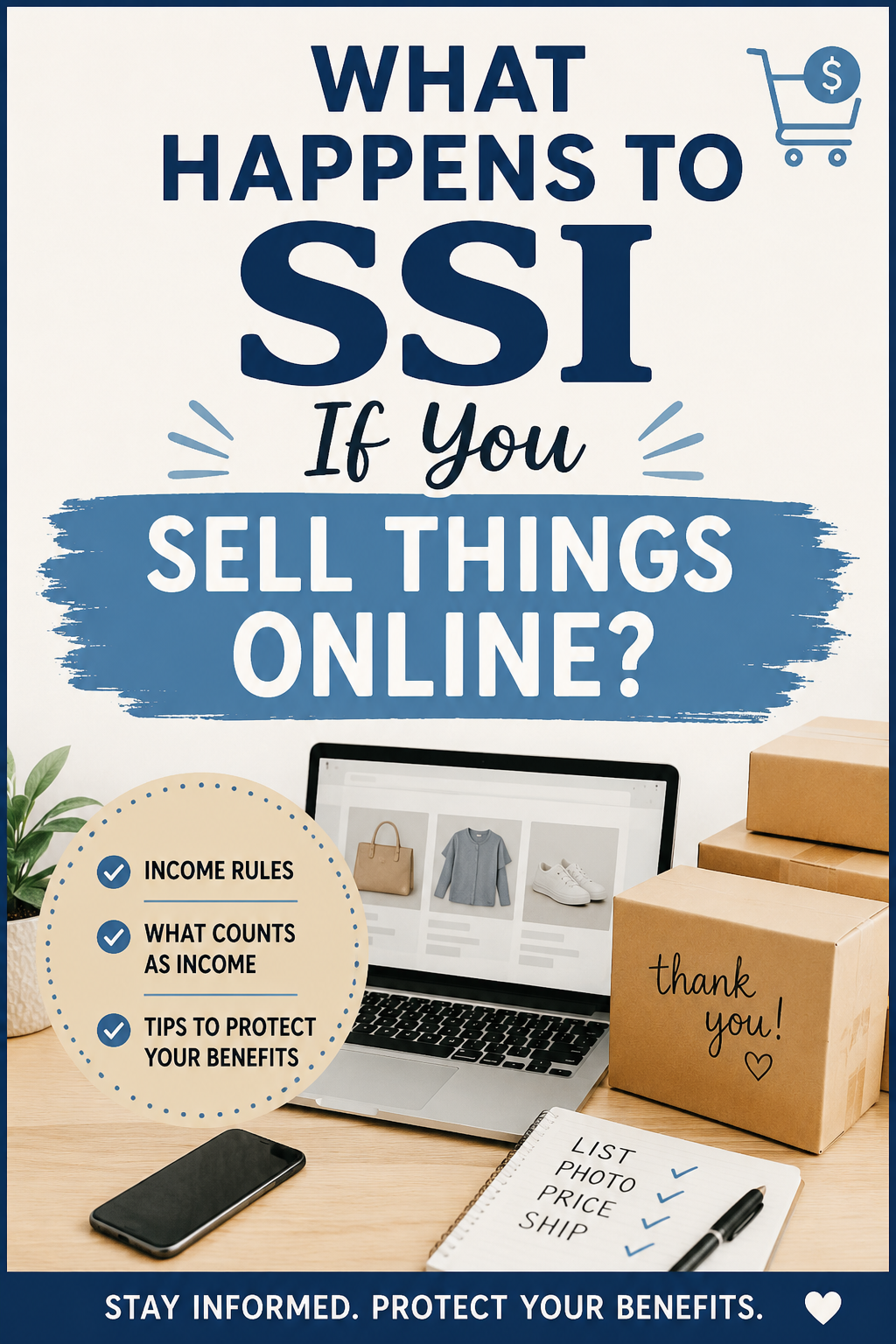


Selling things online has never been easier. From eBay and Facebook Marketplace to Poshmark, Mercari, Etsy, and Whatnot, people are making extra money from home every day. But if you receive Supplemental Security Income (SSI), you may be wondering whether selling online could affect your benefits.
The short answer is: it depends.
Sometimes selling items online is perfectly fine. Other times, Social Security may count it as income or even consider it a business. The details matter more than most people realize.
SSI Has Strict Income and Asset Rules
SSI is a needs-based program. That means your monthly benefit amount is tied to your income and resources.
In 2026, people on SSI generally must:
- Stay under resource limits
- Report changes in income
- Follow Social Security reporting requirements
This is where online selling can become complicated.
Social Security may look at:
- How often you sell
- What you sell
- Whether you make a profit
- Whether it looks like a business
- How much money flows through your accounts
Selling one old toaster is very different from running a full-time resale shop out of your garage.
Selling Personal Items Usually Is Not a Problem
If you are simply getting rid of your own belongings, Social Security often does not treat that the same as earned income.
Examples include:
- Selling old clothes
- Selling used furniture
- Cleaning out a storage unit
- Selling collectibles you already owned
- Selling household items at a loss
In many cases, this is considered converting a resource from one form into another.
For example:
You sell a used couch for $100. You now have $100 instead of the couch. Since you probably sold it for less than you originally paid, there may not actually be any profit involved.
That is very different from buying couches specifically to resell for income.
Profit Matters More Than Sales Amount
A lot of people panic when payment apps send tax forms or marketplaces report sales totals.
But Social Security is generally more concerned about actual profit and work activity than gross sales numbers alone.
For example:
- You sell old clothes online for $500 total
- You originally paid $1,200 for them
You did not really make money. You simply recovered part of what you spent.
On the other hand:
- You buy clearance products for resale
- You regularly flip items online
- You earn ongoing profits
That starts looking more like self-employment income.
When Online Selling Becomes a Business
Social Security may view your activity as a business if you:
- Buy inventory to resell
- Sell items regularly
- Keep business records
- Advertise products
- Have repeat customers
- Intend to make a profit
At that point, your earnings could count as self-employment income for SSI purposes.
This can affect:
- Your monthly SSI payment
- Medicaid eligibility in some states
- Reporting requirements
- Future reviews of your case
Even small side hustles can trigger reporting obligations.
Payment Apps and Tax Forms Can Create Confusion
Many online platforms now report payment activity to the IRS.
You may receive forms like:
- 1099-K forms
- Marketplace income summaries
- Payment processor statements
This does not automatically mean you violated SSI rules.
But it does mean there is now a paper trail.
If Social Security later reviews your case, they may ask questions about:
- Deposits
- Sales activity
- Business expenses
- Inventory
- Profit and loss
Good recordkeeping becomes extremely important.
Keep Records of What You Sold
If you receive SSI and sell online, keep documentation whenever possible.
Helpful records include:
- Original purchase receipts
- Screenshots of listings
- Shipping expenses
- Marketplace fees
- Notes about personal property sold
- Bank records
This can help show whether you were simply selling personal items or operating a business.
Without records, things can get messy fast.
Be Careful With Inventory and Bank Balances
SSI resource limits can create another issue.
If you keep too much cash in your account at the end of the month, you could accidentally exceed SSI asset limits.
This sometimes happens when people:
- Hold inventory
- Let sales money pile up
- Transfer money between apps
- Keep large balances in PayPal, Venmo, or Cash App
Remember that Social Security may count money sitting in payment apps as a resource.
Some People Accidentally Trigger Reviews
A surprising number of SSI recipients run into problems because they assume small online sales “do not count.”
Sometimes the issue is not the selling itself. It is the appearance of business activity.
Things that can raise questions include:
- Daily shipping activity
- Large numbers of listings
- Frequent deposits
- Inventory photos
- Repeat sales patterns
This does not automatically mean benefits will stop. But it can lead to requests for more information.
What Should You Report to Social Security?
If you begin regularly selling online for profit, it is safest to report the activity.
Especially if:
- You are buying items to resell
- You expect ongoing income
- You receive tax forms
- You consider it a side business
Reporting early is usually much better than dealing with an overpayment later.
SSI overpayments can become very stressful and expensive.
What About SSDI?
SSDI works differently than SSI because it is not based on financial need or asset limits. That means people on SSDI usually do not have to worry about how much money they have in the bank, and selling personal belongings typically is not an issue.
However, online selling can still become a problem if Social Security believes you are performing substantial work activity. If you regularly buy inventory, manage listings, ship products daily, or run an active resale business, Social Security could view that as self-employment. In that case, they may evaluate whether your work activity exceeds Substantial Gainful Activity (SGA) limits or affects your disability status. Even if profits are small, the amount of time and effort you put into the business can matter during a disability review.
Selling personal belongings online usually is not the same thing as running a business. But once selling becomes regular, profitable, or inventory-based, Social Security may start treating it differently.
The biggest mistake people make is assuming nobody will notice online sales activity anymore. Between payment apps, marketplace records, and tax reporting, online selling leaves a much larger digital trail than it used to.
If you receive SSI and want to start reselling online, staying organized and understanding the rules can help you avoid unpleasant surprises later.