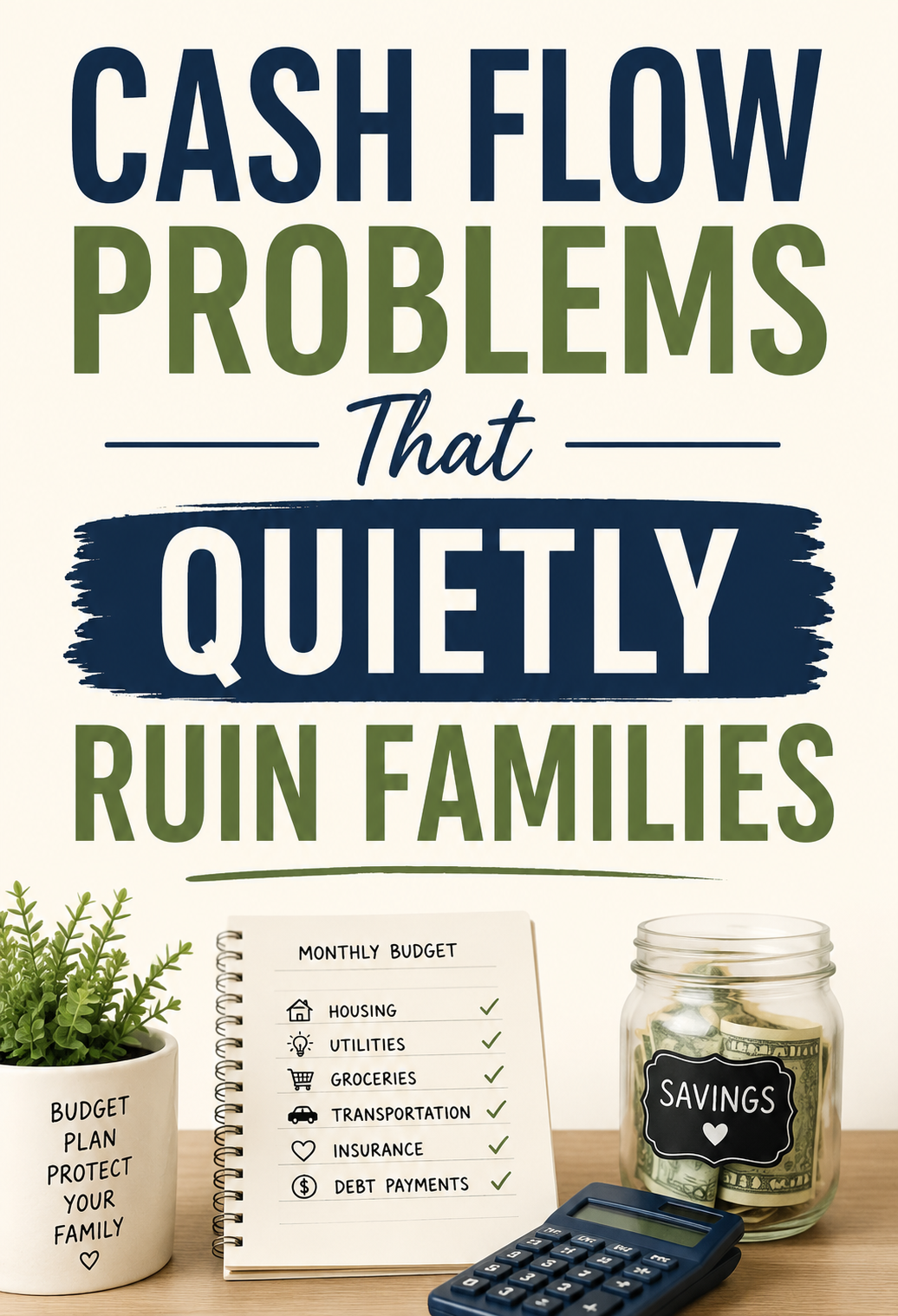


A lot of families look financially “fine” from the outside. The bills are getting paid. There’s food in the fridge. Maybe there’s even a decent income coming in every month.
But behind the scenes, the math is barely holding together.
That’s the thing about cash flow problems. They often don’t show up all at once like a dramatic financial movie scene with foreclosure notices blowing through the air. Instead, they creep in quietly. A late fee here. A maxed-out credit card there. A paycheck that disappears before the month is halfway over.
Over time, poor cash flow can slowly wear down a family’s finances, relationships, mental health, and future stability.
Contents
- What Is a Cash Flow Problem?
- The Warning Signs Often Start Small
- Lifestyle Creep Is a Silent Cash Flow Killer
- Debt Payments Slowly Drain the Household
- Irregular Income Creates Constant Stress
- Poor Cash Flow Hurts Relationships Too
- Emergencies Become Financial Explosions
- How Families Can Start Fixing Cash Flow Problems
- Final Thoughts
What Is a Cash Flow Problem?
Cash flow is simply the movement of money in and out of your household.
When more money is flowing out than coming in, or when timing issues make it hard to cover expenses consistently, cash flow problems begin.
You can technically earn a good income and still have terrible cash flow. That’s why some families making six figures still live paycheck to paycheck while others with lower incomes stay stable.
Cash flow problems are often about timing, debt, spending habits, and financial structure rather than just income alone.
The Warning Signs Often Start Small
Most families don’t wake up one day in financial disaster mode. It usually begins with little warning signs that seem manageable at first.
Some common examples include:
- Constant overdraft fees
- Using credit cards for groceries
- Borrowing money between paychecks
- Falling behind on utility bills
- Only making minimum payments
- Avoiding checking bank balances
- Feeling panic before bills hit
- Needing tax refunds to catch up
- Moving money between accounts to survive the month
These habits can quietly become normal over time. Like financial quicksand, the deeper you get, the harder it becomes to climb out.
Lifestyle Creep Is a Silent Cash Flow Killer
One of the biggest causes of cash flow problems is lifestyle creep.
This happens when spending rises every time income increases.
A raise turns into a larger car payment. A better job leads to more subscriptions, dining out, vacations, or financing purchases. Before long, the extra income disappears into new monthly obligations.
Families often assume they have an income problem when they actually have a spending structure problem.
The danger is that fixed monthly expenses become heavier and heavier. Then one emergency, job loss, medical issue, or unexpected repair can knock everything sideways like dominoes in a windstorm.
Debt Payments Slowly Drain the Household
Debt is one of the biggest cash flow leaks in America.
Monthly payments on credit cards, buy now pay later loans, personal loans, medical debt, and car loans can quietly eat hundreds or even thousands of dollars every month.
The frustrating part is that many families barely notice how much cash flow debt is stealing because the payments become routine.
A household might have:
- $85 for subscriptions
- $120 for BNPL payments
- $450 car payment
- $300 in credit card minimums
- $200 personal loan payment
Suddenly, over $1,000 a month is gone before groceries or utilities are even considered.
Irregular Income Creates Constant Stress
Families with freelance income, commission work, gig jobs, seasonal employment, or self-employment often face unstable cash flow cycles.
One month may feel comfortable while the next feels like survival mode.
Without careful planning, irregular income creates problems like:
- Missing due dates
- Overcommitting during good months
- Panic spending after large checks
- Difficulty saving consistently
- Reliance on credit during slow periods
This financial unpredictability can become emotionally exhausting. It’s hard to relax when every month feels like a puzzle with missing pieces.
Poor Cash Flow Hurts Relationships Too
Money stress quietly affects marriages, parenting, and mental health.
Arguments about spending, bills, and debt are often symptoms of deeper cash flow strain.
Parents under financial pressure may become:
- More anxious
- Easily irritated
- Emotionally exhausted
- Unable to sleep well
- Distracted at work
- Less patient with children
Even kids can sense financial instability in a household. They may overhear arguments, notice stress, or feel anxiety around money themselves.
Cash flow problems don’t just drain bank accounts. They drain emotional energy too.
Emergencies Become Financial Explosions
Families with poor cash flow usually have very little financial margin.
That means ordinary emergencies suddenly become major crises.
A broken transmission. A medical bill. A reduced work schedule. A child needing braces. A leaking roof.
Without emergency savings or breathing room in the budget, many families end up turning to:
- Credit cards
- Payday loans
- Cash advances
- BNPL apps
- Borrowing from family
- Retirement withdrawals
This creates a dangerous cycle where temporary fixes create even worse future cash flow problems.
How Families Can Start Fixing Cash Flow Problems
Improving cash flow doesn’t always require earning dramatically more money overnight.
Often, the biggest improvements come from reducing financial pressure points and creating more breathing room.
Some helpful starting points include:
Track Every Dollar for One Month
Many families are shocked when they see where money is actually going.
Small recurring expenses often add up like tiny financial termites chewing through the walls.
Lower Fixed Monthly Expenses
Reducing recurring bills can instantly improve cash flow.
This might include:
- Refinancing debt
- Cancelling subscriptions
- Switching insurance providers
- Downsizing vehicles
- Negotiating bills
- Cutting unused memberships
Build a Small Emergency Buffer
Even saving $500 to $1,000 can help prevent small emergencies from becoming financial disasters.
Align Bill Due Dates With Paydays
Some companies allow due date changes. Spreading bills more evenly throughout the month can reduce cash crunch periods.
Avoid Financing Everyday Life
Using debt for groceries, gas, or utilities is usually a sign that cash flow needs immediate attention.
Final Thoughts
Cash flow problems rarely arrive with flashing warning lights. They usually sneak into families slowly through debt, overspending, unstable income, and rising monthly obligations.
The good news is that cash flow can improve with small, consistent changes over time.
Families don’t necessarily need perfection. They need breathing room.
And sometimes the difference between financial chaos and financial stability is simply creating enough margin so life’s normal surprises stop feeling like catastrophes wrapped in receipts.