
Chinese New Year isn’t just about fireworks, festive meals, and colorful decorations. It’s also a celebration filled with fascinating money traditions designed to attract wealth, encourage prosperity, and bring good fortune for the year ahead.
From giving money in red envelopes to avoiding certain financial activities on New Year’s Day, many of these centuries-old customs offer interesting perspectives on money management, generosity, and financial fresh starts.
Whether you celebrate Chinese New Year or are simply curious about these cultural traditions, here’s what you should know.
When Is Chinese New Year?
Chinese New Year, also known as the Spring Festival, follows the traditional Chinese lunisolar calendar rather than the Gregorian calendar. This means the date changes every year, typically falling between January 21 and February 20.
Upcoming Chinese New Year dates include:
| Year | Chinese New Year | Zodiac Animal |
|---|---|---|
| 2027 | February 6 | Goat |
| 2028 | January 26 | Monkey |
| 2029 | February 13 | Rooster |
| 2030 | February 3 | Dog |
| 2031 | January 23 | Pig |
| 2032 | February 11 | Rat |
Each year is associated with one of 12 Chinese zodiac animals, along with one of five elements: wood, fire, earth, metal, and water.
15 Chinese New Year Money Traditions
While traditions vary by family, region, and community, the following customs are commonly associated with wealth, happiness, and prosperity.
1. Giving Money in Red Envelopes
One of the most recognizable Chinese New Year traditions is giving red envelopes filled with money. Known as hongbao in Mandarin and lai see in Cantonese, these envelopes symbolize good wishes, happiness, and prosperity.
Traditionally, married adults give red envelopes to children and unmarried younger relatives. Employers may also give them to employees.
The red color symbolizes good fortune and protection from negative influences.
2. Giving Lucky Amounts of Money
The amount of money placed inside a red envelope can be just as meaningful as the envelope itself.
Popular amounts in U.S. dollars might include:
-
$6
-
$8
-
$18
-
$28
-
$68
-
$88
-
$168
-
$888
There is no universal required amount. Your relationship with the recipient, local customs, and personal budget should determine how much you give.
3. Using Crisp, New Bills
Many families prefer to place crisp, new paper money inside red envelopes rather than old, wrinkled bills or loose change.
New bills symbolize a fresh start and are considered a thoughtful way to present a monetary gift.
If you plan to participate in this tradition, you may want to visit your bank ahead of the holiday to request new bills.
4. Choosing Lucky Chinese Numbers
Certain numbers are considered especially lucky in Chinese culture because their pronunciation resembles words associated with positive meanings.
| Number | Traditional Meaning |
|---|---|
| 2 | Harmony and good things coming in pairs |
| 3 | Growth or life |
| 6 | Smooth progress and success |
| 8 | Wealth and prosperity |
| 9 | Longevity and lasting good fortune |
| 88 | Double prosperity |
| 168 | Prosperity all the way |
| 888 | Abundant prosperity |
The number eight is particularly popular because its pronunciation sounds similar to a word associated with becoming wealthy.
These associations can vary across Chinese languages and dialects.
5. Avoiding Unlucky Numbers
Just as some numbers are associated with prosperity, others are traditionally avoided.
The number four is considered unlucky because its pronunciation resembles the word for death in several Chinese languages.
Some people avoid giving monetary gifts in amounts such as $4, $14, or $44.
This belief can also influence phone numbers, license plates, apartment numbers, and even real estate prices in some communities.
6. Paying Off Debts Before Chinese New Year
One Chinese New Year money tradition that fits perfectly with modern personal finance is settling debts before the new year begins.
According to tradition, entering the new year with unpaid debts may symbolize carrying financial troubles into the coming year.
Even if you don’t follow the superstition, it’s a great excuse to:
-
Pay outstanding bills.
-
Repay money borrowed from friends or family.
-
Review credit card balances.
-
Cancel unused subscriptions.
-
Create a debt repayment plan.
Starting the new year with a clearer financial picture is beneficial regardless of your cultural beliefs.
7. Avoiding Borrowing or Lending Money on New Year’s Day
Some traditional beliefs discourage borrowing or lending money on Chinese New Year’s Day.
The idea is that financial activities on the first day may set the tone for the rest of the year.
Of course, you shouldn’t delay essential payments or financial obligations because of a superstition. Instead, consider this tradition an opportunity to plan ahead and build an emergency fund.
8. Avoiding Sweeping Away Good Fortune
Many families thoroughly clean their homes before Chinese New Year to symbolically remove bad luck from the previous year.
However, sweeping or taking out the garbage on New Year’s Day is traditionally avoided by some families because it may symbolize sweeping away newly arrived wealth and good fortune.
From a frugal living perspective, pre-holiday cleaning is also a great opportunity to declutter and sell unwanted belongings for extra cash.
9. Eating Foods That Symbolize Wealth
| Food | Symbolic Meaning |
|---|---|
| Dumplings | Wealth, resembling ancient gold and silver ingots |
| Spring rolls | Gold bars and prosperity |
| Fish | Surplus and abundance |
| Mandarin oranges | Good luck and wealth |
| Sticky rice cake | Rising success |
| Long noodles | Longevity |
Preparing these symbolic foods at home can also be an affordable alternative to dining out.
10. Welcoming the God of Wealth
Caishen, the Chinese God of Wealth, is an important figure in many Chinese New Year celebrations.
Some families and businesses display images or statues of Caishen, light incense, or participate in ceremonies intended to welcome prosperity.
The fifth day of Chinese New Year is particularly associated with welcoming the God of Wealth in many traditions. Some businesses also traditionally reopen around this time.
11. Displaying Lucky Coins and Gold Ingots
Traditional Chinese coins with square holes, often tied together with red ribbon, are popular symbols of prosperity.
Decorative gold ingots, known as yuanbao, are also commonly displayed during Chinese New Year.
These items can be found in homes, offices, stores, and businesses as symbolic reminders of financial abundance.
You don’t need to purchase expensive decorations to participate. Inexpensive replicas and homemade decorations can serve the same symbolic purpose.
12. Decorating With Red and Gold
Red and gold are two of the most prominent colors associated with Chinese New Year.
Red represents happiness and good fortune, while gold is associated with wealth and prosperity.
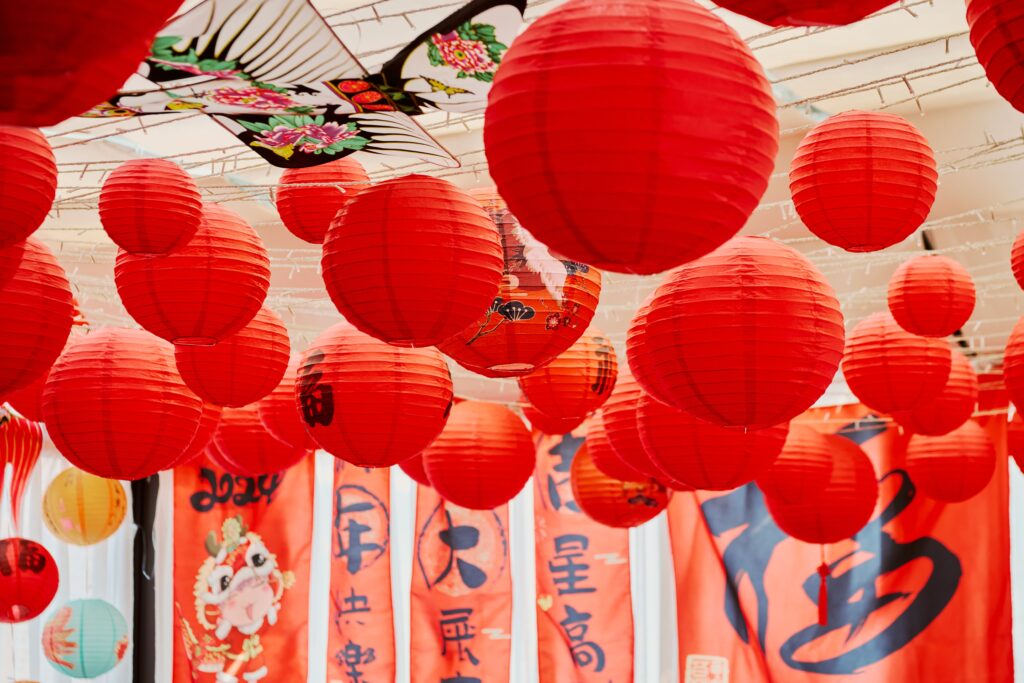
Popular decorations include red lanterns, paper cutouts, decorative coins, banners, and gold ingots.
To save money, shop after-holiday clearance sales, reuse decorations each year, or make your own using inexpensive craft supplies.
13. Displaying a Money Tree
Money trees are popular gifts for Chinese New Year, business openings, and housewarming celebrations.
The braided money tree plant, scientifically known as Pachira aquatica, is a common plant associated with prosperity and good fortune in modern feng shui practices.
Decorative trees featuring coins, gold ornaments, or red envelopes are also popular.
While a money tree won’t magically increase your bank balance, it can serve as a visual reminder of your savings goals.
14. Giving Digital Red Envelopes
Traditional red envelopes have entered the digital age.
Mobile payment platforms such as WeChat Pay and Alipay allow users to send virtual red envelopes to friends, relatives, and groups.
Some digital red envelope features even distribute money randomly among multiple recipients, adding an element of surprise.
Digital gifting can be convenient, especially for families who live far apart, although availability depends on the platform and country.
15. Starting the Year With a Full Wallet
Some people like to begin Chinese New Year with money in their wallets to symbolize abundance throughout the coming year.
Rather than spending money to attract money, consider putting this tradition into practice by making a deposit into your savings account.
Even a small amount can represent the beginning of a healthier financial future.
Chinese Lucky Money Savings Calculator
Want to incorporate Chinese lucky numbers into your savings goals? Try a savings challenge based on the lucky number eight.
Here is how much you could save by setting aside different lucky amounts:
| Savings Amount | Every Week for One Year | Every Month for One Year |
|---|---|---|
| $8 | $416 | $96 |
| $18 | $936 | $216 |
| $28 | $1,456 | $336 |
| $68 | $3,536 | $816 |
| $88 | $4,576 | $1,056 |
| $168 | $8,736 | $2,016 |
| $188 | $9,776 | $2,256 |
Choose an amount that fits your budget. The real financial benefit comes from consistently saving money, not from the number itself.
What Is Your Chinese Lunar Age?
Another interesting aspect of Chinese culture is the traditional method of calculating age.
Under the traditional Chinese age-counting system, known as xusui, a baby is considered one year old at birth, and everyone gains another year of age at Chinese New Year rather than on their individual birthdays.
Depending on your birth date and the current date, your traditional Chinese lunar age may be one or two years older than your Western age.
Traditional lunar age is sometimes referenced in cultural customs, astrology, and celebrations, although modern official age calculations generally use completed years since birth.
Chinese Lunar Age Calculator
Enter your birth date to discover your traditional Chinese lunar age.
Your results will appear here.
Free calculator by SavingK.com
Use our free Chinese Lunar Age Calculator to discover how old you are according to the traditional Chinese age-counting system. Unlike the Western method of calculating age, traditional Chinese lunar age begins at one at birth and increases by one each Chinese New Year rather than on your birthday.
This means your Chinese lunar age is typically one or two years older than your Western age.
Chinese Zodiac Signs and Wealth
Each of the 12 Chinese zodiac animals has traditional personality traits associated with it, including characteristics related to money, business, and success.
| Chinese Zodiac | Traditional Financial Traits |
|---|---|
| Rat | Resourceful and opportunistic |
| Ox | Hardworking and financially disciplined |
| Tiger | Bold and willing to take risks |
| Rabbit | Cautious and security-conscious |
| Dragon | Ambitious and confident |
| Snake | Strategic and thoughtful |
| Horse | Independent and entrepreneurial |
| Goat | Creative and generous |
| Monkey | Inventive and adaptable |
| Rooster | Organized and detail-oriented |
| Dog | Loyal and responsible |
| Pig | Generous and comfort-loving |
These descriptions are based on cultural folklore and should be enjoyed for entertainment rather than used to make financial decisions.
How Much Money Should You Give in a Chinese Red Envelope?
There is no set amount that everyone is expected to give. Here are some illustrative, budget-friendly suggestions in U.S. dollars.
| Recipient | Suggested Amount |
|---|---|
| Young children | $6–$18 |
| Nieces and nephews | $18–$28 |
| Older children and teenagers | $18–$88 |
| Adult relatives | $28–$88+ |
| Parents and grandparents | $68–$168+ |
| Employees | $8–$88+ |
These are examples rather than cultural requirements. Family traditions, regional customs, and individual financial circumstances vary considerably.
Remember, the meaning behind the gift is more important than the dollar amount. Never go into debt to give lucky money.
Frequently Asked Questions
Why is eight considered a lucky money number?
The pronunciation of eight in Chinese resembles words associated with wealth and prosperity, making it a popular number for monetary gifts, business names, and important celebrations.
Can you give $20 in a Chinese red envelope?
Yes. While amounts containing lucky numbers are popular, $20 is perfectly acceptable in many situations. Customs vary by family and region.
Can non-Chinese people give red envelopes?
Yes. Giving red envelopes respectfully is a wonderful way to participate in Chinese New Year celebrations, particularly when invited by friends, relatives, or coworkers.
Is it rude to open a red envelope immediately?
Traditionally, recipients often wait until they are in private to open their red envelopes rather than opening them in front of the giver.
What is the luckiest color for money in Chinese culture?
Gold is commonly associated with wealth and prosperity, while red symbolizes happiness and good fortune. Combining the two colors is especially popular during Chinese New Year.
Do Chinese money traditions actually attract wealth?
There is no scientific evidence that lucky numbers, colors, or decorations increase wealth. However, traditions that encourage saving, repaying debt, generosity, and financial planning can have practical financial benefits.
Final Thoughts
Chinese New Year money traditions are a fascinating combination of cultural symbolism, generosity, family values, and optimism about the future.
While lucky numbers and red envelopes may not guarantee financial success, some of these customs offer valuable lessons that anyone can embrace. Paying off debt, saving consistently, giving within your means, and starting the year with clear financial goals are all habits worth celebrating.
You don’t need a lucky coin to build wealth, but a little inspiration to save more money never hurts.
Gong Xi Fa Cai! Wishing you happiness and prosperity!