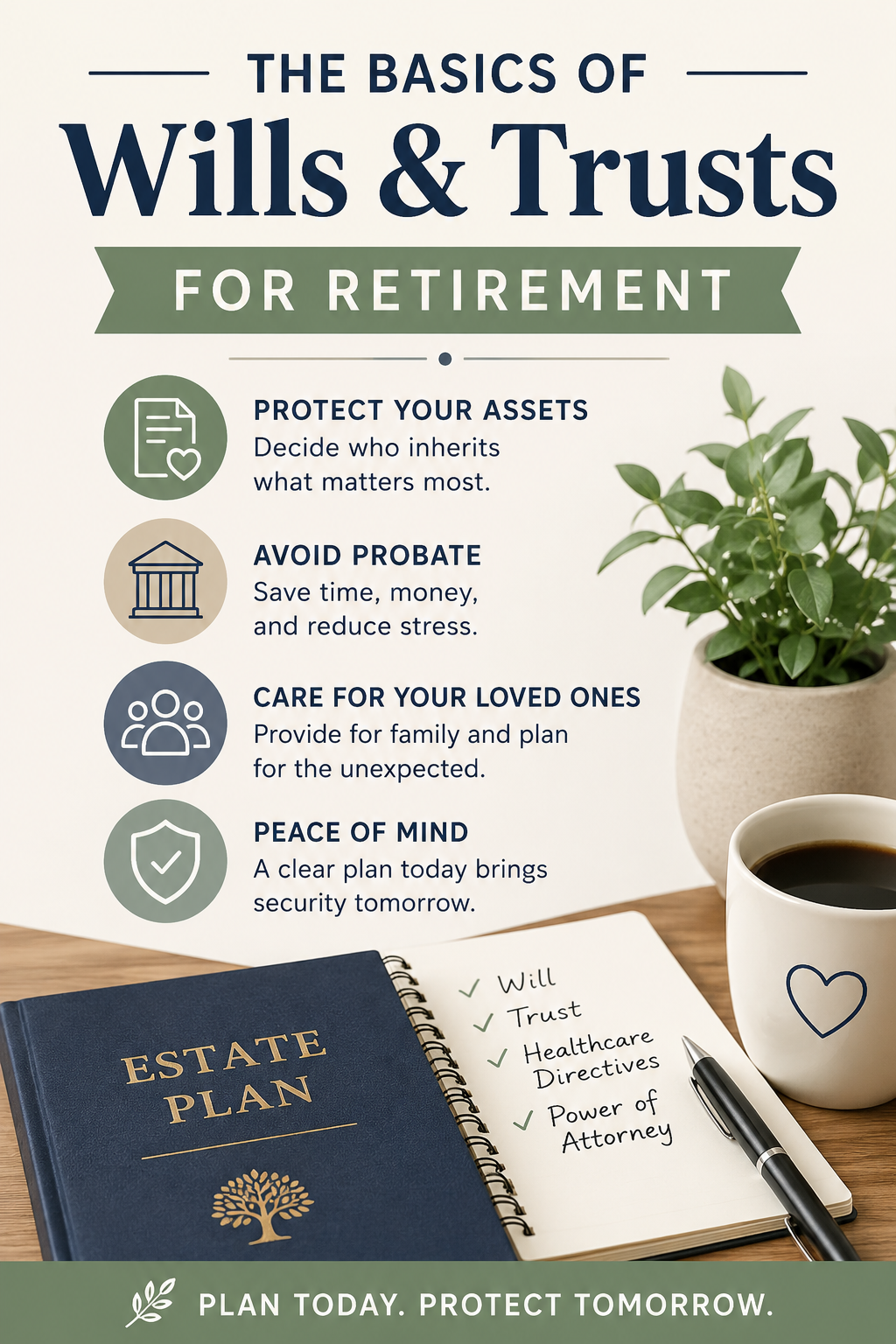


Planning for retirement is not just about saving money. It is also about deciding what happens to your money, property, and personal wishes after you are gone. That is where wills and trusts come in.
Many people avoid estate planning because it sounds expensive or complicated. The truth is that understanding the basics can help protect your family, reduce stress, and prevent financial chaos later on. Think of it like building a financial “instruction manual” for the people you leave behind.
What Is a Will?
A will is a legal document that explains how your assets should be distributed after your death. It can include things like:
- Who inherits your money and property
- Who takes care of minor children
- Who manages your estate
- Funeral or burial wishes
The person responsible for carrying out your wishes is called the executor.
Without a will, state laws decide how your assets are divided. That process can take time, cost money, and sometimes create family disputes worthy of a courtroom reality show.
What Is a Trust?
A trust is a legal arrangement that allows someone to hold and manage assets for another person. The person creating the trust is called the grantor. The person managing it is the trustee.
Unlike a will, a trust can take effect while you are still alive.
Trusts are often used to:
- Avoid probate
- Control how and when assets are distributed
- Protect privacy
- Manage assets if you become incapacitated
There are many types of trusts, but the most common for retirement planning is a revocable living trust.
Wills vs. Trusts: What’s the Difference?
A will only takes effect after death. A trust can work during your lifetime and after death.
A will usually goes through probate court. Probate is the legal process of validating a will and distributing assets. Depending on the state, probate can be slow and expensive.
A trust often avoids probate entirely, which can save time and keep family matters private.
Here’s the easy version:
| Will | Trust |
|---|---|
| Takes effect after death | Can take effect immediately |
| Goes through probate | Often avoids probate |
| Public record | Usually private |
| Simpler and cheaper upfront | More complex and costly upfront |
For many retirees, having both a will and a trust makes sense.
Why Retirement Planning Should Include Estate Planning
Retirement accounts, pensions, home equity, savings, and personal belongings all become part of your estate. If you do not organize these assets ahead of time, your loved ones may face confusion later.
Estate planning can help:
- Protect your spouse or children
- Reduce legal complications
- Clarify healthcare wishes
- Prevent family conflicts
- Preserve more wealth for heirs
It is not just for wealthy families with yachts and secret wine cellars. Even modest estates benefit from clear planning.
Beneficiary Designations Matter Too
One of the biggest mistakes retirees make is assuming their will overrides everything.
Certain assets pass directly through beneficiary designations, including:
- 401(k)s
- IRAs
- Life insurance policies
- Some bank accounts
If your beneficiary forms are outdated, the wrong person could inherit those funds, even if your will says otherwise.
Review your beneficiaries regularly, especially after major life events like marriage, divorce, or the death of a spouse.
When a Trust May Make More Sense
Not everyone needs a trust, but certain situations make trusts especially useful.
A trust may help if you:
- Own property in multiple states
- Have a blended family
- Want to avoid probate delays
- Have a child with special needs
- Want more control over inheritance timing
- Value privacy
For example, a trust can distribute money gradually to younger beneficiaries instead of handing over a large lump sum all at once. That can help prevent “sports car at age 19” financial decisions.
Healthcare Directives and Power of Attorney
Estate planning is not only about what happens after death. It also covers what happens if you become unable to make decisions yourself.
Important documents often include:
Durable Power of Attorney
Allows someone to handle financial matters on your behalf.
Healthcare Power of Attorney
Lets someone make medical decisions if you cannot.
Living Will
Explains your wishes regarding life support and medical care.
Without these documents, family members may need court approval to act for you.
Common Estate Planning Mistakes
Many retirees delay estate planning for too long. Others create documents once and never update them.
Some common mistakes include:
- Not having a will
- Forgetting to update beneficiaries
- Leaving out digital accounts and passwords
- Naming the wrong executor or trustee
- Failing to communicate plans with family
- Assuming estate planning is only for the wealthy
Even a simple estate plan is usually better than no plan at all.
How Much Does Estate Planning Cost?
Costs vary depending on complexity and location.
Basic wills may cost a few hundred dollars. Trust-based estate plans can cost more, sometimes several thousand dollars.
While online templates exist, retirees with significant assets, blended families, or complicated situations may benefit from working with an estate planning attorney.
It may feel expensive upfront, but poor planning can cost families far more later.
Final Thoughts
Retirement planning is about more than building savings accounts. It is also about protecting the people and assets you worked hard for throughout your life.
A will gives instructions. A trust can add flexibility and protection. Together, they help create a smoother transition for your loved ones during an already difficult time.
Estate planning may not be the most exciting retirement task, but neither is leaving your family a paperwork scavenger hunt through filing cabinets and forgotten passwords. A little preparation today can make a huge difference tomorrow.