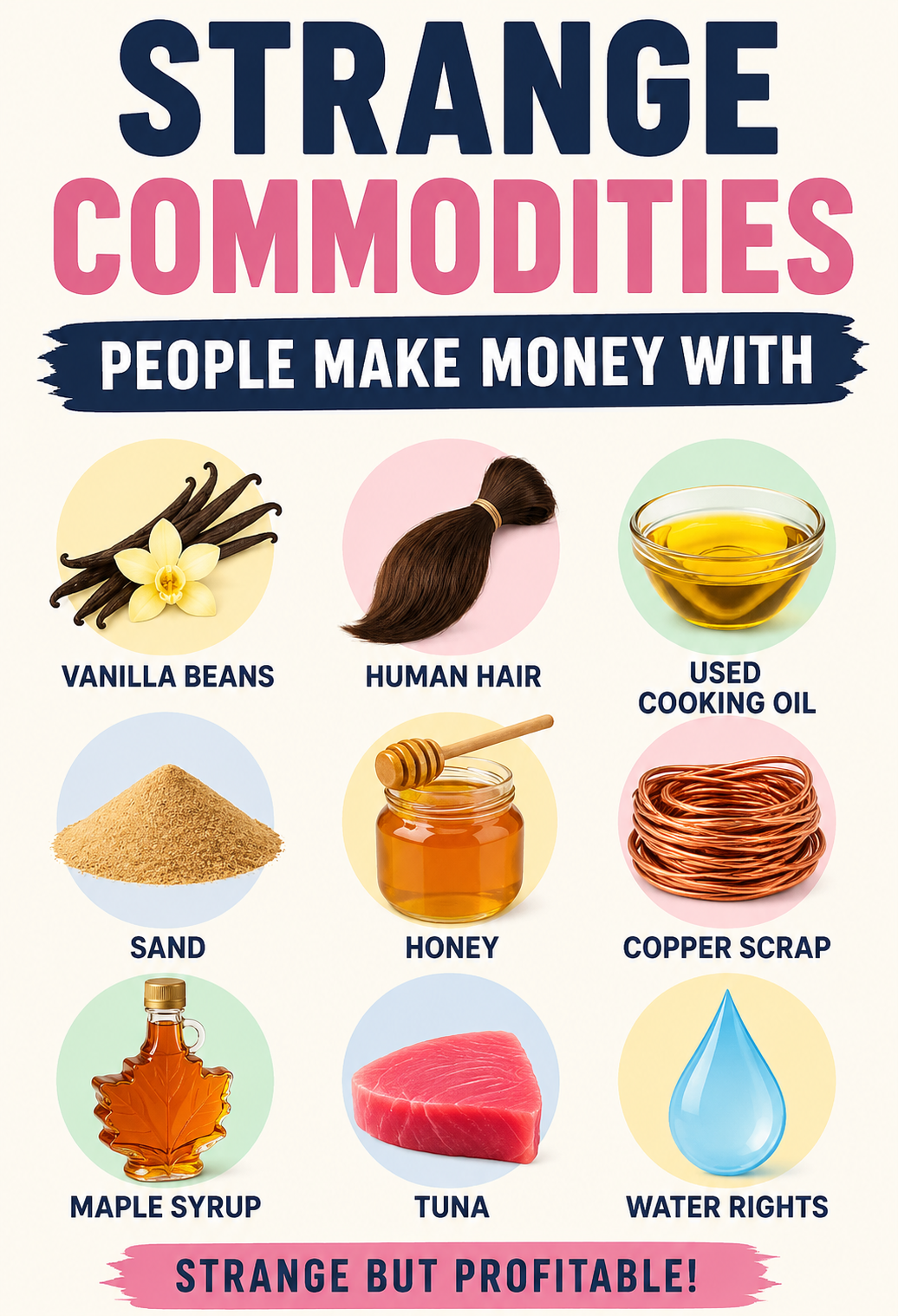

When most people think about commodities, they picture gold bars, barrels of oil, or giant fields of corn stretching toward the horizon. But the world of commodities is much stranger than that. Hidden behind everyday products are markets built around items you’d never expect people to trade, collect, or profit from.
Some commodities are practical. Others are bizarre. A few sound like they belong in a late-night trivia game. Yet people around the world are making real money from them every day.
Here are some of the strangest commodities people profit from and how these unusual markets actually work.
Vanilla Beans
Vanilla is one of the most expensive spices in the world. Real vanilla beans require hand pollination, careful harvesting, and months of processing before they can be sold.
Most of the world’s vanilla comes from Madagascar, where weather problems and crop shortages can cause prices to explode almost overnight. At times, vanilla has been worth more per pound than silver.
That high value has even led to vanilla bean thefts from farms. For investors and growers, though, rising demand for natural flavorings has made vanilla surprisingly profitable.
Human Hair
Human hair has become a global commodity thanks to the wig and extension industry. Long, untreated hair can sell for hundreds or even thousands of dollars depending on length, color, and quality.
Hair from certain regions is especially valuable because of texture or strength. Salons, brokers, and exporters all participate in this unusual supply chain.
Some people intentionally grow their hair for years specifically to sell it later. In a strange twist, your ponytail could technically become part of the global beauty market.
Used Cooking Oil
The greasy leftovers from restaurant fryers may not look valuable, but used cooking oil has become a hot commodity thanks to biodiesel fuel production.
Companies collect waste oil from restaurants and process it into renewable fuel. Because of increased demand, some cities have even experienced thefts involving grease dumpsters and storage containers.
For restaurants, selling used oil can create an extra stream of income instead of simply paying disposal costs.
Sand
Sand seems unlimited until you realize construction projects consume enormous amounts of it. Concrete, glass, roads, and electronics all rely heavily on specific types of sand.
Not all sand works for construction. Desert sand is often too smooth and rounded, so builders need sand from rivers, lakes, or coastal areas.
Demand has become so intense in some parts of the world that illegal sand mining operations now exist. It is one of the least glamorous but most important commodities on Earth.
Honey
Honey prices have climbed steadily as consumers look for natural sweeteners and local products. Specialty honey varieties, such as manuka honey, can sell for shocking prices.
Beekeepers also make money from pollination services. Farmers pay to have bees brought to orchards and crop fields because many foods depend on pollination to grow properly.
In some agricultural areas, bees are almost as valuable as the honey itself.
Copper Scrap
Old wires, plumbing pipes, and broken electronics can all contain valuable copper. Scrap yards buy copper by weight, and prices rise and fall based on global demand.
Copper is heavily used in construction, renewable energy systems, electric vehicles, and technology manufacturing. Because of that demand, even ordinary household junk can suddenly become worth salvaging.
High prices have occasionally fueled copper thefts from vacant buildings, construction sites, and even utility infrastructure.
Maple Syrup
Canada takes maple syrup so seriously that it actually maintains a strategic syrup reserve similar to how countries stockpile oil.
Poor harvest seasons can send syrup prices soaring. Producers carefully monitor supply levels because weather conditions have a huge effect on production.
There was even a famous maple syrup heist in Quebec involving millions of dollars worth of stolen syrup. Somewhere out there, a warehouse full of pancakes is still dreaming about it.
Tuna
Certain types of tuna, especially bluefin tuna, can sell for staggering amounts at seafood auctions.
High-end sushi restaurants compete for the best fish, and rare giant tuna have sold for hundreds of thousands of dollars. The market depends heavily on quality, freshness, and scarcity.
For some fishermen, one successful catch can mean an enormous payday.
Water Rights
In some regions, water itself has become a valuable commodity. Farmers, cities, and businesses buy and sell access to water supplies, especially in drought-prone areas.
As populations grow and climate patterns shift, water rights may become even more valuable in the future.
It sounds futuristic, but in many places, water is already treated like liquid real estate.
Cardboard
The explosion of online shopping has increased demand for recycled cardboard and paper products.
Warehouses, retailers, and recycling businesses can generate serious income from baled cardboard. Prices fluctuate depending on manufacturing demand and shipping activity.
It may not sound exciting, but mountains of flattened boxes quietly fuel a massive recycling economy.
Why Strange Commodities Matter
Unusual commodities reveal something important about the economy: value is often created where most people are not looking.
Many of these markets exist because industries need raw materials, ingredients, or recycled products that average consumers barely think about. Others become valuable because of scarcity, trends, or changing technology.
The next time you throw something away, pass a scrapyard, or drizzle syrup on pancakes, remember there may be an entire hidden marketplace behind it.
Sometimes the strangest commodities turn out to be the most profitable ones.
FAQ
What is considered a commodity?
A commodity is a basic good or raw material that can be bought and sold. Common examples include oil, wheat, gold, and natural gas, but many unusual products also function as commodities.
Can regular people invest in commodities?
Yes. People can invest through commodity ETFs, futures markets, mining stocks, agricultural investments, or by physically buying certain commodities like gold or silver.
What is the strangest commodity in the world?
That depends on who you ask, but unusual examples include human hair, used cooking oil, sand, water rights, and even maple syrup reserves.
Why do commodity prices change?
Commodity prices are affected by supply and demand, weather, global events, transportation costs, technology changes, and economic conditions.
Is commodity investing risky?
Yes. Commodity prices can change quickly and are often more volatile than traditional investments like index funds or bonds.