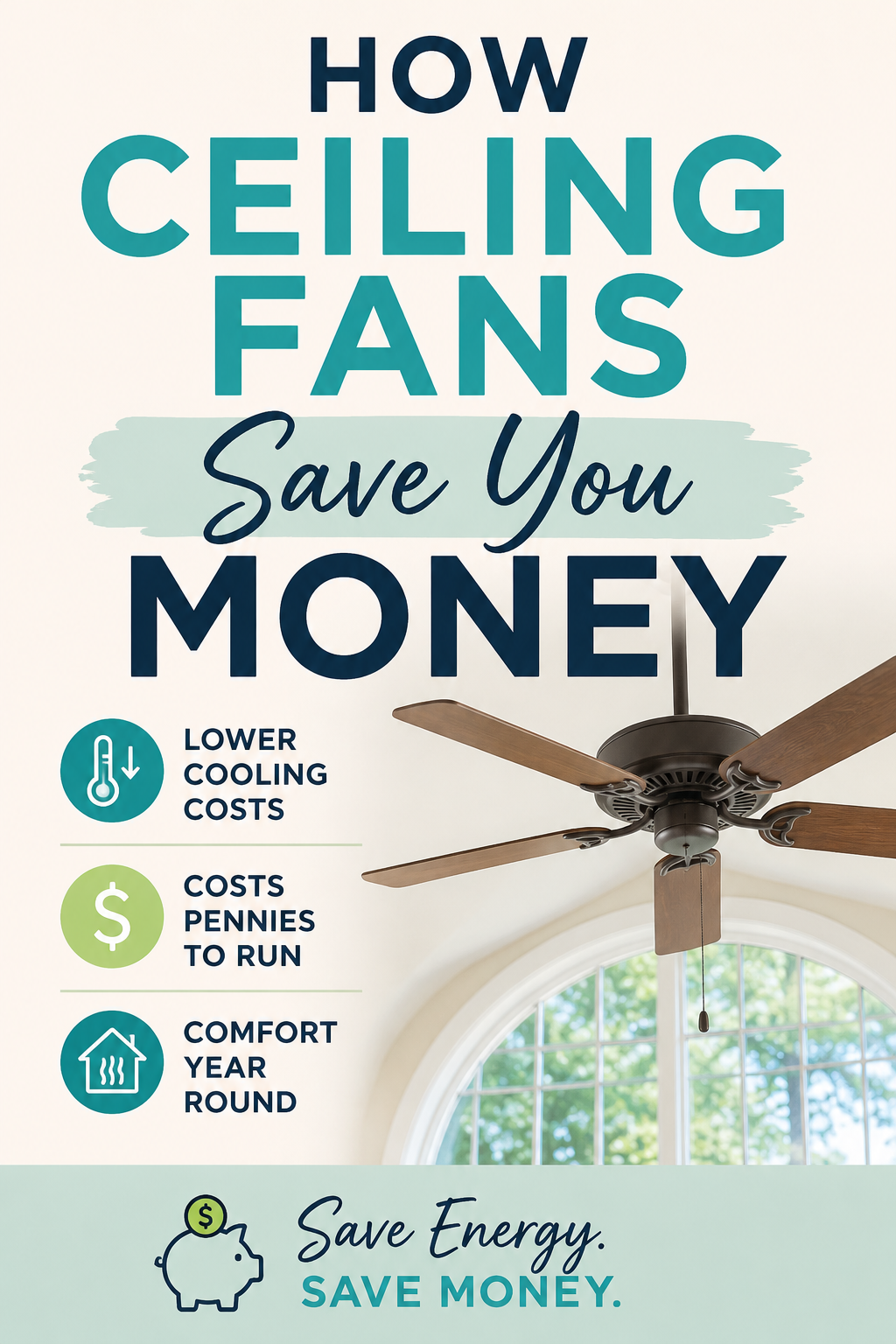
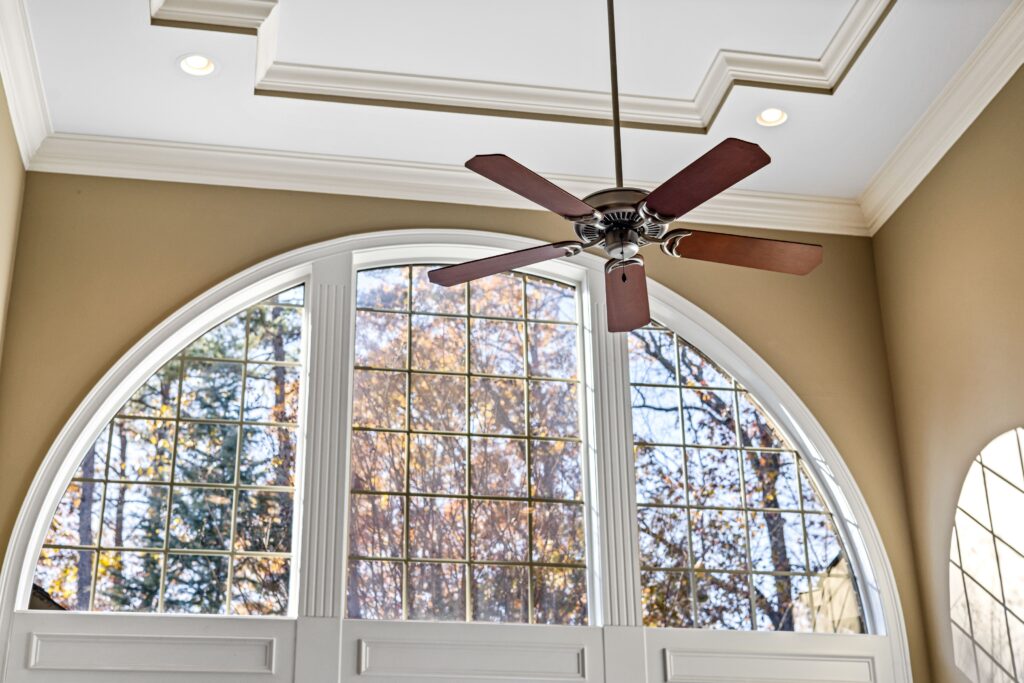

When summer temperatures rise, many people instinctively reach for the thermostat. But one of the easiest and most affordable ways to reduce your cooling costs is already hanging from your ceiling. Ceiling fans don’t actually lower the temperature of a room, but they can make you feel cooler, allowing you to rely less on your air conditioner and save money month after month.
Here’s how ceiling fans can help lower your energy bills and make your home more comfortable all year long.
How Ceiling Fans Work
Unlike an air conditioner, a ceiling fan doesn’t cool the air. Instead, it circulates the air, creating a wind chill effect on your skin. This moving air helps sweat evaporate more quickly, making you feel several degrees cooler than the actual room temperature.
Because you feel cooler, you can raise your thermostat without sacrificing comfort.
Raise Your Thermostat and Save
The biggest savings come from adjusting your thermostat while using ceiling fans.
A good rule of thumb is that you can increase your thermostat setting by about 4°F while maintaining the same comfort level when you’re in the room. Even a small increase can noticeably reduce how often your air conditioner runs.
For example:
- Set your thermostat to 78°F instead of 74°F.
- Run your ceiling fan while you’re in the room.
- Stay just as comfortable while using significantly less electricity.
Since central air conditioning is one of the largest energy expenses during the summer, even modest reductions in runtime can add up over the course of the season.
Ceiling Fans Cost Very Little to Operate
One of the best reasons to use ceiling fans is how inexpensive they are to run.
A typical ceiling fan uses only 15 to 75 watts of electricity, depending on its size and speed setting. By comparison, central air conditioners often use 2,000 to 5,000 watts while operating.
That means you can run several ceiling fans for hours and still spend only pennies in electricity each day.
Don’t Forget Winter Savings
Ceiling fans aren’t just for hot weather.
Most models include a small switch that changes the blade direction.
During the winter:
- Set the fan to rotate clockwise at a low speed.
- The fan gently pushes warm air that collects near the ceiling back down into the living space.
- Your heating system doesn’t have to work as hard to keep rooms comfortable.
This simple adjustment can improve comfort while helping reduce heating costs.
Only Run Fans When You’re in the Room
Here’s a common misconception:
Ceiling fans cool people, not rooms.
Because they only create a cooling sensation, running a fan in an empty room wastes electricity. Although ceiling fans use relatively little power, you’ll maximize your savings by turning them off when no one is using the space.
Installing wall timers or smart switches can help automate this.
Choose an Energy-Efficient Ceiling Fan
If you’re shopping for a new fan, look for these features:
- ENERGY STAR certified models
- DC motors, which use significantly less electricity than traditional AC motors
- LED light kits instead of incandescent bulbs
- Multiple speed settings
- Remote controls or smart home compatibility
While efficient models may cost a little more upfront, they typically use less electricity over their lifetime.
Keep Your Fan Clean
Dust buildup on fan blades reduces efficiency and can throw the fan off balance.
Every few months:
- Wipe down the blades.
- Tighten any loose screws.
- Make sure the fan is balanced.
- Reverse the direction seasonally.
A well-maintained fan lasts longer and performs better.
Ceiling Fans vs. Air Conditioning
| Ceiling Fan | Air Conditioner |
|---|---|
| Low operating cost | Higher operating cost |
| Uses far less electricity | Uses significantly more electricity |
| Creates a cooling effect | Actually cools the air |
| Best for occupied rooms | Cools the entire home |
| Helps reduce AC use | Main source of cooling |
The most cost-effective approach is often using both together. Ceiling fans allow you to rely less on your air conditioner while maintaining comfort.
How Much Money Can You Save?
Your actual savings depend on:
- Your local climate
- Electricity rates
- How often you use your air conditioner
- The size and efficiency of your HVAC system
- How many ceiling fans you use
For many households, simply raising the thermostat a few degrees while using ceiling fans can reduce summer cooling costs by several percent, especially during long periods of hot weather.
Additional Ways to Lower Cooling Costs
Pair ceiling fans with other energy-saving strategies for even bigger savings:
- Close blinds during the hottest part of the day.
- Seal air leaks around windows and doors.
- Replace HVAC filters regularly.
- Use a programmable or smart thermostat.
- Avoid using ovens during the hottest hours.
- Schedule annual air conditioner maintenance.
- Add attic insulation if needed.
Each improvement may seem small on its own, but together they can noticeably reduce your monthly utility bill.
Final Thoughts
Ceiling fans are one of the simplest upgrades you can make to save money at home. They cost very little to operate, improve comfort year-round, and can reduce how hard your heating and cooling systems have to work.
If you already have ceiling fans, use them strategically by adjusting your thermostat and remembering to turn them off when you leave the room. If you don’t have them yet, installing a few in the rooms you use most often can be a smart investment that pays for itself through lower energy bills over time.