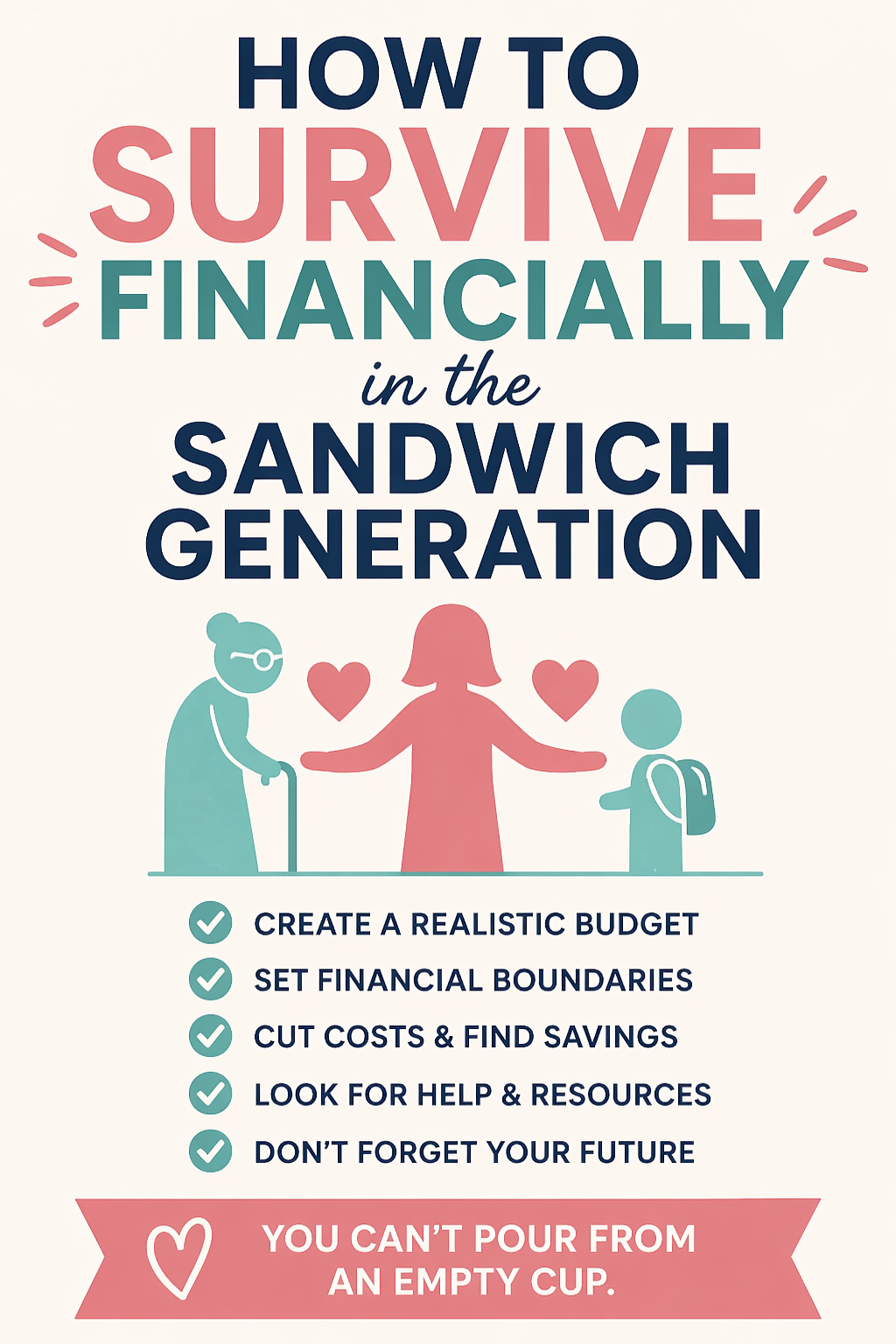


If your paycheck feels like it’s being stretched in two directions at once, you’re not alone. The sandwich generation is made up of people supporting their kids while also helping aging parents. And financially, it can feel like you’re carrying everything at once.
This isn’t just an emotional strain. It’s expensive. Between childcare, groceries, medical bills, housing, and unexpected costs, money can disappear fast without a clear plan.
The good news is you don’t need perfect circumstances; you just need a smarter approach.
Get a Clear Picture of Your Finances
Before you can make changes, you need to see exactly where your money is going. Look at your total monthly income, your fixed expenses like housing and insurance, and your variable spending like food and gas. Then factor in what you’re contributing to your kids and your parents.
A lot of people underestimate how much they’re actually spending to support others. Once everything is laid out, it becomes much easier to make decisions that aren’t based on guesswork.
Set Financial Boundaries That Actually Stick
Helping family doesn’t mean sacrificing your own financial future. This is one of the hardest realities to accept, but also one of the most important.
You may need to set a monthly limit on what you can contribute, say no to certain expenses, or ask siblings to share the responsibility. Support should be intentional, not open-ended. When there’s no structure, it’s easy to overspend without realizing it.
Setting boundaries isn’t selfish; it’s what makes long-term support possible.
Build a Budget That Reflects Reality
A basic budget often falls apart when you’re supporting more than just your own household. Instead, think of your budget as covering multiple layers: your home, your kids, and your parents.
Break your spending into a few clear categories like household expenses, kids’ costs, and parent support. Add in savings and retirement as non-negotiables, even if the amounts are small. Treating family support as a defined expense instead of “whatever comes up” can prevent financial drift.
Cut Costs Where It Makes a Difference
You don’t need to cut everything; just focus on the areas that actually move the needle.
Start by reviewing your recurring bills. Many people can lower internet, insurance, or phone costs just by asking. Look at subscriptions you rarely use, switch to generic brands where it makes sense, and consider buying shared household items in bulk.
Medical expenses are another big one. Always review bills for errors and ask about discounts or payment options. Small adjustments here can add up quickly when you’re managing multiple sets of expenses.
Look for Help With Care Costs
One of the biggest mistakes people make is assuming they have to cover everything themselves. In reality, there are programs designed to help.
Depending on your situation, your parent may qualify for Medicaid assistance, veterans benefits, or local services that help with meals, transportation, or in-home care. Some states even offer programs that pay family caregivers.
It takes a little time to research, but the savings can be significant.
Don’t Put Your Own Future on Hold
It’s easy to pause your own financial goals when everyone else needs help, but that can backfire quickly.
Try to keep contributing something to retirement, even if it’s a small amount. Maintain an emergency fund so unexpected costs don’t turn into debt. The goal isn’t perfection—it’s consistency.
Your future still matters, even while you’re helping others.
Find Ways to Bring in Extra Income
If cutting expenses isn’t enough, bringing in a little extra income can relieve some pressure.
Look for flexible options that fit around your schedule. Reselling is a natural fit for a lot of people because you can do it on your own time. Selling items you no longer use, picking up occasional freelance work, or taking on small side gigs can add a few hundred dollars a month without overwhelming your schedule.
That extra cushion can make a big difference.
Have the Conversations Most People Avoid
Money stress often grows because no one is talking about it.
Have an honest conversation with your parents about their finances, what they can contribute, and what future care might look like. It’s also important to make sure key documents like power of attorney and medical directives are in place.
It might feel uncomfortable, but having clarity now can prevent much bigger financial problems later.
Watch for Burnout. It Shows Up in Your Finances Too
Burnout doesn’t just affect your energy; it shows up in your bank account.
If you’re relying on credit cards to cover everyday expenses, avoiding bills, or feeling constant stress about money, those are signs something needs to change. Pushing harder isn’t the solution. Adjusting your plan is.
You Don’t Have to Do This Alone
The biggest misconception about the sandwich generation is that you’re supposed to handle everything yourself.
You’re not.
Use available resources, ask for help when you need it, and create a plan that works not just for today, but for the long run. Surviving financially in the sandwich generation isn’t about doing more. It’s about being intentional with what you do.