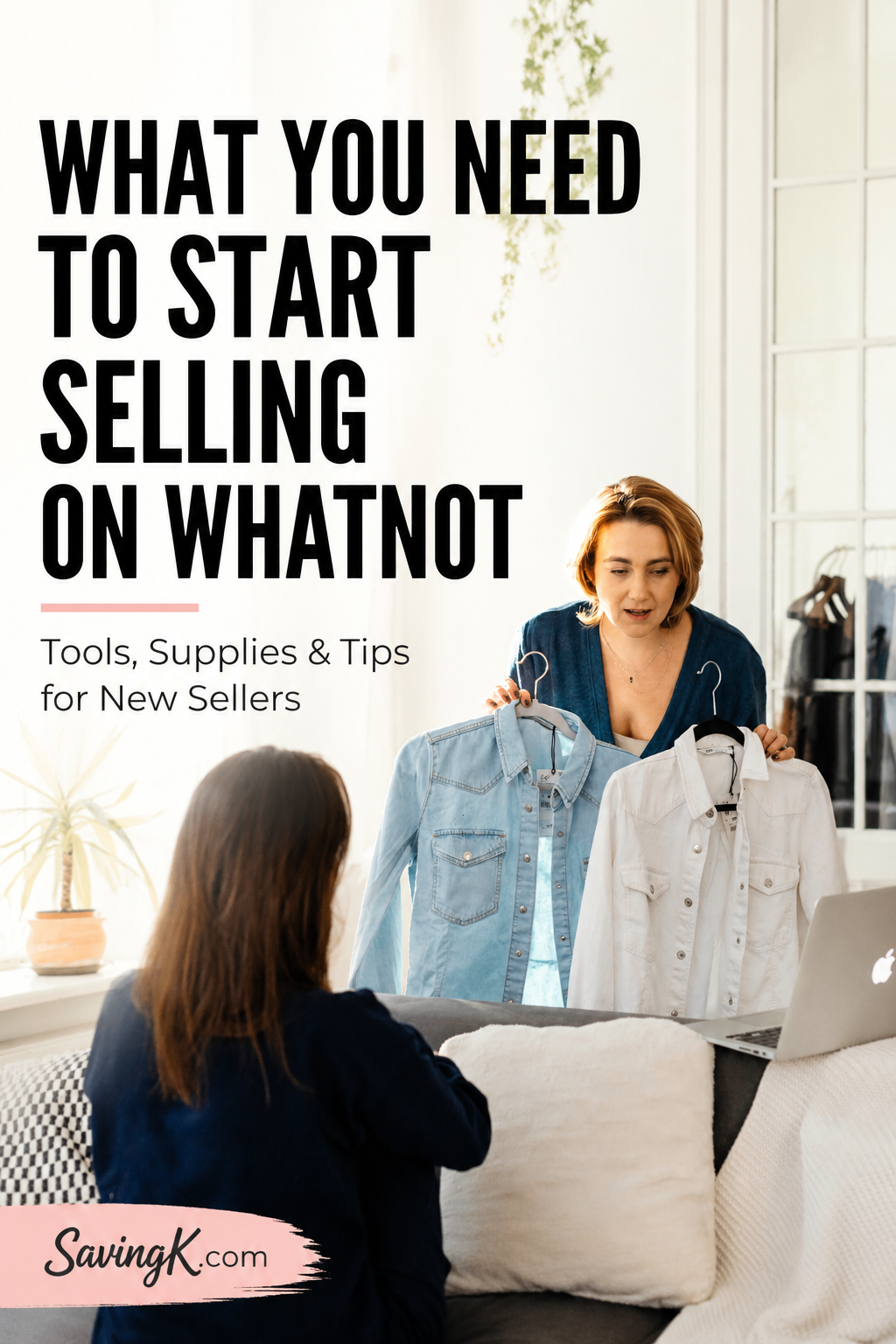


Live selling on Whatnot has exploded in popularity, giving everyday people a way to turn extra items, liquidation finds, thrift store treasures, and collectibles into cash. The good news is that you don’t need an expensive studio setup to get started.
If you’re thinking about becoming a Whatnot seller, here’s a look at the tools and equipment you’ll need, along with a few optional upgrades that can help your shows look more professional.
Ready to start selling? Sign up as a Whatnot seller here!
A Smartphone
The most important tool you’ll need is a smartphone.
Most successful Whatnot sellers start with nothing more than an iPhone or Android device. The Whatnot app is designed to stream directly from your phone, making it easy to list items, host auctions, and communicate with buyers.
For best results:
- Use a newer phone with a good camera
- Make sure you have plenty of storage space
- Keep your phone fully charged during shows
You can always upgrade your equipment later as your business grows.
Reliable Internet
Nothing ends a live sale faster than a poor internet connection.
Before hosting your first show, test your Wi-Fi speed and make sure you have a strong signal where you’ll be streaming. Many experienced sellers use:
- High-speed home internet (we recommend Starlink)
- Mesh Wi-Fi systems
- Ethernet adapters for maximum stability
A stable connection helps prevent buffering and keeps buyers engaged.
Good Lighting
Lighting can make a huge difference in how your products appear on camera.
Many new sellers start with inexpensive ring lights or LED panel lights. Proper lighting helps buyers see details, colors, and condition issues more clearly.
Popular options include:
- Ring lights
- Softbox lights
- Adjustable LED panels
Even a $20 light can dramatically improve your stream quality.
A Phone Tripod
Trying to hold your phone while showing products quickly becomes frustrating.
A simple tripod keeps your camera steady and leaves both hands free to demonstrate products.
Look for:
- Adjustable height
- Phone compatibility
- Stable base
Many sellers use desktop tripods when selling smaller items and floor-standing tripods for larger merchandise.
Shipping Supplies
Once the sales start rolling in, you’ll need a way to safely package and ship your orders.
Basic shipping supplies include:
- Poly mailers
- Bubble mailers
- Shipping boxes
- Bubble wrap
- Packing paper
- Packing tape
One of the biggest money-saving tips for new Whatnot sellers is to order free Priority Mail shipping supplies from USPS. Because Whatnot has negotiated discounted USPS shipping rates for sellers, many orders ship via Priority Mail, allowing you to use official USPS Priority Mail boxes at no cost.
You can order a variety of free Priority Mail boxes, envelopes, and mailing tubes directly from the USPS website and have them delivered to your door.
Many experienced Whatnot sellers keep an assortment of USPS Priority Mail boxes on hand, including:
- Priority Mail Shoe Boxes
- Priority Mail Flat Rate Padded Envelopes
- Priority Mail Flat Rate Boxes
- Priority Mail Mailing Tubes
Having free shipping supplies readily available can significantly reduce your startup costs and make fulfilling orders much easier.
If you’re sourcing inventory from liquidation pallets, save any clean shipping boxes and packing materials that come with your merchandise. Reusing boxes and packing materials can further reduce your shipping expenses and increase your profits.
A Printer
While Whatnot generates shipping labels for your orders, you’ll still need a printer to print those labels and get packages out the door.
Many sellers start with a standard home printer and regular paper, taping the labels securely to their packages. As your sales volume grows, you may decide to upgrade to a thermal label printer, but it isn’t necessary when you’re first getting started.
Some sellers also choose to print packing slips or invoices to include with orders, especially when shipping multiple items to the same buyer or adding a personal thank-you note.
If you’re planning to sell regularly, make sure you have:
- A reliable printer
- Plenty of paper and/or labels
- Ink or toner on hand
- Clear packing tape for attaching labels
A basic printer is often all you need to fulfill your first few hundred Whatnot orders.
Inventory To Sell
Of course, you’ll need products.
Some popular inventory sources include:
Your Own Home
Many sellers start by decluttering.
Unused clothing, toys, collectibles, electronics, and household goods can become your first inventory.
Thrift Stores
Thrift stores are a popular source for:
- Vintage clothing
- Collectibles
- Brand-name apparel
- Shoes
- Home décor
Garage Sales
Garage sales often provide opportunities to find underpriced items that can be resold online.
Liquidation Pallets
Many experienced Whatnot sellers source inventory from liquidation pallets, such as Target pallets and Amazon pallets.
Retailer returns, shelf pulls, overstock, and customer returns can provide hundreds of items for resale at a fraction of retail price.
Liquidation inventory works especially well for:
- Clothing
- Home goods
- Toys
- Electronics
- Beauty products
Storage Unit Auctions
Some Whatnot sellers build their inventory by purchasing abandoned storage units at auction. A single unit can contain hundreds or even thousands of dollars worth of merchandise to resell.
While storage units can be a great source of inventory, they also come with risks. You never know exactly what you’ll find inside, and some units may contain damaged or unsellable items. New sellers should start small and learn the process before investing significant money in storage auctions.
Pick a Niche
Another popular strategy is to focus on a specific category and become known for it.
Many successful Whatnot sellers specialize in a niche such as:
- Hot Wheels
- Sports cards
- Trading card games
- Vintage toys
- Video games
- Funko Pops
- Jewelry
- Coins and currency
- Clothing
- Sneakers
Choosing a niche can make sourcing inventory easier and help you build a loyal following. Buyers often return to sellers who consistently offer products they’re interested in.
For example, a seller who specializes in Hot Wheels may attract collectors who return week after week looking for new additions to their collections. Over time, building expertise in a niche can help you identify valuable items, price products more accurately, and grow your audience faster than trying to sell a little bit of everything.
A Clean Selling Space
You don’t need a fancy studio.
Many successful sellers stream from:
- Spare bedrooms
- Basements
- Garages
- Small offices
The key is having a clean, organized space where buyers can clearly see your products.
A neutral background often works best.
Optional Upgrades For Growing Sellers
As your sales increase, you may want to invest in:
External Cameras
Some sellers use multiple camera angles to showcase products.
Microphones
A dedicated microphone can improve audio quality.
Whatnot Tools
As your Whatnot business grows, you may want to invest in tools designed specifically for sellers. These tools can help automate tasks, organize inventory, create labels, and improve the buyer experience.
Some popular options include:
NotBot
NotBot helps sellers automate certain aspects of running shows and managing inventory. Many high-volume sellers use it to streamline repetitive tasks and spend more time sourcing and selling.
Wintagz
Wintagz allows sellers to create custom inventory tags and labels that can be scanned during live shows. This can make order fulfillment faster and help keep inventory organized, especially for clothing and collectible sellers with hundreds or thousands of items.
Hot-Label
Hot-Label is a popular label creation and inventory management tool used by many Whatnot sellers. It allows you to create professional inventory labels with barcodes, prices, SKUs, and other information that can make running live auctions more efficient.
While none of these tools are required when you’re first starting out, they can become valuable time-savers as your inventory and sales volume increase.
Storage Shelving
As inventory grows, organization becomes increasingly important.
Industrial shelving units can help keep products organized and easy to find.
How Much Does It Cost To Start Selling On Whatnot?
Many people start for less than $100.
A basic setup might include:
- Existing smartphone
- Simple ring light
- Basic tripod
- Shipping supplies
As profits grow, you can reinvest into better equipment and larger inventory purchases.
The biggest advantage of Whatnot is that you can start small and scale over time.
Final Thoughts
One of the best things about Whatnot is that you don’t need thousands of dollars to get started. A smartphone, decent lighting, reliable internet, and inventory to sell are enough to launch your first show.
Many successful sellers began with items from their own homes before expanding into thrift stores, liquidation pallets, and wholesale inventory.
If you’ve been thinking about becoming a reseller, Whatnot can be an affordable way to start building an online business while connecting with buyers in real time.
Want to become a Whatnot seller? Apply here and start your selling journey today!