

Medicaid is often associated with doctor visits, prescriptions, and nursing homes. But hidden inside the system is a collection of programs that can quietly change a family’s entire financial and caregiving situation.
These are called Medicaid waiver programs.
For families caring for disabled children, adults with disabilities, or aging loved ones, waiver programs can unlock services that regular Medicaid may not cover. In some cases, they can even help family members get paid as caregivers.
The confusing part? Most people have never heard of them until they are already overwhelmed and desperately Googling at 2 a.m.
What Is a Medicaid Waiver Program?
A Medicaid waiver program allows states to “waive” certain federal Medicaid rules so they can provide extra services to people who need long-term care or disability support.
Most waiver programs are designed to help people stay in their homes or communities instead of moving into institutions or nursing facilities.
That is why they are often called:
- Home and Community-Based Services (HCBS) waivers
- Medicaid waivers
- HCBS programs
- Community care waivers
Think of them as special Medicaid side doors that open access to additional help.
What Services Can Medicaid Waivers Cover?
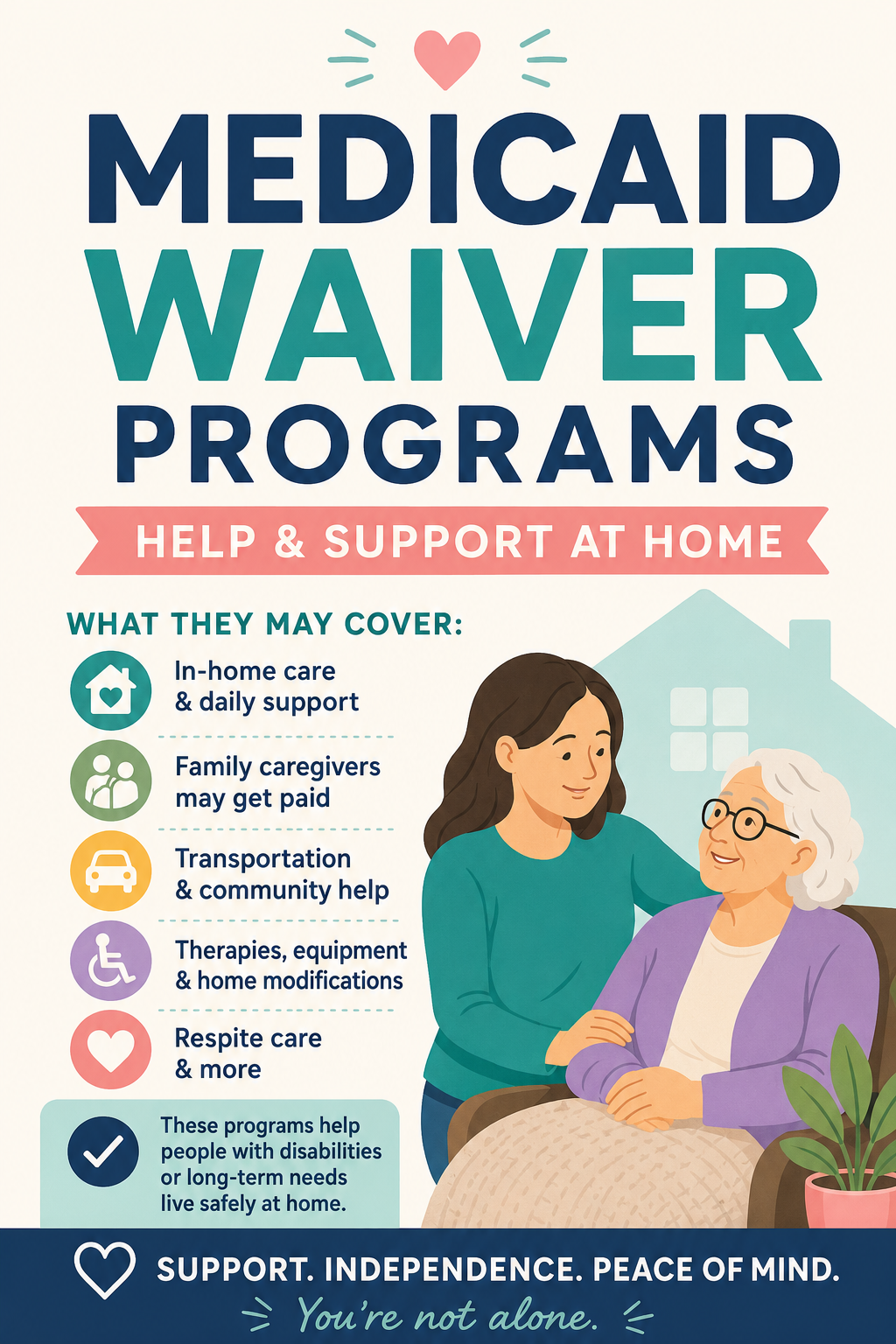
Coverage varies by state and program, but waiver benefits may include:
- In-home caregiving
- Personal care attendants
- Respite care
- Adult day programs
- Transportation
- Behavioral therapy
- Home modifications
- Medical equipment
- Skilled nursing
- Supported employment services
Some waiver programs also allow participants to choose their own caregivers, including family members in certain situations.
Who Qualifies for Medicaid Waiver Programs?
Eligibility depends on the program and state, but waiver recipients generally must:
- Meet Medicaid financial requirements
- Have a qualifying disability or medical condition
- Need assistance with daily living activities
- Require a level of care similar to nursing home care
Programs may exist for:
- Children with developmental disabilities
- Adults with intellectual disabilities
- Seniors needing long-term care
- Individuals with autism
- People with traumatic brain injuries
- Medically fragile children
Some waivers have age restrictions while others do not.
Why Medicaid Waivers Matter
Waiver programs can dramatically reduce financial pressure on families caring for loved ones at home.
Without waivers, families may pay out of pocket for:
- Caregiving help
- Medical supplies
- Therapy
- Accessibility modifications
- Transportation
- Supervision services
For many caregivers, the waiver system acts like a life raft floating in a sea of paperwork and burnout.
Can Parents Get Paid Through Medicaid Waivers?
Sometimes, yes.
Certain waiver programs allow family caregivers to receive payment for providing approved care services.
Depending on the state, this may include:
- Parents of disabled children
- Adult children caring for parents
- Siblings
- Spouses in limited situations
These programs are often called:
- Self-directed care
- Consumer-directed services
- Participant-directed care
The person receiving care may be allowed to “hire” family members as caregivers through Medicaid funding.
Medicaid Waiver Waiting Lists
One frustrating reality of waiver programs is that many have waiting lists.
Some states have thousands of people waiting for services, especially for developmental disability waivers.
Waiting periods can range from months to several years.
This is why advocates often recommend applying as early as possible, even if services are not immediately needed.
Medicaid Waiver Programs by State
Every state runs waiver programs differently.
For example:
- California has IHSS and regional center programs
- Florida has iBudget waivers
- Texas offers STAR+PLUS and HCS waivers
- New York has OPWDD and CDPAP programs
Even neighboring states can have completely different rules, benefits, and caregiver pay policies.
How to Apply for a Medicaid Waiver
The application process usually includes:
- Applying for Medicaid
- Requesting a waiver or long-term care assessment
- Providing medical and financial documentation
- Completing evaluations or screenings
- Joining a waiting list if necessary
Families often work with:
- Medicaid caseworkers
- Disability advocates
- Social workers
- Area Agencies on Aging
Keeping detailed records and copies of paperwork can save a lot of stress later.
Common Challenges Families Face
The Process Is Complicated
Waiver systems are not exactly famous for being simple.
Different agencies may handle:
- Medicaid eligibility
- Disability services
- Care assessments
- Caregiver enrollment
Sometimes families feel like they need a law degree and a color-coded binder system just to navigate the process.
Rules Change Frequently
Programs and eligibility requirements can change depending on:
- State budgets
- Policy updates
- Federal funding
- Waiver renewals
Caregiver Burnout Is Real
Even with financial assistance, caregiving can be emotionally and physically exhausting.
Respite services included in some waiver programs can provide temporary relief for family caregivers.
Final Thoughts
Medicaid waiver programs are one of the most important resources many families have never fully heard explained.
They can provide caregiving support, financial relief, and services that help disabled individuals remain safely at home instead of entering institutional care.
The process may feel overwhelming at first, but understanding how waiver programs work can open doors to help that many families desperately need.
If you are caring for a loved one with disabilities or long-term medical needs, researching your state’s Medicaid waiver programs may be worth the effort. Hidden inside all the paperwork and acronyms could be services that make everyday life a little more manageable.
FAQ
What is a Medicaid waiver program?
A Medicaid waiver program allows states to provide additional home and community-based services for people with disabilities or long-term care needs.
Can family members get paid through Medicaid waivers?
Some waiver programs allow family members to become paid caregivers for approved services.
Are Medicaid waiver programs available in every state?
Yes, but every state has different programs, eligibility rules, and waiting lists.
Do Medicaid waivers have income limits?
Most waiver programs have financial eligibility requirements tied to Medicaid rules.
How long are Medicaid waiver waiting lists?
Waiting lists vary widely and can range from months to several years depending on the program and state.