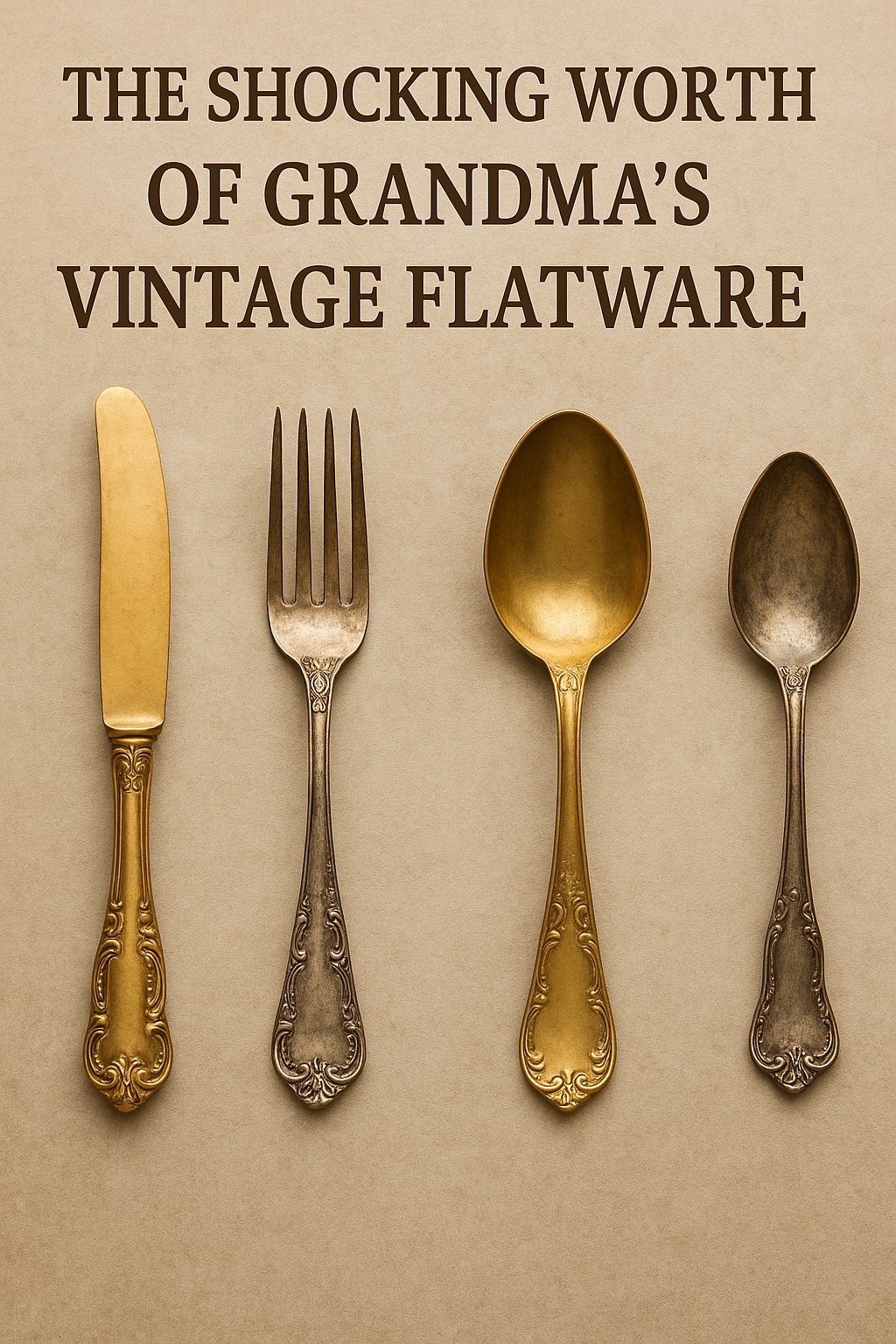


When most people think about valuable collectibles, they picture rare coins, jewelry, or antiques. Yet sitting quietly in old family china cabinets or tucked away in dusty estate sale boxes is a surprisingly valuable item: vintage flatware. Whether crafted from sterling silver, silver plate, or even gold accents, these once-everyday utensils can hold more financial worth than many realize.
Why Vintage Flatware Has Value
Unlike modern stainless steel cutlery, vintage flatware was often made with precious metals. This means the value isn’t just in craftsmanship, but also in raw material. Sterling silver, for example, is 92.5% pure silver, while gold-accented or vermeil pieces combine artistic design with intrinsic metal worth. Collectors and resellers prize these sets for both their metal content and historical appeal.
Sterling Silver Flatware
Sterling silver flatware is often the star of estate sales and auctions. Its value comes from two factors:
- Melt Value – Based on the weight of the silver content, sterling flatware can be melted down and sold just like silver coins or bullion.
- Collector’s Value – Certain patterns, particularly from well-known makers like Gorham, Tiffany & Co., or Reed & Barton, can sell for significantly more than their melt value due to rarity or design.
Silver-Plated Flatware
Though silver-plated flatware doesn’t carry the same intrinsic metal value, some ornate or discontinued patterns are highly collectible. Full sets in good condition can fetch impressive prices from collectors, decorators, and vintage lovers.
Gold Flatware and Accents
Gold flatware is less common but highly sought after. Some pieces are made entirely of gold (rare), while others feature gold plating or gold accents. These command a premium, especially when paired with a luxury maker’s name.
What Makes Vintage Flatware Valuable?
Not all old forks and spoons are worth their weight in gold—or silver. Several factors determine value:
- Maker & Pattern – Famous brands and discontinued patterns increase collectability.
- Condition – Tarnish can be cleaned, but bent tines, pitting, or missing pieces decrease value.
- Completeness of Set – A full dinner service often sells for more than mismatched single pieces.
- Market Trends – Shabby chic, vintage dining, and sustainable living trends have boosted demand for heirloom-quality flatware.
Where to Find and Sell Vintage Flatware
If you’re on the hunt for valuable flatware—or thinking of selling some—there are several avenues:
- Estate Sales & Auctions – Often the best place to find full sets.
- Thrift Stores & Flea Markets – A treasure hunter’s dream for overlooked silver spoons.
- Online Marketplaces – eBay, Etsy, and specialty auction houses are excellent platforms for selling.
- Scrap Buyers – If pieces are damaged, sterling silver still holds melt value.
Tips for Buyers and Sellers
- Check for Hallmarks – Look for stamps like “925,” “Sterling,” or brand names that confirm authenticity.
- Weigh Your Pieces – Sterling silver is priced by weight; knowing grams or ounces matters.
- Consider Restoration – Light polishing can dramatically increase visual appeal, but avoid over-cleaning which can reduce antique value.
- Do Your Research – Some patterns can be worth hundreds more than melt value—don’t rush to the scrap dealer.
Conclusion
Gold and silverware aren’t just dining tools of the past—they’re tangible assets with surprising financial potential. Whether inherited, discovered in a second-hand shop, or carefully collected, vintage flatware holds value that blends history, artistry, and precious metal worth. Before you dismiss those old forks and spoons as outdated, consider this: you may just be holding a hidden treasure in your hands.