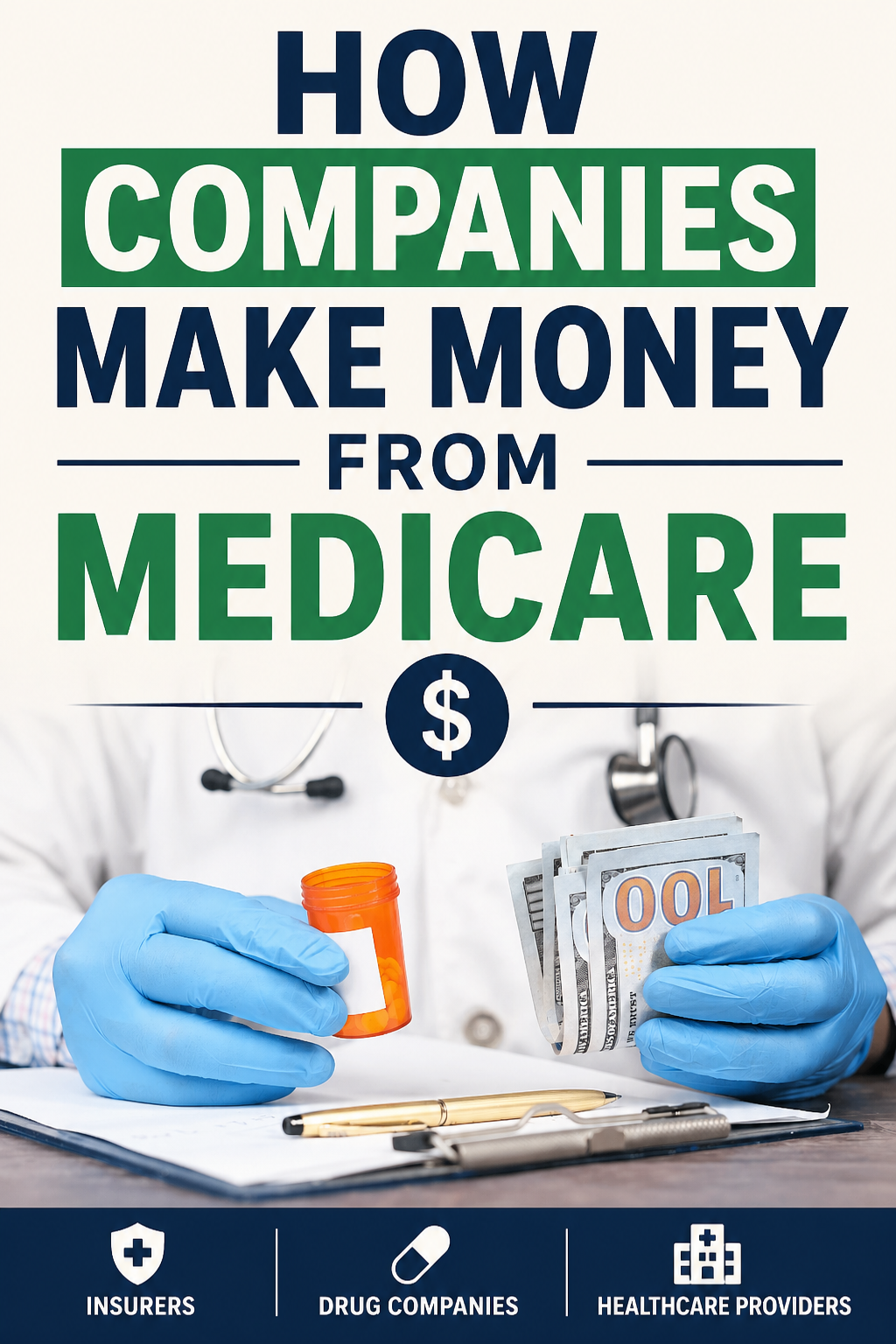


Medicare feels like a government safety net, and it is. But behind the scenes, it’s also a massive economic ecosystem where private companies play a big role.
That doesn’t mean anything shady is happening. It just means there’s more going on than most people realize.
If you follow the money, you start to see how different companies earn revenue from Medicare and how that can shape the experience you have as a patient.
First, How Medicare Money Flows
At a high level, Medicare is funded by taxpayers and premiums. That money doesn’t just sit in a vault. It moves, flowing outward to pay for care, services, and administration.
Some of it goes directly to doctors and hospitals through Original Medicare. But a growing portion is routed through private companies that manage care, provide services, or supply products.
Think of it less like a single program and more like a network of interconnected businesses.
Insurance Companies: The Biggest Slice
One of the largest ways companies make money from Medicare is through Medicare Advantage plans.
Instead of the government paying providers directly, it pays private insurance companies a set amount per person enrolled. Those companies then manage your care within that budget.
They make money by:
- Managing costs efficiently
- Keeping members healthier (and less expensive)
- Structuring networks and approvals
If they spend less on care than they receive, they keep the difference. If they spend more, they absorb the loss.
That’s why you see:
- Network restrictions
- Prior authorization requirements
- Emphasis on preventive care
It’s all part of balancing cost and care.
Hospitals and Providers: Getting Paid Per Service
Doctors, hospitals, and clinics also earn money through Medicare.
Under Original Medicare, providers are typically paid per service. That means each visit, test, or procedure has a set reimbursement rate.
This system can encourage volume. More services often mean more revenue, although payment rates are controlled and not always as high as private insurance.
With Medicare Advantage, providers may be paid differently, sometimes through contracts with insurers, which can include incentives tied to outcomes or cost control.
Pharmaceutical Companies: Prescription Profits
Drug manufacturers make money through Medicare Part D and other prescription coverage within Medicare Advantage plans.
While Medicare helps cover the cost, the pricing of medications still plays a major role. Pharmaceutical companies earn revenue based on:
- The medications prescribed
- Pricing agreements with plans
- Volume of usage
This is one of the most debated areas of Medicare spending, especially when it comes to high-cost drugs.
Medical Device and Equipment Companies
From wheelchairs to oxygen machines to diagnostic equipment, companies that supply medical devices also benefit from Medicare spending.
If a product is deemed medically necessary, Medicare may cover part or all of the cost. That creates steady demand for:
- Durable medical equipment (DME)
- Testing devices
- Assistive technologies
These companies operate within reimbursement guidelines, but the scale of Medicare means consistent business.
Home Health and Senior Care Services
As more care shifts out of hospitals, home health agencies and senior care providers have become a growing part of the Medicare ecosystem.
These businesses make money by providing:
- In-home nursing care
- Therapy services
- Assistance with daily living
Medicare pays for certain types of care under specific conditions, and companies structure their services around those rules.
Administrative and Support Companies
Not all the money goes to direct care.
There are also companies that:
- Process claims
- Manage billing systems
- Provide software and data analytics
- Handle compliance and administration
These behind-the-scenes players help keep the system running, and they’re paid to do it.
Why This Matters to You
All of this activity shapes your experience, even if you never see it directly.
When companies are involved, you may notice:
- Networks that limit where you can go
- Approval steps before receiving care
- Differences in coverage depending on your plan
At the same time, private involvement can also bring:
- Extra benefits and perks
- More plan options
- Innovation in care delivery
It’s a mix of trade-offs.
The Big Picture
Medicare isn’t just a program; it’s a marketplace layered on top of a public system.
Companies make money by:
- Managing care
- Providing services and products
- Supporting the infrastructure behind it all
For consumers, the key isn’t to avoid this system. It’s to understand it.
Because once you see how the money moves, you can make better decisions about:
- Which plan to choose
- What costs to expect
- How to navigate your coverage
The Bottom Line
Companies make money from Medicare in many different ways, but it all comes back to one thing: managing and delivering care within a structured system.
The more you understand how that system works, the easier it is to avoid surprises and choose options that fit your needs.
And in a system this big, a little awareness goes a long way.