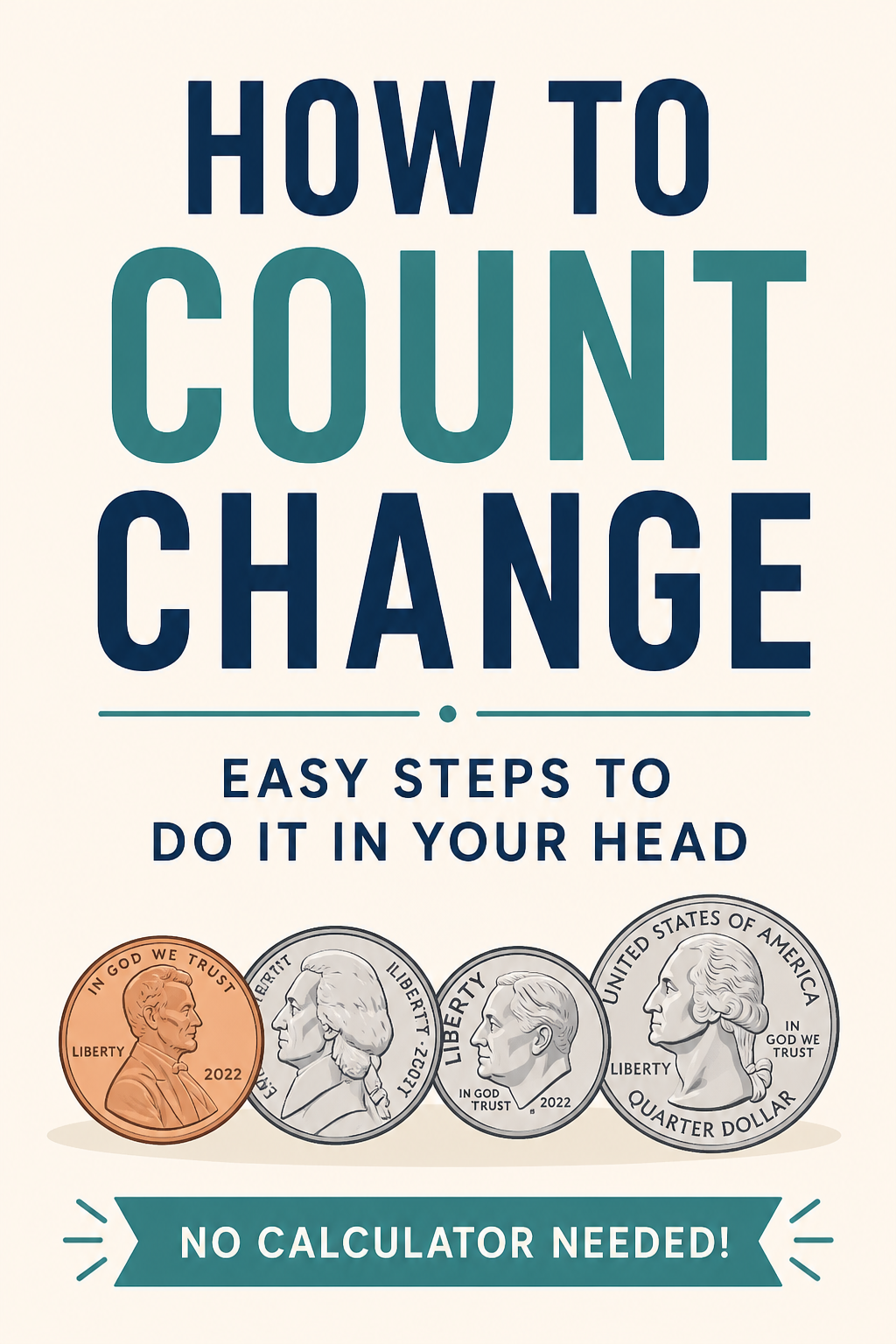
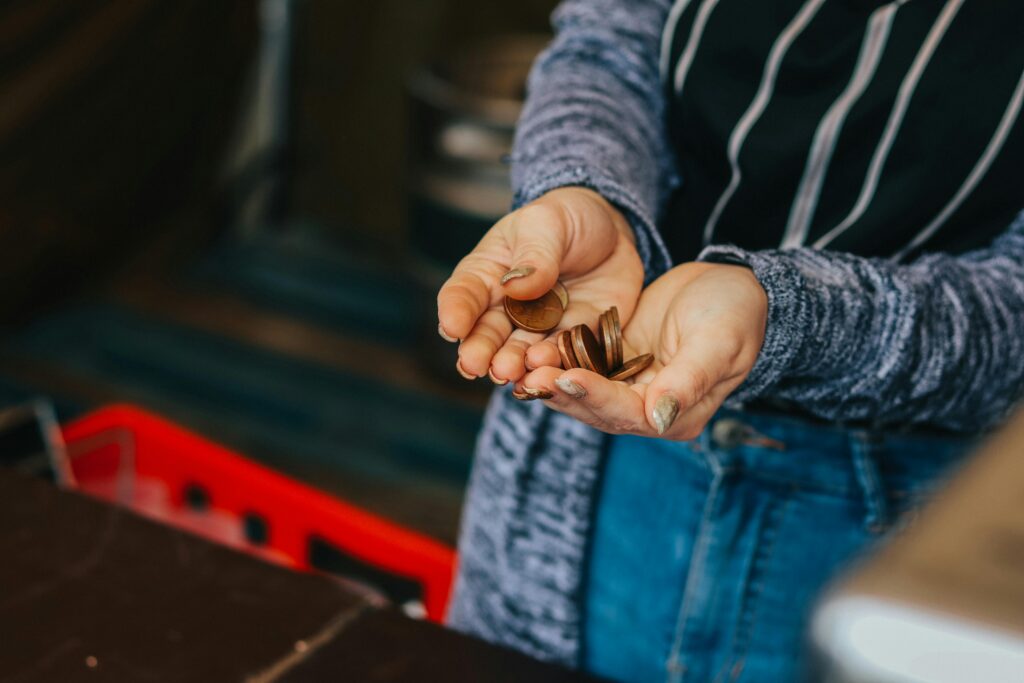

There was a time when counting change wasn’t a skill… it was background noise. Cashiers did it fast, kids learned it early, and nobody reached for a calculator. Now? Most people stare at a handful of coins like it’s ancient treasure from a forgotten civilization.
But here’s the twist: knowing how to count change is still incredibly useful. It sharpens your mental math, helps you avoid mistakes at the register, and gives you a quiet confidence that no app can replace.
Let’s bring this skill back to life.
Why Counting Change Still Matters
Even in a tap-to-pay world, cash hasn’t disappeared. And when it shows up, it’s often in small, everyday moments:
- Checking if you got the right change
- Paying with cash to stick to a budget
- Teaching kids real-world math
- Moving faster in line without fumbling
Think of it as mental math with a purpose. It’s practical, fast, and just a little bit satisfying.
The Basic Idea: Count Up, Not Down
Most people make this harder than it needs to be. The secret is simple:
Don’t subtract. Count up from the price to the amount paid.
It turns math into a small stepping-stone game.
Example:
Your total is $6.37, and you pay with a $10 bill.
Instead of doing $10 − $6.37, you count up:
- $6.37 → $6.50 (add 13¢)
- $6.50 → $7.00 (add 50¢)
- $7.00 → $10.00 (add $3.00)
Now add what you counted:
- 13¢ + 50¢ + $3.00 = $3.63 in change
No calculator. No stress. Just stepping stones.
A Simple Step-by-Step Method
Here’s a repeatable rhythm you can use every time:
1. Round up to the nearest coin
Start by getting to the next “easy” number (usually a multiple of 5 or 10 cents).
2. Move to the next dollar
Once you hit something like $7.00, jump to the next whole dollar.
3. Jump to the amount paid
From there, it’s usually just whole dollars.
It’s like climbing a ladder where each rung is easier than the last.
Practice With Common Scenarios
Coins Only
Total: $2.68
Paid: $5.00
- $2.68 → $2.75 (7¢)
- $2.75 → $3.00 (25¢)
- $3.00 → $5.00 ($2.00)
Change: $2.32
Exact Change Trick
If someone gives $20 for a $19.25 purchase:
- $19.25 → $19.50 (25¢)
- $19.50 → $20.00 (50¢)
Change: 75¢
Pro Tips That Make You Faster
- Memorize coin values like muscle memory:
quarters (25¢), dimes (10¢), nickels (5¢), pennies (1¢) - Think in chunks:
25¢ + 25¢ = 50¢, 50¢ + 50¢ = $1 - Use friendly numbers:
jumping to .50 or .00 makes everything easier - Say it out loud (at first):
It helps your brain lock into the rhythm
Teaching Kids (and Relearning Yourself)
Counting change is one of the best “real life math” skills you can pass on.
Try this:
- Let kids handle cash at a store
- Practice with a small pile of coins at home
- Turn it into a quick game: “What’s the change?”
It’s hands-on, visual, and way more engaging than worksheets.
The Bottom Line
Counting change isn’t outdated… it’s just underused. Like knowing how to read a map or cook without a recipe, it’s a small skill that quietly builds independence.
And once you get the hang of it, it feels less like math and more like a smooth little rhythm your brain just knows how to play.
Pocket calculators are great.
But having one in your head? Even better.