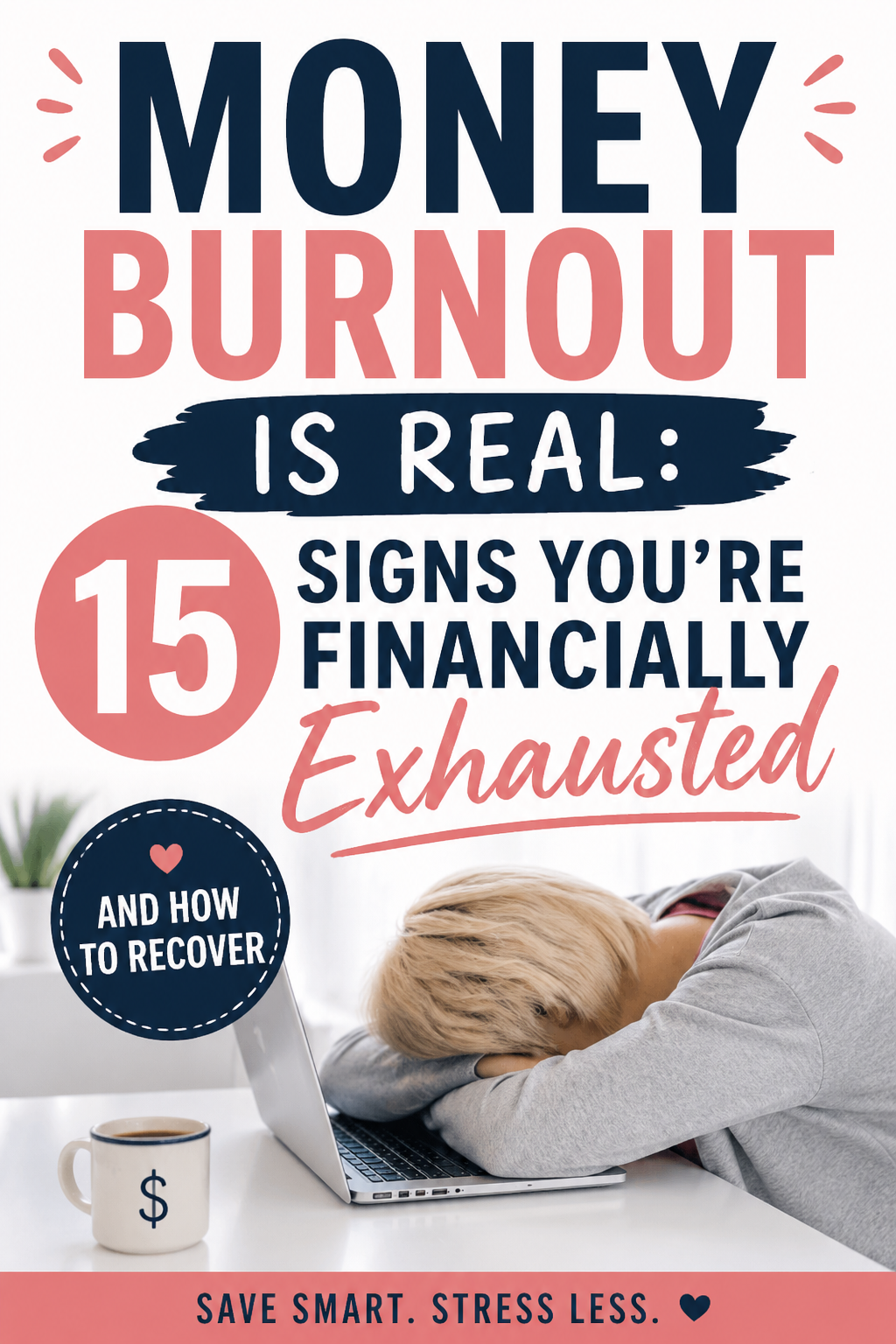


For years, personal finance advice has focused on one message: save more, spend less, hustle harder.
While those are all worthwhile goals, constantly thinking about money can become mentally exhausting. Between rising prices, endless budgeting apps, side hustles, coupon hunting, and trying to keep up with financial advice on social media, it’s no wonder so many people feel burned out.
Money burnout is real. And if you’re experiencing it, you’re certainly not alone.
Here’s how to recognize the signs and what you can do to regain control without letting your finances control you.
What Is Money Burnout?
Money burnout is the mental, emotional, and physical exhaustion that comes from constantly worrying about finances or managing every dollar.
Unlike simply being stressed about paying bills, money burnout often develops after months or years of trying to do “everything right.”
You may be:
- Tracking every purchase
- Comparing prices constantly
- Working multiple jobs
- Watching countless budgeting videos
- Feeling guilty about every purchase
- Always worrying about the next unexpected expense
Eventually, your brain simply gets tired.
15 Signs You’re Financially Exhausted
1. You Avoid Looking at Your Bank Account
Ironically, many people experiencing money burnout stop checking their finances altogether.
Ignoring your account may temporarily reduce stress, but it usually creates more anxiety later.
2. Every Purchase Comes with Guilt
Even buying necessities like groceries or replacing worn-out shoes feels wrong.
If every swipe of your debit card makes you anxious, your relationship with money may need a reset.
3. Budgeting Feels Like a Chore
Budgets should help you feel confident.
If yours feels like a punishment, it may be too restrictive or simply too complicated.
4. You’re Constantly Comparing Prices
Looking for a deal is smart.
Spending three hours to save $2 probably isn’t.
Sometimes your time and energy are worth more than the small savings.
5. You Feel Like You’re Never Doing Enough
No matter how much you save…
No matter how many coupons you use…
No matter how many side hustles you start…
It never feels like enough.
That’s a common symptom of financial burnout.
6. You Can’t Enjoy Spending Money
Healthy finances include enjoying life.
If vacations, hobbies, or even a cup of coffee leave you feeling guilty, money may be controlling you instead of serving you.
7. Financial Advice Makes You Feel Worse
You open social media and see:
- Someone paying off $200,000 of debt
- Someone retiring at 35
- Someone making six figures from a side hustle
Instead of feeling inspired, you feel defeated.
Too much financial content can become overwhelming.
8. You Keep Starting New Budgets
Monday.
Next month.
January 1.
Every payday.
If you’re constantly restarting your financial plan, you may be chasing perfection instead of progress.
9. You’re Working All the Time
Many people take on side hustles to improve their finances.
But when every evening and weekend becomes work, burnout often follows.
More income isn’t always worth sacrificing your health or family time.
10. Small Financial Problems Feel Huge
A $75 car repair.
An unexpected prescription.
A broken appliance.
When you’re burned out, even relatively small expenses can feel emotionally overwhelming.
11. You Constantly Think About Money
Money occupies your thoughts while:
- Driving
- Trying to sleep
- Eating dinner
- Watching TV
- Spending time with family
Your brain never gets a break.
12. You Feel Envious of Everyone Else
Friends buying new cars.
Neighbors taking dream vacations.
Social media influencers decorating dream homes.
Comparison can magnify money burnout.
Remember, you’re seeing someone else’s highlight reel, not their bank statement.
13. You Keep Buying Money Books… But Don’t Read Them
Many people consume endless financial advice without ever acting on it.
Information overload can become another form of procrastination.
14. You Feel Like Saving Money Has Become Your Entire Personality
There’s nothing wrong with being frugal.
But if every conversation revolves around coupons, cashback, and cutting expenses, it may be time to create more balance.
Money should support your life, not become your identity.
15. You’re Simply Tired
Sometimes the biggest sign is the simplest.
You’re mentally exhausted.
You don’t want another budgeting spreadsheet.
You don’t want another savings challenge.
You just want a break.
That’s okay.
Why Money Burnout Happens
Several factors have made financial burnout more common than ever.
Inflation
Higher prices mean families have to think harder about every purchase.
Too Much Financial Advice
Thousands of podcasts, YouTube channels, TikToks, newsletters, and blogs compete for your attention.
Not all advice applies to your situation.
Hustle Culture
Many people feel pressured to monetize every hobby and work every free hour.
Decision Fatigue
Every financial decision requires mental energy.
Store brands or name brands?
Use points or save them?
Buy now or wait for a sale?
Multiply that by dozens of decisions every week, and it’s easy to feel overwhelmed.
How to Recover From Money Burnout
Simplify Your Budget
A simple budget you actually follow is better than a complicated one you abandon.
Automate What You Can
Set up automatic:
- Savings
- Bill payments
- Retirement contributions
The fewer decisions you make, the less mental energy you use.
Give Yourself Permission to Spend
It’s okay to enjoy the money you’ve worked hard to earn.
A healthy budget should include room for fun.
Stop Comparing Yourself to Others
Your financial journey doesn’t need to look like anyone else’s.
Focus on your own goals.
Take a Break From Financial Content
If every podcast, YouTube video, and Instagram reel is about money, consider taking a week or two off.
You may discover you already know enough.
Celebrate Small Wins
Paid off a credit card?
Built a $500 emergency fund?
Stayed within your grocery budget?
Celebrate it.
Progress matters.
Remember Your “Why”
Money is simply a tool.
The goal isn’t having the biggest savings account.
The goal is creating security, freedom, and opportunities for the life you want to live.
Final Thoughts
Saving money is important.
Budgeting is important.
Planning for the future is important.
But constantly stressing about every dollar isn’t healthy.
If you’re feeling financially exhausted, it doesn’t mean you’ve failed. It simply means you’ve been carrying a heavy mental load for a long time.
Take a step back. Simplify where you can. Focus on steady progress instead of perfection.
The best financial plan isn’t the one that squeezes every last penny out of your budget. It’s the one you can stick with while still enjoying your life.
Frequently Asked Questions
Is money burnout real?
Yes. While it’s not an official medical diagnosis, financial experts and mental health professionals recognize that prolonged financial stress can lead to emotional exhaustion, anxiety, and decision fatigue.
Can you experience money burnout even if you aren’t in debt?
Absolutely. Even people with stable incomes and healthy savings can become burned out from constantly budgeting, tracking expenses, or feeling pressure to optimize every financial decision.
How long does it take to recover from money burnout?
Recovery varies for everyone. Simplifying your finances, automating routine tasks, limiting financial content, and allowing yourself reasonable spending can help reduce stress over time.
Is it okay to take a break from budgeting?
Yes, as long as your essential bills and savings remain on track. Sometimes simplifying your budget or using automation is more sustainable than tracking every penny indefinitely.