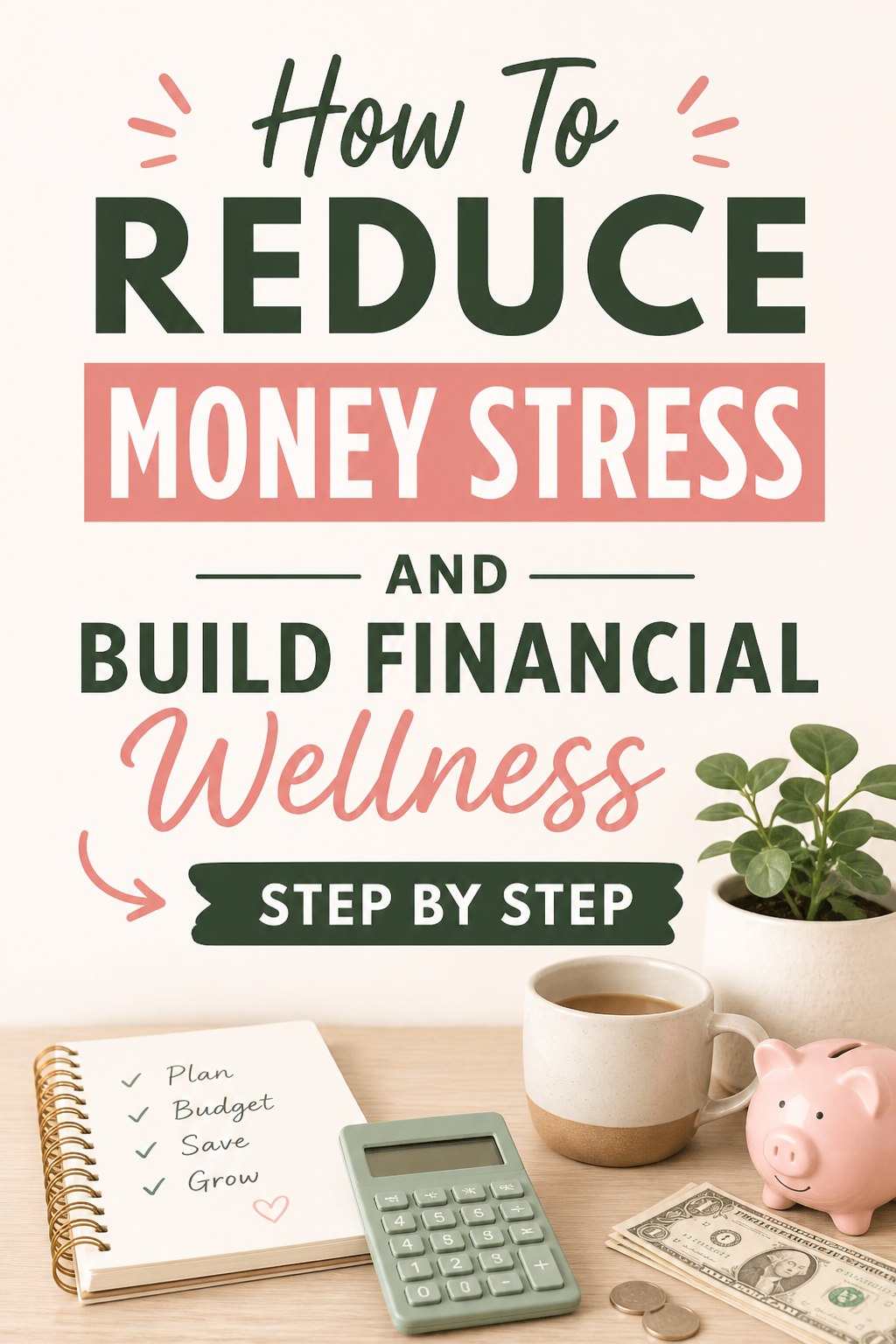


Busy parents juggling work, childcare, and rising bills often carry a quiet, constant weight: financial anxiety that shows up in sleep, mood, and relationships. When every decision, groceries, gas, medical copays, feels like a trade-off, personal finance challenges can start to feel like personal failures, even though they’re not. That’s the real financial stress impact: it chips away at mental health and money confidence at the same time, making it harder to make clear choices. With steady stress management for adults and a kinder approach to money, financial well-being can feel possible again.
Use This 5-Part Reset to Calm Your Money Worries
Money stress can feel loud and constant, especially after you’ve named what’s weighing on you (bills, debt, uncertainty) but aren’t sure what to do first. Use this simple reset to create quick clarity and a calmer plan you can follow.
- Do a 20-minute “reality budget” (not a perfect one): Grab the last month of bank/credit card activity and list your must-pay basics first (housing, utilities, groceries, transportation, minimum debt payments). Then estimate the rest and circle the categories that trigger the most worry, those are your first targets. Keep it simple: you’re building a starting point you can adjust weekly, not a spreadsheet you’ll abandon.
- Set one “relief goal” and one “progress goal”: A relief goal lowers stress fast (for example, “avoid overdrafts this month” or “keep $200 in checking”). A progress goal builds momentum (like “save $25 a week” or “pay an extra $30 toward one card”). Write down your goal with the cost and a timeline so you know exactly what to do each month.
- Pick a debt payoff lane you can stick with for 30 days: Choose avalanche if you want to pay less interest over time (extra money goes to the highest APR), or snowball if you need quick wins (extra money goes to the smallest balance). Automate minimums, then send one extra payment per week or per paycheck to your focus debt, even $10 counts. After 30 days, review what worked before changing the plan.
- Build a tiny “stress buffer” while you pay debt: A starter emergency fund of $250–$500 can prevent one surprise bill from turning into new credit card debt. Set up an automatic transfer on payday, even if it’s just $5–$20, and treat it like a bill you pay yourself. This supports the “ease it” part of stress management by reducing the number of financial fires you have to put out.
- Protect self-care with a weekly money check-in ritual: Money anxiety is common, many people report financial stress at least once a week, so plan a routine that keeps you steady. Pick one day, set a 15-minute timer, and do three actions: check balances, confirm upcoming bills, and choose one small move (cancel a subscription, negotiate a bill, make an extra payment). Pair it with something calming (tea, music, a short walk) so your body learns that “money time” doesn’t equal panic.
When your budget is realistic, your goals are concrete, and your debt plan is consistent, you can start looking for ways to simplify payments, especially if you’re balancing multiple high-interest balances and want more predictability.
Could Home Equity Simplify Your Debt Into One Payment?
Once you’ve mapped out your debts and a payoff direction, simplifying the number of payments can make the plan feel more manageable.
If you own a home, a cash-out refinance may reduce stress by replacing multiple high-interest balances with one mortgage payment at a potentially lower rate, while also giving you extra funds to consolidate remaining obligations or build a small financial cushion. To get a feel for what that could look like, you can review 30 year fixed cash out refinance rates as part of exploring whether the numbers might work for your situation.
Qualifying typically means meeting a few basics: a credit score of about 620 or higher, enough home equity to tap, steady income, and a debt-to-income ratio that stays within manageable limits.
If this option feels promising but you’re unsure whether it’s realistic for you, the next section will help you work through common “stuck” questions with practical next steps.
Money Stress Questions People Ask Most
Q: How do I start if money stress makes me avoid looking at my accounts?
A: Start with a 10 minute “money check in” and only look at what’s due before payday. Write down three numbers: cash on hand, bills due, and minimum debt payments. Practicing a little financial stress management can help you feel calmer and more in control.
Q: What’s the first step to a budget that actually sticks?
A: Build a “bare bones” plan for essentials first: housing, food, utilities, transportation, insurance. Then assign any leftover dollars to one goal at a time, like a small emergency buffer or extra debt payment. Keep categories simple so you can maintain it weekly.
Q: Can I build an emergency fund while paying off debt?
A: Yes. Start with a starter cushion of $500 to $1,000, then focus on high interest debt. Many financial professionals suggest saving three to six months of fixed living expenses over time.
Q: How do I know if a refinance or consolidation is a bad idea for me?
A: It may be risky if it raises your total cost, adds big fees, or stretches payments so long you pay much more interest. Ask for a written estimate, compare total repayment, and avoid using new credit until the plan is stable.
Q: When should I talk to a professional instead of figuring it out alone?
A: Get help if you cannot make minimum payments, you are considering bankruptcy, or money stress is affecting sleep or relationships. A nonprofit credit counselor or a fee only financial planner can help you choose options and set a realistic plan.
You’re not behind, you’re building a calmer system one small decision at a time.
Weekly Money-Calm Rituals That Actually Stick
Try these small routines to stay grounded.
Habits beat willpower when money feels heavy. These practices turn financial wellness into a steady rhythm, so you build confidence step by step without needing long, stressful sessions.
Ten-Minute Money Date
- What it is: Review balances, upcoming bills, and one goal while you turn financial tasks into enjoyable experiences.
- How often: Weekly
- Why it helps: It reduces avoidance and keeps small issues from becoming emergencies.
Pay-Then-Save Automation
- What it is: Schedule a tiny transfer to savings right after each paycheck lands.
- How often: Every payday
- Why it helps: Consistency builds a buffer without requiring daily decisions.
One-Card Spending Boundary
- What it is: Use one debit or credit card for everyday spending to simplify tracking.
- How often: Daily
- Why it helps: Cleaner data makes your next plan faster and less emotional.
Two-Step Debt Nudge
- What it is: Pay minimums, then add a small extra amount to one priority balance.
- How often: Monthly
- Why it helps: You create visible progress without overhauling your whole budget.
Five-Breath Reset Before Logging In
- What it is: Take five slow breaths before checking accounts or paying bills.
- How often: Each session
- Why it helps: It lowers stress so you can make clearer choices.
Pick one habit this week and tailor it to your household routines.
Turn Money Stress Into Steady Confidence, One Habit at a Time
Money stress can feel like a constant background noise, too many decisions, not enough certainty, and a nagging fear of falling behind. A steady, step-by-step approach built on simple routines and realistic choices makes the pressure more manageable and the path forward clearer. As those habits stack up, the benefits of reduced financial stress show up as improved financial confidence and stronger long-term financial health. Small, consistent money actions beat big, stressful overhauls. Choose one next step today, set a 10-minute weekly money check-in or automate a small savings amount, and reach out for community financial support when motivation dips. That’s how progress turns into stability, resilience, and more room to breathe.