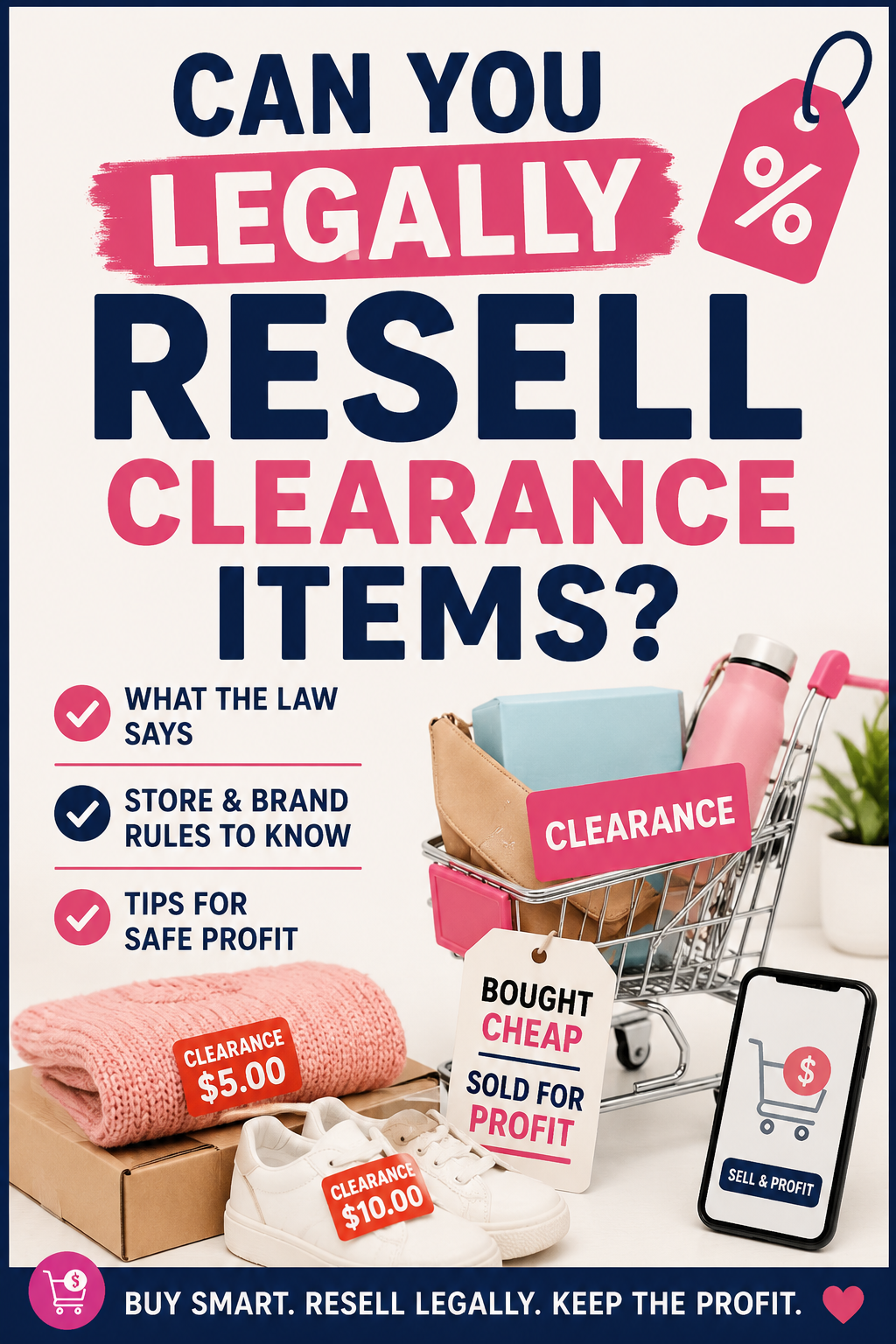
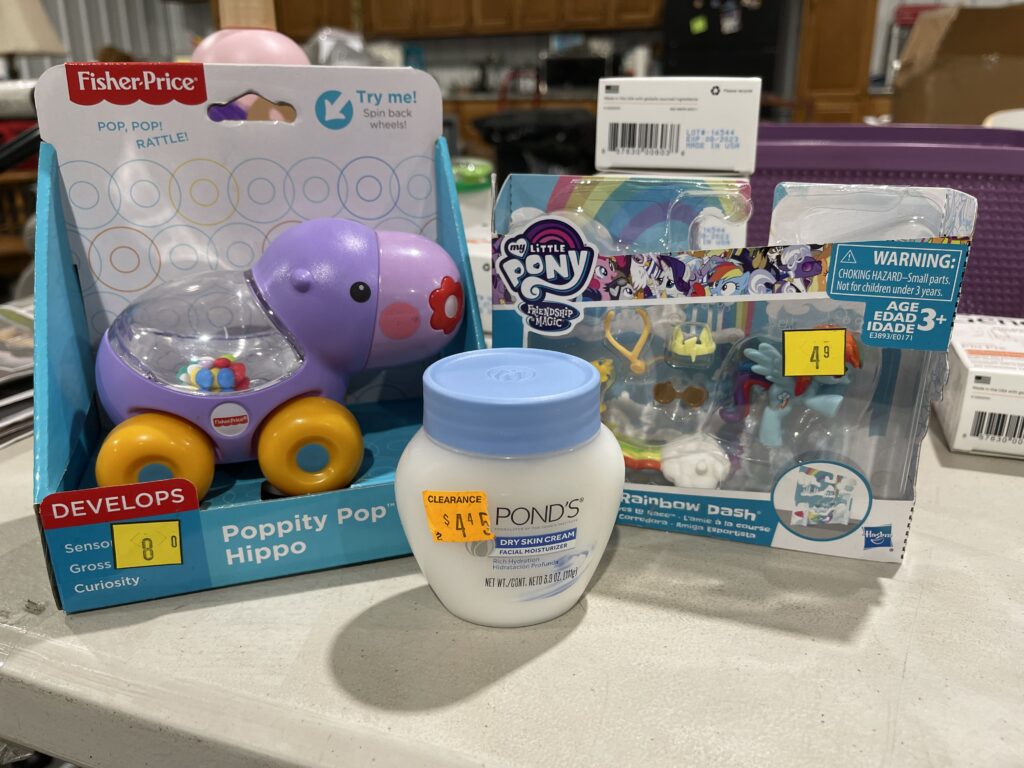

A lot of people have wondered the same thing while staring at a clearance shelf stacked with markdown stickers like treasure-map clues:
“Can I buy this cheap and resell it for profit?”
In most cases, the answer is yes.
People legally resell clearance items every day on eBay, Amazon, Facebook Marketplace, flea markets, bin stores, boutique shops, and even full retail stores. Entire businesses are built around buying discounted products and reselling them for more money.
But there are still some important rules, risks, and gray areas to understand before you start filling your cart like a contestant on a game show fueled by markdown stickers and caffeine.
Reselling Clearance Items Is Usually Legal
In the United States, the “first sale doctrine” generally allows people to resell products they legally purchased.
That means if you buy an item from a store:
- You usually own it
- You can typically resell it
- You do not usually need the manufacturer’s permission
This applies to many kinds of products, including:
This is one reason garage sales, thrift stores, consignment shops, liquidation stores, and online marketplaces exist in the first place.
Why Stores Clearance Items Out
Retailers markdown products for all kinds of reasons:
- Seasonal inventory changes
- Packaging updates
- Overstock
- Shelf resets
- Discontinued products
- Customer returns
- Damaged boxes
- Slow-moving inventory
Sometimes stores simply need products gone quickly to free up shelf space.
That creates opportunities for resellers.
A $5 clearance item may still sell online for $25 if:
- It is sold out elsewhere
- It is collectible
- It is seasonal
- Someone cannot find it locally
- The brand has strong demand
Some Resellers Make Serious Money From Clearance
Clearance reselling has become a huge side hustle.
People commonly resell:
- Target clearance
- Walmart clearance
- Walgreens clearance
- Dollar store overstock
- Costco markdowns
- Home Depot seasonal items
- Nike outlet finds
- Beauty products
- Toys after holidays
Some people casually flip a few items for extra cash. Others run full businesses with storage units, warehouses, and daily shipping schedules.
But There Are Some Important Exceptions
Even though reselling itself is generally legal, certain situations can create problems.
Counterfeit Items
Selling fake branded merchandise is illegal.
This includes:
- Fake designer handbags
- Counterfeit makeup
- Knockoff shoes
- Unauthorized replicas
Even if you bought the item unknowingly, reselling counterfeit products can create legal headaches fast.
Restricted Products
Some products have extra rules or restrictions.
Examples can include:
- Alcohol
- Tobacco products
- Certain medical devices
- Prescription items
- Hazardous materials
- Recalled products
Online marketplaces may also ban certain categories completely.
Brand Restrictions on Amazon
Amazon has something called “gating.”
Some brands restrict who can sell their products on Amazon. Even if you legally bought the item, Amazon may:
- Require invoices
- Restrict listings
- Suspend sellers
- Remove products
This is especially common with:
- Beauty brands
- Luxury brands
- Grocery items
- Supplements
This is usually a platform rule rather than a law.
Stores Sometimes Try to Stop Resellers
Some retailers dislike aggressive clearance resellers because they clear shelves quickly or interfere with inventory limits.
You may see:
- Purchase quantity limits
- Membership restrictions
- “Not for resale” wording
- Account bans for abuse
- Return restrictions
But buying clearance merchandise itself is usually not illegal.
The biggest problems typically happen when people:
- Use fake tax exemptions
- Commit fraud
- Steal inventory
- Manipulate coupons improperly
- Violate marketplace policies
Watch Out for Product Recalls
One area many resellers overlook is recalled merchandise.
If a product has been recalled for safety reasons, reselling it could become risky.
This especially matters with:
- Baby products
- Electronics
- Space heaters
- Cosmetics
- Food items
- Supplements
Before reselling large amounts of inventory, it can be smart to quickly check recall databases online.
Taxes Still Apply
Just because something came from clearance does not mean the profits are tax-free.
If you regularly resell products for profit, you may need to report:
- Business income
- Self-employment income
- Marketplace earnings
Many platforms now issue 1099-K forms for payment activity.
Keeping records matters more than ever.
Some People Turn Clearance Into Full Businesses
What starts as “I found this candle on clearance” sometimes snowballs into:
- A reseller side hustle
- An eBay store
- A flea market booth
- A liquidation store
- A boutique
- A bin store
A surprising number of retail businesses began with someone spotting a profitable markdown aisle and thinking, “Wait a second…”
Tips for Reselling Clearance Items Safely
If you want to try clearance flipping, a few basic habits can help:
- Keep receipts
- Avoid counterfeit products
- Check for recalls
- Understand marketplace rules
- Research sold prices before buying
- Start small
- Track profits and expenses
It is very easy to accidentally buy things that look valuable but sit unsold for months like lonely potatoes in a clearance bin.
Final Thoughts
Yes, you can usually legally resell clearance items.
In fact, the resale economy is massive, and retailers indirectly depend on it more than many people realize. Clearance shoppers help move excess inventory that stores no longer want taking up shelf space.
The real challenge usually is not legality. It is figuring out what people actually want to buy, what platforms allow, and whether you can make enough profit after fees, shipping, and taxes.
Some people make a few extra dollars flipping clearance finds. Others quietly build entire businesses from the orange markdown sticker aisle.