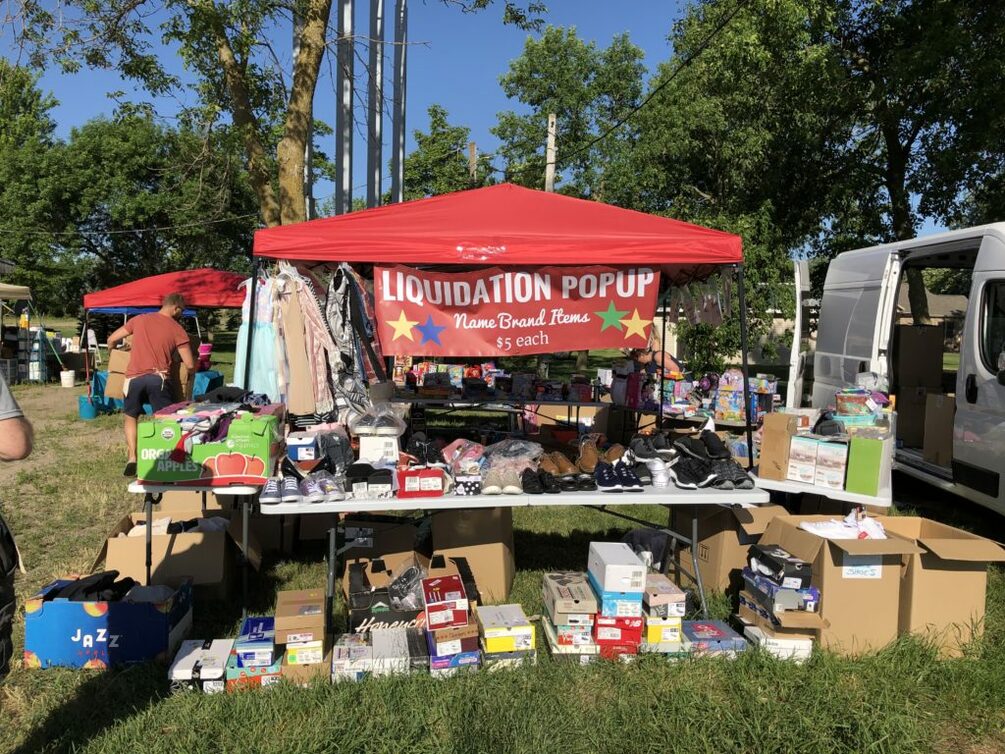


Clothing pallets are the thrift store’s louder, bolder cousin. Instead of hunting one rack at a time, you’re buying inventory by the square foot. It’s fast. It’s messy. It can be wildly profitable.
If you’ve ever considered reselling apparel, clothing pallets can turn a small budget into serious inventory volume. The key is knowing how to buy, sort, and sell strategically instead of emotionally.
Let’s break it down.
What Is a Clothing Pallet?
A clothing pallet is a bulk lot of apparel sold as overstock, shelf pulls, store returns, or liquidation merchandise from major retailers. These pallets can include:
- Department store brands, such as Target pallets
- Boutique overstock
- Fast fashion
- Seasonal clearance
- Online returns
Some pallets are manifested, meaning you get a list of items and quantities. Others are unmanifested, which means you’re buying a mixed assortment without knowing every piece inside.
Manifested pallets reduce guesswork. Unmanifested pallets can offer higher margins but require more risk tolerance.
Where To Buy Clothing Pallets
You can source clothing pallets from:
- Direct liquidation marketplaces
- Local liquidation warehouses
- Online live auction platforms, such as Whatnot pallets
- Regional wholesale distributors
Some sellers include freight in the price, often labeled as “free shipping.” In reality, shipping is typically built into the final cost, but the benefit is simplicity. You know your total investment upfront without arranging freight separately.
If you’re just starting, buying locally can reduce freight risk and allow you to inspect inventory before committing to larger purchases.

How Much Money Can You Make?
Let’s talk numbers.
Suppose you purchase a clothing pallet for $800 and it contains 200 pieces. Your cost per piece is $4.
If:
- 150 items sell at an average of $18
- 30 items sell at $10 clearance
- 20 items are unsellable
Your gross revenue would be:
(150 × $18) = $2,700
(30 × $10) = $300
Total = $3,000
Even subtracting platform fees, supplies, and labor, there’s room for solid margin.
Profit doesn’t come from every item being perfect. It comes from buying low enough that even after losses, your average return works.
How To Evaluate a Clothing Pallet Before Buying
The biggest mistake new resellers make is focusing on retail value instead of resale value.
Here’s what actually matters:
Brand mix. Recognizable brands with consistent demand are easier to move.
Condition. Shelf pulls and overstock generally perform better than heavy return pallets.
Seasonality. Buying winter coats in July can tie up cash unless you have storage space.
Size range. A pallet full of only XS or only XXL can limit your buyer pool depending on your platform.
Trend factor. Classic basics move steadily. Trendy pieces move fast but fade quickly.
If the seller provides photos or live walkthroughs, study them carefully. Look beyond the flashy pieces. Ask yourself whether the average item will realistically sell.
Best Places To Resell Clothing Pallet Inventory
Where you sell depends on your time, margin goals, and volume.
Online marketplaces like eBay, Poshmark, Mercari, and Facebook Marketplace offer broad reach. Boutique owners may sell in-store or through live sales. Some resellers bundle items into mystery boxes to move volume faster.
Higher-end brands, such as Nordstrom liquidation, deserve individual listings. Lower-value items can be bundled by size, style, or season to increase average order value and reduce listing time.
The more volume you buy, the more important efficiency becomes.
Sorting Strategy That Protects Profit
When your pallet arrives, resist the urge to immediately list everything.
Instead:
- Separate new-with-tags from used.
- Group by brand.
- Identify premium pieces first.
- Pull damaged items aside immediately.
- Create clearance or bundle piles early.
Your highest-value items should be photographed and listed first to recoup capital quickly. Once you recover your initial investment, everything else becomes profit margin management.
Common Mistakes To Avoid
Overpaying in auction environments is one of the biggest risks. Excitement can override math. Always set a maximum bid before you start.
Another mistake is underestimating labor. Photographing, measuring, listing, storing, and shipping apparel takes time. Your profit calculations should account for that effort.
Finally, avoid tying up too much capital in one season or one brand category. Diversification reduces risk.
Scaling From Side Hustle To Real Income
Clothing pallets can start as a side hustle and grow into consistent income if you reinvest strategically.
The cycle typically looks like this:
Buy small pallet → Sort and test market → Identify strong-performing brands → Reinvest profits → Increase pallet size → Improve listing efficiency → Build repeat buyers.
As volume grows, negotiating better pricing with suppliers becomes possible. Consistency builds leverage.
Is Selling Clothing Pallets Worth It?
If you enjoy inventory flow, trend spotting, and margin math, clothing pallets can be a powerful income stream.
They are not passive. They require organization, pricing discipline, and storage space. But for resellers willing to treat it like a business rather than a gamble, the upside is real.
The difference between clutter and cash is strategy.
Buy smart. Price realistically. Move inventory quickly.
And remember: in the clothing pallet world, your profit lives in the average, not the highlight piece.