

Money makes the world go round, but not all money has taken the form of the dollar bills and coins we carry today. Throughout history, different communities, companies, and even governments have used alternative forms of payment known as scrip. While scrip may sound like an outdated relic of the past, its influence can still be seen today in things like gift cards, loyalty points, and vouchers.
In this guide, we’ll break down what scrip is, where it came from, how it was used, and why it still matters in modern money systems.
What Is Scrip?
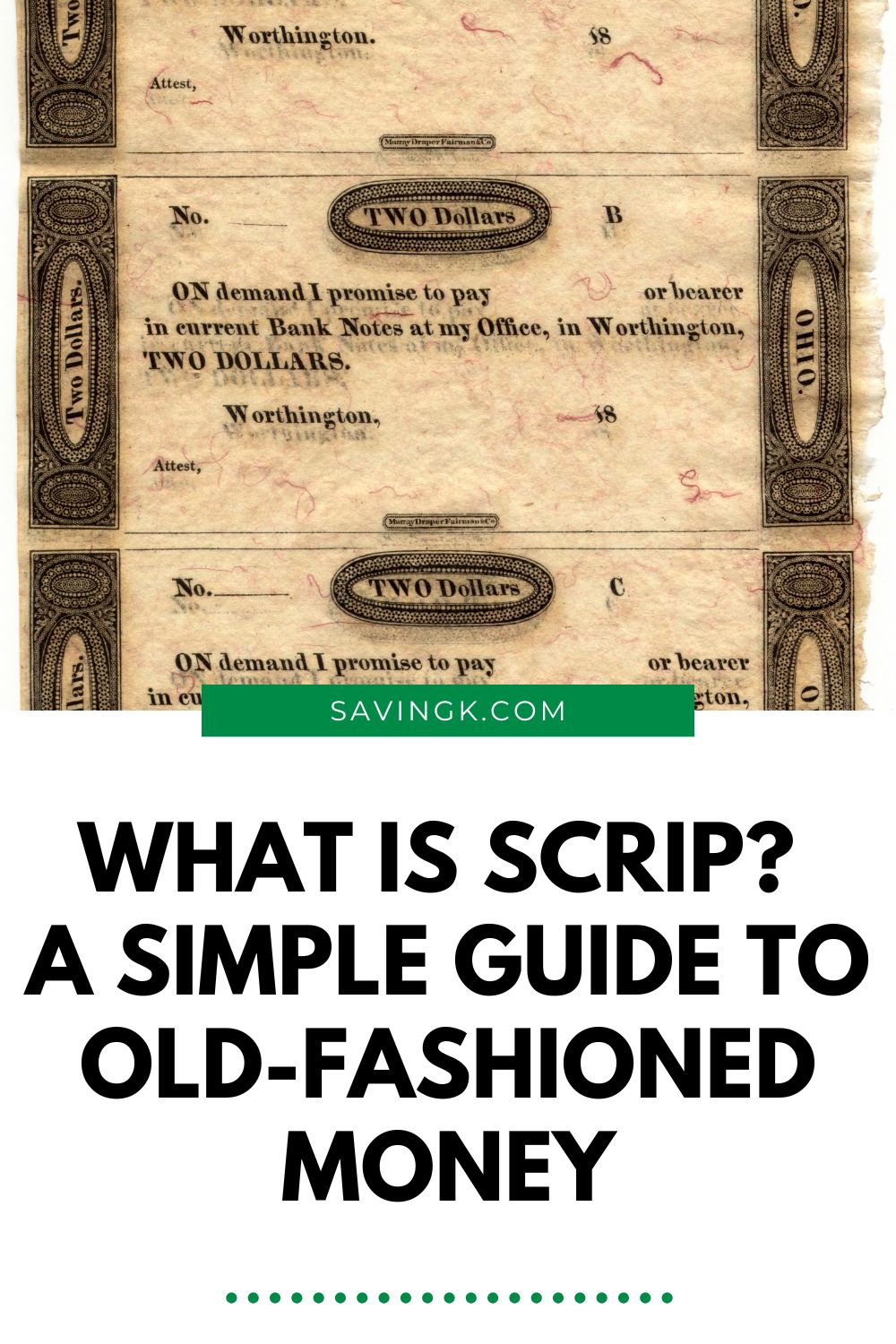
At its simplest, scrip is any substitute for legal currency that’s issued by a private organization, business, or local authority. Instead of receiving government-backed money, workers or community members were given scrip that could be redeemed for goods and services—often with limitations.
Scrip came in different forms:
- Paper notes resembling currency
- Metal tokens
- Coupons or vouchers
It was never official legal tender, but in certain environments, like a mining town or a company store, it functioned as money.
The History of Scrip
Scrip gained prominence in the 19th and early 20th centuries, particularly in the United States and parts of Europe. It was most commonly issued by employers, especially in industries like coal mining, lumber, and textiles.
Company Towns and Scrip
In isolated company towns, businesses often paid workers in scrip instead of cash. This scrip could only be used at the company store for food, clothing, and household goods. While convenient for employers, this practice created a cycle of dependency. Workers couldn’t easily save money, and since the company often set the prices, many families lived paycheck-to-paycheck with little chance of financial freedom.
The phrase “I owe my soul to the company store” from the folk song “Sixteen Tons” was inspired by this system of scrip-based pay.
Local and Emergency Scrip
Scrip wasn’t limited to companies. During times of financial crisis, such as the Great Depression, local governments and businesses also issued emergency scrip when official currency was scarce. These notes circulated in communities until the banking system stabilized.
Types of Scrip
Scrip came in many varieties depending on who issued it and what it was meant to buy. Some of the most common types included:
- Company Scrip – Used in company towns, often redeemable only at the employer’s store.
- Municipal Scrip – Issued by towns or cities during economic hardships.
- War Scrip – Used during times of conflict when national currency was unstable.
- Fundraising Scrip – Certificates or tokens sold by organizations to raise money, later redeemable for goods.
Each type had different rules, but they all shared the same principle: acting as a substitute for real money.
Problems with Scrip
While scrip served a purpose, it was controversial. Some of the biggest issues included:
- Lack of Freedom: Workers paid in company scrip couldn’t use it outside the company store, limiting their financial independence.
- Inflated Prices: Employers often charged higher-than-average prices at company stores.
- Debt Traps: Families sometimes had to borrow against future wages, creating a cycle of debt.
- No Savings Power: Since scrip wasn’t official currency, workers couldn’t save, invest, or build wealth.
These problems led to government regulations. Eventually, labor laws restricted the use of scrip, and payment in government-issued money became standard.
Scrip Collecting: A Niche Hobby
Today, old scrip has found new life as a collectible. Historians and hobbyists collect company-issued notes and tokens as artifacts of the past. The value of scrip depends on factors like rarity, condition, and historical significance.
For example:
- A common coal mining token might sell for a few dollars.
- Rare pieces from defunct companies or unique designs can fetch hundreds.
Scrip collecting offers a fascinating glimpse into economic history, and many museums and private collections include these items.
Modern-Day Scrip
Although company towns have faded into history, the concept of scrip is still alive in more modern forms. In fact, many things we use today are essentially modern versions of scrip:
- Gift Cards: Just like scrip, gift cards can only be used at specific retailers.
- Store Credit or Vouchers: Issued as refunds or rewards, these act like scrip limited to a certain store.
- Loyalty Points and Rewards: Airline miles, credit card rewards, and retail loyalty points are digital scrip, usable only within certain systems.
- Fundraising Programs: Many schools and churches use “scrip programs,” where families buy gift cards at face value, and the retailer donates a percentage back to the organization.
These systems demonstrate that scrip has simply evolved rather than disappeared.
The Financial Lessons of Scrip
Looking back at the history of scrip reveals important lessons about money and financial freedom:
- The Importance of Choice – Currency backed by the government gives people freedom to shop, save, and invest as they see fit.
- The Risk of Dependency – Systems that restrict spending (like scrip) often favor businesses over individuals.
- The Power of Community Currency – While company scrip had its flaws, local scrip and modern gift cards show how communities can create value when resources are limited.
- History Repeats Itself – From mining towns to digital rewards programs, scrip reminds us that control over currency shapes control over people’s lives.
Final Thoughts
Scrip may seem like a relic of a bygone era, but its influence is still woven into modern money systems. While once criticized for trapping workers in unfair economic cycles, the concept of scrip lives on in gift cards, vouchers, and digital loyalty programs.
Understanding scrip gives us a better appreciation of how money evolves and how systems of exchange shape financial independence. Whether you’re curious about history, interested in collecting, or simply want to understand why your gift cards and reward points matter, scrip offers a fascinating look at the way alternative currencies shape everyday life.