
If there’s one thing I’ve learned over the years, it’s that sometimes the best businesses are born out of necessity. Pop-up shops were never part of my grand plan, but they turned into one of the most powerful parts of my business.
From Websites to Warehouses
I started my first company, Key Internet Marketing, Inc. (yes, KIM for short), building websites and monetizing them through affiliate marketing. My first sites were about saving people money, raising my preemie twins, my love for shoes, and even my favorite football team, the Nebraska Cornhuskers. For over two decades, those websites paid the bills and allowed me to work from home long before remote work was mainstream.
But as my kids grew up and needed me less, I got curious about other business opportunities. In 2016, I started experimenting with retail arbitrage, which led me down the rabbit hole of online arbitrage and eventually liquidation. By 2020, I sold my websites and shifted my full focus to liquidation. Today, we buy truckloads of pallets from Target, Macy’s, Dollar General, Walmart, and more, reselling online. We’re in the top 5% of Amazon FBA sellers and growing quickly on Walmart Marketplace.
Where the Pop-Up Idea Was Born
As exciting as online sales were, we eventually ran into a common liquidation problem: mountains of inventory that just wouldn’t move online. Damaged packaging, customer returns, or items that didn’t quite fit marketplace requirements started piling up. Instead of letting it sit, I thought, why not sell it all locally at one set price?
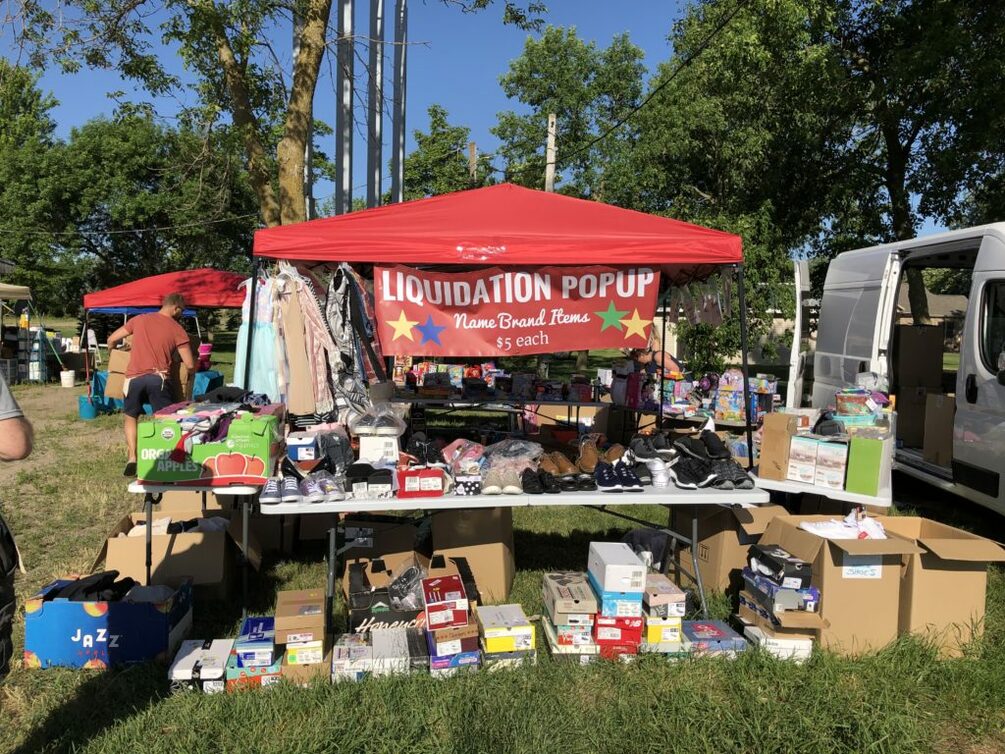
That’s how our $5 Liquidation Pop-Up Sale was born. Everything was five bucks. We were basically a bin store before bin stores were a thing!
At first, we sold at flea markets and vendor shows. Then we rented a small building just for pop-ups. Eventually, we expanded into our own warehouse, where we now host monthly themed sales. Some weekends, everything is $5. Other times, it’s $25, or we focus on larger items like furniture and mattresses.
No matter the theme, one thing is consistent: people line up hours before we open. Every sale feels like Black Friday, and we’ve even been featured in Woman’s World magazine.
Creating Urgency and Community
One of the biggest lessons I’ve learned is that scarcity and urgency drive sales. When we experimented with being open more often, we lost that energy. People prefer lining up for a short, exciting window over leisurely browsing all week.
It’s not just about the bargains; it’s an experience. Neighbors meet in line, families make an afternoon of it, and people come back again and again, not knowing what treasures they’ll find.
And when we realized our clothing was overlooked in the $5 free-for-all, we launched Bend The Trend, our liquidation boutique. The same clothing no one picked up for $5 now sells for $12. We’re only open Thursdays and Saturdays, and just like the pop-ups, there’s a line at the door. Limited hours, lower staff overhead, and higher perceived value works.
Marketing That Works
So, how do we pack the house every time? Not with radio or newspaper ads. Social media is our powerhouse.
- Facebook Pages & Groups: Groups get more interaction, but you need both. They allow conversations, customer questions, and visibility in the algorithm.
- Events: Every pop-up has its own Facebook event page packed with keywords. We run small, hyper-local ads (never boosted posts—only event ads) and manually target zip codes around us.
- Content: Videos of pallets arriving, forklifts unloading, or even quirky “loss leader” items spark engagement. Sometimes controversy even helps—like when we sold snowblowers “as-is” for $25 and the comments section exploded.
- Giveaways & Partnerships: We’ve given away store credit, partnered with local cookie makers, and even encouraged shares by offering free treats. Small touches build big loyalty.
- Email & SMS: Not everyone lives on Facebook. We built an email list with a 46% open rate and use Square to gather customer info for future campaigns.
The formula is simple: urgency + interaction = sales.
Why Pop-Ups Are So Powerful
Pop-up shops aren’t just a way to clear inventory; they’re a way to create buzz, build community, and keep your business flexible. They let you test new ideas, create recurring excitement, and build a loyal following without the overhead of a traditional retail store.
For us, they turned excess inventory into opportunity, brought in new customers, and became a cornerstone of our business model.
And the best part? Pop-ups remind me that business doesn’t have to be boring. It can be fun, scrappy, and community-driven—and still wildly profitable.


- How To File Your 2025 Income Taxes Online For Free In 2026 - January 26, 2026
- The 12-3-30 Workout And Personal Finance - January 9, 2026
- The Power Of Pop-Up Shops - August 24, 2025