

Think you need thousands of dollars to start a business? Think again! Some of the best side hustles require little more than a smartphone, an internet connection, and a willingness to put in the work.
Whether you’re looking to make an extra $100 a week, pay off debt, build your savings, or eventually replace your full-time income, starting a side hustle doesn’t have to break the bank.
In fact, many successful entrepreneurs started with less than $100.
From reselling liquidation merchandise and flipping thrift store finds to offering freelance services and creating digital products, there are plenty of opportunities to make money without a huge upfront investment.
The trick is choosing a side hustle that matches your skills, interests, and available time.
Here are 10 side hustles you can start with $100 or less, including startup costs, earning potential, and practical tips to help you get started.
Note: Startup costs are estimates and assume you already have basic equipment such as a smartphone or computer. Earnings are not guaranteed, and actual profits depend on demand, expenses, and the time you invest.
1. Reselling Thrift Store and Clearance Finds
Startup cost: $25–$100 | Potential earnings: $50–$500+ per month
One of my favorite ways to make extra money is buying merchandise at a discount and reselling it for a profit.
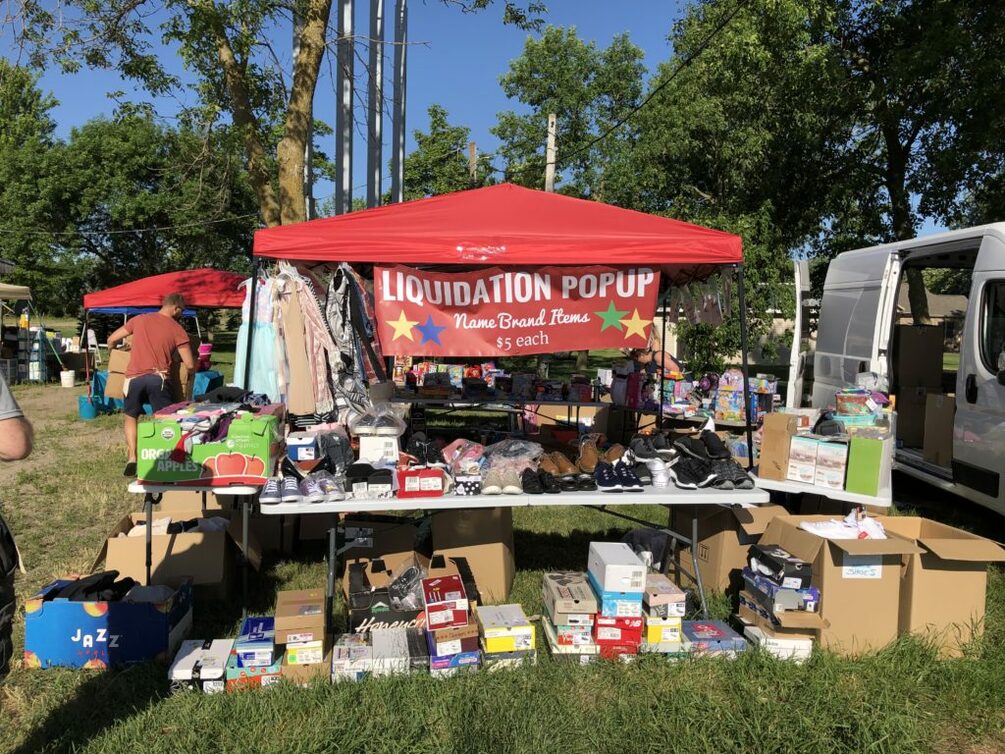
You can find inventory at thrift stores, garage sales, clearance racks, estate sales, and liquidation stores.
Look for products such as:
-
Brand-name clothing and shoes
-
Vintage toys and collectibles
-
Small electronics
-
Books and video games
-
Home decor
-
New merchandise with tags
For example, you might purchase a pair of brand-name jeans for $5 at a thrift store and resell them for $25 online.
After selling fees and other expenses, you could walk away with a profit.
How to get started: Set aside $50 for inventory, research sold prices on eBay, and list your first five items.
Where to sell: eBay, Poshmark, Mercari, Facebook Marketplace, and Whatnot.
Money-saving tip: Start by selling items you already own. This allows you to learn the resale process before spending money on inventory.
2. Start a Print-on-Demand Business
Startup cost: $0–$50 | Potential earnings: $25–$300+ per month
Print-on-demand allows you to sell customized products without purchasing inventory upfront.
You create designs for items such as T-shirts, mugs, tote bags, stickers, and sweatshirts.
When someone places an order, a print-on-demand company produces and ships the product.
Popular platforms include:
You can create designs using free tools such as Canva.
How to get started: Choose a niche, create five original designs, and upload them to a print-on-demand platform.
Money-saving tip: Focus on a specific audience, such as teachers, pet lovers, or gardening enthusiasts, instead of trying to sell to everyone.
Keep in mind that marketplace fees, advertising, and product samples can affect profitability.
3. Offer Freelance Writing or Virtual Assistant Services
Startup cost: $0–$25 | Potential earnings: $100–$1,000+ per month
If you’re organized, detail-oriented, or enjoy writing, you can turn those skills into a side hustle.
Small businesses often need help with tasks such as:
-
Writing blog posts
-
Managing email inboxes
-
Scheduling social media posts
-
Creating product descriptions
-
Data entry
-
Customer service
-
Research
-
Pinterest management
You don’t necessarily need a degree or professional certification to get started.
You can offer your services through freelance marketplaces or contact small businesses directly.
How to get started: Choose two or three services, create a simple portfolio using Google Docs or Canva, and begin reaching out to potential clients.
Where to find clients: Upwork, Fiverr, LinkedIn, and local business Facebook groups.
Money-saving tip: Offer a small introductory project to build your portfolio and collect testimonials.
4. Flip Free Furniture and Household Items
Startup cost: $0–$100 | Potential earnings: $50–$400+ per month
People give away furniture and household items all the time simply because they want them gone.
You can find free items through Facebook Marketplace, Buy Nothing groups, neighborhood giveaways, and curb alerts.
Some items need nothing more than cleaning and better photographs before they can be resold.
Others may benefit from minor repairs or a fresh coat of paint.
Popular items to flip include:
-
Small dressers
-
End tables
-
Bookshelves
-
Mirrors
-
Patio furniture
-
Lamps
-
Storage cabinets
For example, you might pick up a free end table, spend $15 on supplies, and sell it for $60.
That could leave $45 before transportation and other expenses.
How to get started: Search local listings for free furniture, choose one manageable item, and list it for resale.
Money-saving tip: Start with smaller items that fit in your vehicle and require minimal repairs.
Avoid damaged upholstered furniture with signs of pests, mold, or other safety concerns.
5. Sell Digital Products on Etsy
Startup cost: $0–$50 | Potential earnings: $25–$500+ per month
Selling digital products is an appealing side hustle because you can create a product once and sell it repeatedly.
There’s no physical inventory to store, and customers receive their files electronically.
Popular digital products include:
-
Budget planners
-
Savings trackers
-
Printable calendars
-
Meal planners
-
Wedding checklists
-
Chore charts
-
Classroom worksheets
-
Party games
-
Reseller inventory spreadsheets
For example, you could create a printable savings challenge and list it for $4.99.
If you sold 30 copies, that would generate $149.70 in gross sales before fees and expenses.
How to get started: Choose a niche, create three to five useful digital products, and open an Etsy shop.
Money-saving tip: Use free design software and focus on products that solve a specific problem.
Remember that Etsy charges listing and transaction fees, and some shops may have additional setup costs.
6. Start a Pet Sitting or Dog Walking Business
Startup cost: $0–$75 | Potential earnings: $100–$600+ per month
If you love animals, pet sitting and dog walking can be a flexible way to earn extra money.
Many pet owners need someone to care for their pets while they’re working, traveling, or attending events.
Services you could offer include:
-
Dog walking
-
Pet feeding
-
Drop-in visits
-
Overnight pet sitting
-
Litter box cleaning
-
Basic pet care
You can advertise locally or join a pet care platform such as Rover.
How to get started: Create a simple flyer or online profile, decide which services you’re comfortable offering, and begin accepting local clients.
Money-saving tip: Start with friends, neighbors, and referrals before spending money on advertising.
Consider liability insurance, platform fees, and any local business requirements before accepting paying clients.
7. Start an Affiliate Marketing Side Hustle
Startup cost: $0–$100 | Potential earnings: $0–$500+ per month initially
Affiliate marketing is one of my favorite online business models because you don’t need to create products, manage inventory, or handle shipping.
Instead, you earn commissions when someone makes a qualifying purchase through your affiliate link.
You can promote products through:
-
A blog
-
Pinterest
-
YouTube
-
Social media
-
An email newsletter
-
Product reviews
-
Shopping guides
For example, you might create a blog about budget-friendly home decor and recommend products from retailers with affiliate programs.
When readers purchase eligible products through your links, you may earn a commission.
How to get started: Choose a niche you know well, join relevant affiliate programs, and create helpful content that answers common shopping questions.
Money-saving tip: Start with free social media platforms before investing in a website.
Affiliate marketing typically takes time to build. Many beginners earn little or nothing initially, so don’t expect immediate passive income.
Always disclose affiliate relationships clearly.
8. Offer Local Cleaning or Organizing Services
Cleaning and organizing are services people are often willing to pay for because they save time.
You could offer:
-
Basic house cleaning
-
Pantry organization
-
Closet organization
-
Garage decluttering
-
Move-out cleaning
-
Office organizing
-
Laundry folding
You don’t need to start with expensive equipment.
Basic cleaning supplies, microfiber cloths, gloves, and a few organizing tools may be enough for small jobs.
How to get started: Decide which services to offer, create a simple price list, and advertise in neighborhood groups.
Money-saving tip: Ask clients whether you can use their vacuum or other large cleaning equipment to keep startup costs low.
Check local licensing and insurance requirements, and avoid specialized cleaning work that requires training or protective equipment.
9. Make Money With Canva Design Services
Startup cost: $0–$15 | Potential earnings: $100–$500+ per month
You don’t have to be a professional graphic designer to create useful marketing materials for small businesses.
With Canva, you can design social media graphics, flyers, invitations, menus, and promotional materials.
Potential services include:
-
Facebook promotional graphics
-
Pinterest pins
-
Instagram posts
-
Business flyers
-
Event invitations
-
Restaurant menus
-
Simple presentations
-
Product listing graphics
Small businesses often need attractive graphics but don’t have the time to create them.
How to get started: Create five sample designs, build a small portfolio, and offer your services to local businesses.
Money-saving tip: Use Canva’s free plan while you’re building your business.
Make sure you follow Canva’s licensing rules and avoid reselling copyrighted artwork or templates in ways that aren’t permitted.
10. Buy and Resell Liquidation Merchandise
Startup cost: $25–$100 | Potential earnings: $50–$500+ per month
If you enjoy bargain hunting, liquidation reselling can be an excellent side hustle.
Retailers regularly liquidate customer returns, overstock, shelf pulls, and discontinued merchandise.
These products are often sold through liquidation stores, bin stores, online auctions, and wholesale suppliers.
You don’t need to purchase an entire pallet to get started.
In fact, buying a few individual items or a small bundle is often a smarter choice for beginners.
How to get started: Visit a local liquidation store, research resale values, and purchase a small assortment of merchandise.
For example, you might spend $50 on 10 products and resell them for an average of $12 each.
That would generate $120 in gross sales, leaving $70 before selling fees, shipping, taxes, and other expenses.
Where to sell: Facebook Marketplace, eBay, Whatnot, and local resale groups.
Money-saving tip: Start with new, sealed merchandise when possible. Returns and untested products can carry additional risk.
At SavingK, we also sell liquidation bundles through our @SavingK Whatnot account, sometimes starting auctions at just $1.
New Whatnot buyers may qualify for a $25 shopping credit through our referral offer, subject to the current promotion’s terms.
Side Hustle Comparison: Which One Is Best for You?
Here’s a quick look at all 10 side hustles.
| Side hustle | Estimated startup cost | Best for |
|---|---|---|
| Thrift store reselling | $25–$100 | Bargain hunters |
| Print-on-demand | $0–$50 | Creative entrepreneurs |
| Freelancing | $0–$25 | Writers and organized people |
| Furniture flipping | $0–$100 | DIY enthusiasts |
| Digital products | $0–$50 | Printable creators |
| Pet sitting | $0–$75 | Animal lovers |
| Affiliate marketing | $0–$100 | Content creators |
| Cleaning and organizing | $25–$100 | Hands-on workers |
| Canva design services | $0–$15 | Creative freelancers |
| Liquidation reselling | $25–$100 | Resellers and deal hunters |
Which Side Hustles Make Money the Fastest?
If your goal is to earn extra money quickly, service-based side hustles may offer the fastest path to your first payment.
For example, cleaning, pet sitting, and freelance services can generate income as soon as you find a paying customer.
Reselling can also produce relatively quick results if you already have desirable merchandise.
On the other hand, affiliate marketing, digital products, and print-on-demand businesses may take longer to build because you need to attract customers.
For faster potential income: Consider cleaning, pet sitting, or reselling items you already own.
For long-term growth: Consider affiliate marketing, digital products, or print-on-demand.
For flexible weekend work: Consider furniture flipping, thrift store reselling, or liquidation reselling.
How to Turn $100 Into a Profitable Side Hustle
Starting with a small budget means every dollar matters.
Here’s an example of how you could divide $100 when starting a reselling business.
Example $100 startup budget
- Inventory $60
- Packaging supplies $15
- Transportation $15
- Emergency reserve $10
- Total startup budget $100
The goal isn’t to spend your entire budget immediately. It’s to test your idea, make your first sale, and reinvest a portion of your profits.
For example, if you spend $60 on inventory and eventually sell it for $150, your gross profit before fees and other expenses would be $90.
You could use some of that money to purchase more inventory while setting aside funds for taxes and unexpected costs.
7 Tips for Starting a Side Hustle With Almost No Money
1. Start With What You Already Have
Before spending money, look at the skills, equipment, and resources you already own.
You may already have everything you need to get started.
2. Test Your Idea Before Investing
Don’t spend $100 creating a business before you know whether customers want what you’re selling.
Try to get your first customer or sale as inexpensively as possible.
3. Avoid Unnecessary Subscriptions
It’s tempting to sign up for premium software, paid memberships, and business tools.
Start with free options whenever possible.
4. Reinvest Your Profits
Instead of spending your first earnings, consider reinvesting a portion into inventory, equipment, or marketing.
This can help your side hustle grow without requiring additional money from your regular paycheck.
5. Track Every Expense
Even small expenses can eat into your profits.
Keep records of purchases, mileage, supplies, fees, and income.
6. Set Aside Money for Taxes
Side hustle income is generally taxable, even if you receive payments through cash, PayPal, Venmo, or other platforms.
Depending on your earnings and circumstances, you may also owe self-employment taxes.
7. Don’t Try to Start Everything at Once
It’s easy to get excited about multiple business ideas.
However, focusing on one side hustle at a time makes it easier to learn what works and improve your results.
Frequently Asked Questions
What is the cheapest side hustle to start?
Freelance writing, virtual assistant services, affiliate marketing, and selling digital products can all be started with little or no money if you already have a computer and internet access.
Can I really start a business with $100?
Yes. Many small service businesses, online businesses, and reselling ventures can begin with $100 or less. However, costs may increase as the business grows, and some activities require licenses or insurance.
What side hustle can make $100 a day?
Cleaning, freelance services, furniture flipping, and reselling may generate $100 or more in revenue on a good day. However, earnings are not guaranteed, and revenue is different from profit.
What side hustle is best for beginners?
Selling unwanted household items is one of the easiest ways to start because you don’t need to purchase inventory or learn complicated software.
Can I start a side hustle while working full-time?
Absolutely. Many side hustles can be operated during evenings and weekends, including reselling, pet sitting, freelance writing, and selling digital products.
What side hustles can become full-time businesses?
Affiliate marketing, freelancing, cleaning services, and reselling can potentially grow into full-time businesses. Success depends on demand, profitability, time commitment, and your ability to manage expenses.
More Ways to Make Extra Money
If you’re interested in starting a side hustle, check out these related SavingK articles:
Final Thoughts
Starting a side hustle doesn’t have to require thousands of dollars, expensive equipment, or a complicated business plan.
With $100 or less, you can begin reselling merchandise, offering freelance services, creating digital products, or building an online business.
The key is to start small, keep your expenses low, and focus on earning your first dollar before worrying about scaling.
Some side hustles may bring in extra cash relatively quickly, while others require patience and consistent effort.
Whatever you choose, remember that you don’t need a huge budget to start building an additional income stream. You just need a realistic plan and the willingness to get started.